
Reflexology for Stress Relief: What the Research Actually Shows
Medically reviewed by Ksenya Kharnam, BPT, Registered Physiotherapist, Clinical Director · Last reviewed August 21, 2026
A client came in last winter, twenty minutes before a big work presentation, hands shaking, talking too fast. She wasn’t there for her feet. She was there because sitting still with someone pressing slow, steady pressure into her arches was the only thing that had ever brought her heart rate down before a stressful event. That’s reflexology in practice — not a cure-all, but a tool that seems to interrupt the stress response in a way people notice immediately.
What Reflexology Actually Is
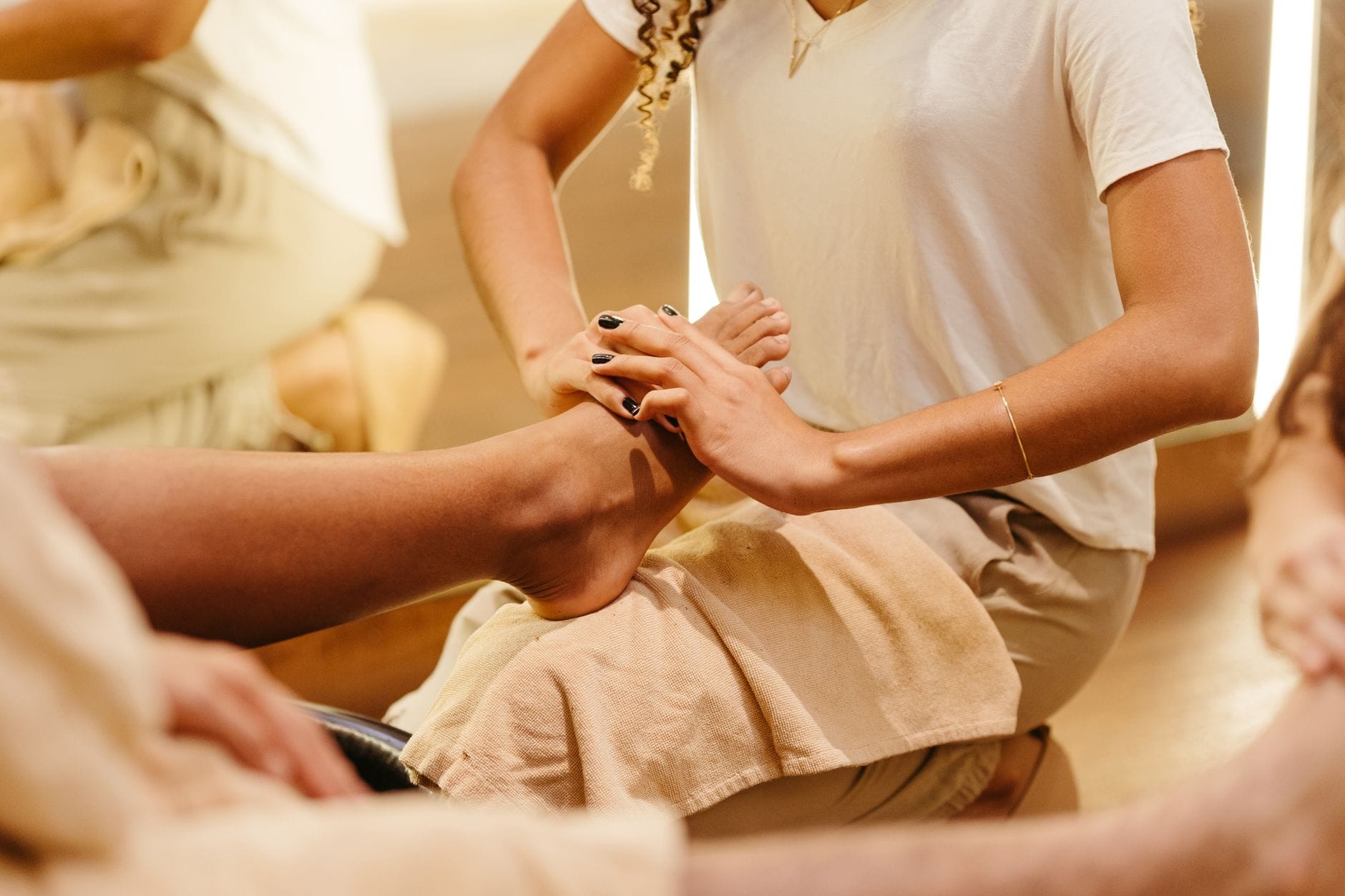
Reflexology is a focused pressure technique applied to specific points on the feet (sometimes hands and ears too), based on the idea that these points correspond to organs and systems throughout the body. Practitioners use thumb and finger pressure in precise patterns — not a foot massage in the spa sense, though it can feel similarly relaxing. A typical session runs 45 to 60 minutes, most of it spent working through the same sequence of points on each foot.
Why People in Newmarket Are Asking About It
We’ve seen a steady uptick in people booking reflexology specifically for stress and anxiety, not pain. Some are dealing with work burnout. Others have generalized anxiety and are looking for something to add alongside therapy or medication, not replace it. A few just want an hour where their phone stays in their bag. Whatever brings someone in, the pattern is consistent: they want a non-drug option that fits into a normal week, and reflexology has an accessibility to it that other treatments sometimes lack. If you want the details on how sessions are structured at our clinic, our foot reflexology service page covers what to expect.
What the Research Actually Shows
This is where it gets interesting, because reflexology has a reputation problem — dismissed by some as pseudoscience, oversold by others as a cure for everything. The actual evidence sits in between, and it’s worth looking at directly rather than trusting either extreme.
The Coronary Angiography Study
One randomized controlled trial, published in the Journal of Cardiovascular Nursing in 2021, looked at patients about to undergo coronary angiography and angioplasty — procedures that reliably spike anxiety in almost anyone facing them (Vural Doğru et al., 2021). Researchers gave one group foot reflexology before the procedure and compared their anxiety, stress, and cortisol (the body’s main stress hormone) levels against a control group who didn’t receive it. The reflexology group showed measurably lower anxiety, stress, and cortisol levels. That’s a meaningful finding, because cortisol is a biological marker, not just a self-reported feeling — it suggests something physiological was happening, not just a placebo effect from the attention and touch.
The Meta-Analysis on Depression, Anxiety, and Sleep
The second piece of evidence is broader. A 2020 meta-analysis and meta-regression in Evidence-Based Complementary and Alternative Medicine pooled data from multiple randomized controlled trials examining foot reflexology’s effects on depression, anxiety, and sleep quality in adults (Wang et al., 2020). Across the pooled studies, reflexology was associated with improvements in all three areas. The authors were careful about the limitations in the underlying studies — trial quality varied, and sample sizes weren’t always large — but the overall direction of the data pointed toward real, consistent benefit rather than a fluke.
Neither study claims reflexology replaces medical or psychological treatment for anxiety or depression. Neither should be read that way. What they show is more modest and, frankly, more useful: applied consistently, foot reflexology appears to lower measurable stress markers and improve self-reported anxiety and sleep. For a lot of people, that’s exactly the gap they’re trying to fill.
Who Tends to Benefit Most
In our experience, three groups get the most out of it. People with situational anxiety — job interviews, medical procedures, big life transitions — often feel a difference after just one or two sessions. People managing chronic stress as part of a larger care plan tend to benefit from regular sessions, every two to three weeks, as a maintenance tool rather than a one-off fix. And people with sleep disruption tied to a racing mind sometimes notice better sleep quality within a few weeks of starting. If stress is the underlying issue you’re trying to manage, our stress condition page walks through how reflexology fits alongside other options we offer.
What a Session Actually Feels Like
Most people expect it to tickle. It doesn’t. The pressure is firm, sometimes surprisingly so on tender spots near the heel or the ball of the foot. Many clients say they feel drowsy or unusually calm about fifteen minutes in — that’s the point where the nervous system seems to shift out of high alert. Some fall asleep entirely. That’s normal, and it’s usually a sign the session is doing exactly what it’s meant to do.
If stress has been building for weeks and nothing else has fit into your schedule, book a session and see how your body responds. One hour, feet up, no phone — it’s a small ask for a real data point on your own stress levels.