Osteoporosis and Bone Health: Building Strength from the Inside Out
What Is Osteoporosis?
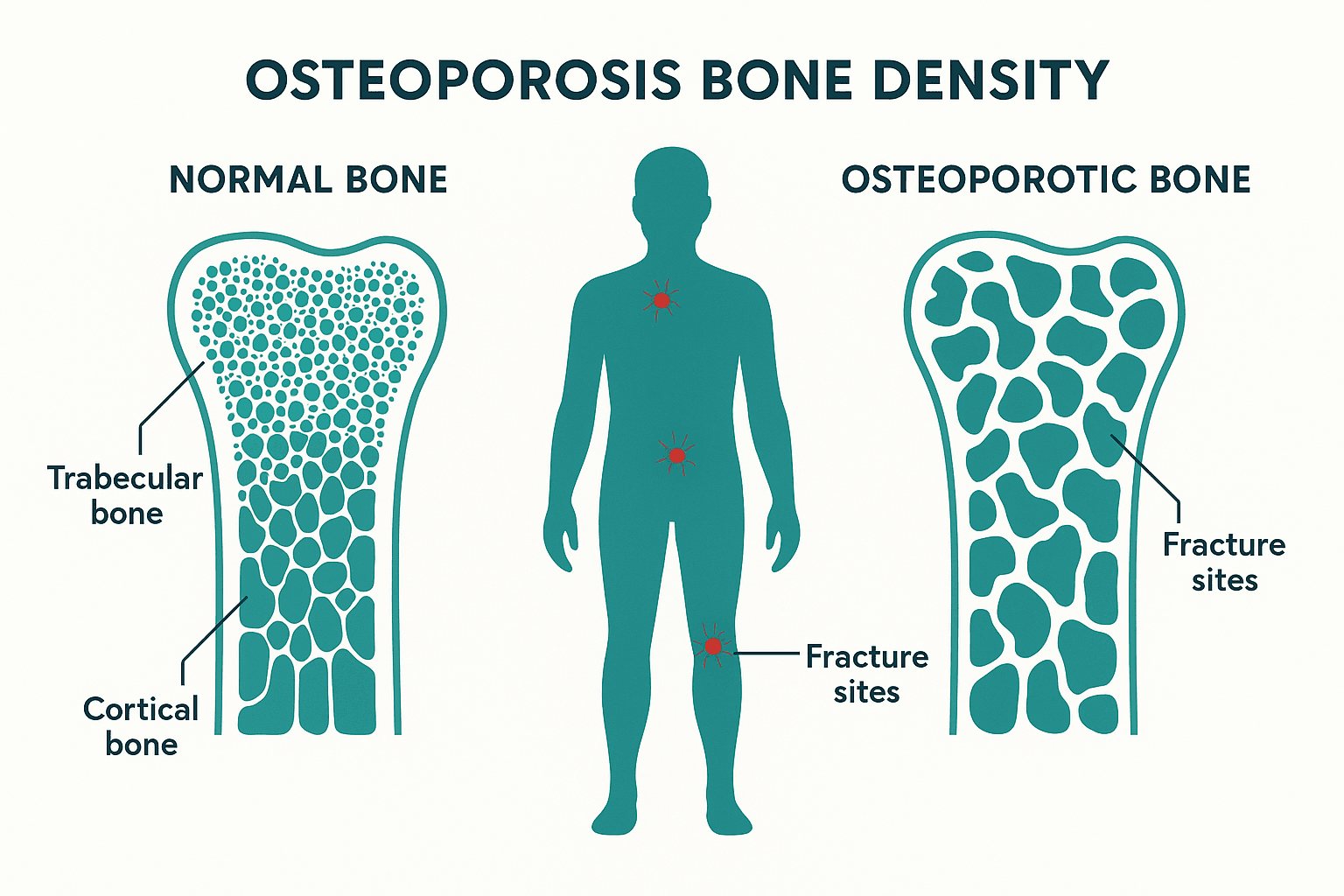
Bone is not static. It is constantly being broken down and rebuilt in a process called bone remodelling. In healthy adults, resorption (breakdown) and formation (building) are in balance. Osteoporosis occurs when bone resorption outpaces formation, resulting in reduced bone density and altered bone architecture — bones that are less able to resist the forces of daily life.
Osteopenia is the stage before osteoporosis — lower than normal bone density, but not yet meeting the diagnostic threshold for osteoporosis.
Bone density is measured with a DEXA scan and reported as a T-score:
– T-score above -1.0: Normal
– T-score -1.0 to -2.5: Osteopenia
– T-score below -2.5: Osteoporosis
The Fracture Risk: Where Osteoporosis Causes Harm
Osteoporotic fractures most commonly affect:
- Vertebral bodies — compression fractures causing height loss, kyphosis (forward rounding), and acute or chronic back pain
- Hip — the most serious; 20–25% of hip fracture patients die within one year from complications, and up to 50% never regain full independence
- Wrist — often the first fracture, from falling on an outstretched hand
- Humerus (upper arm), pelvis, and ribs
Nutrition for Bone Health
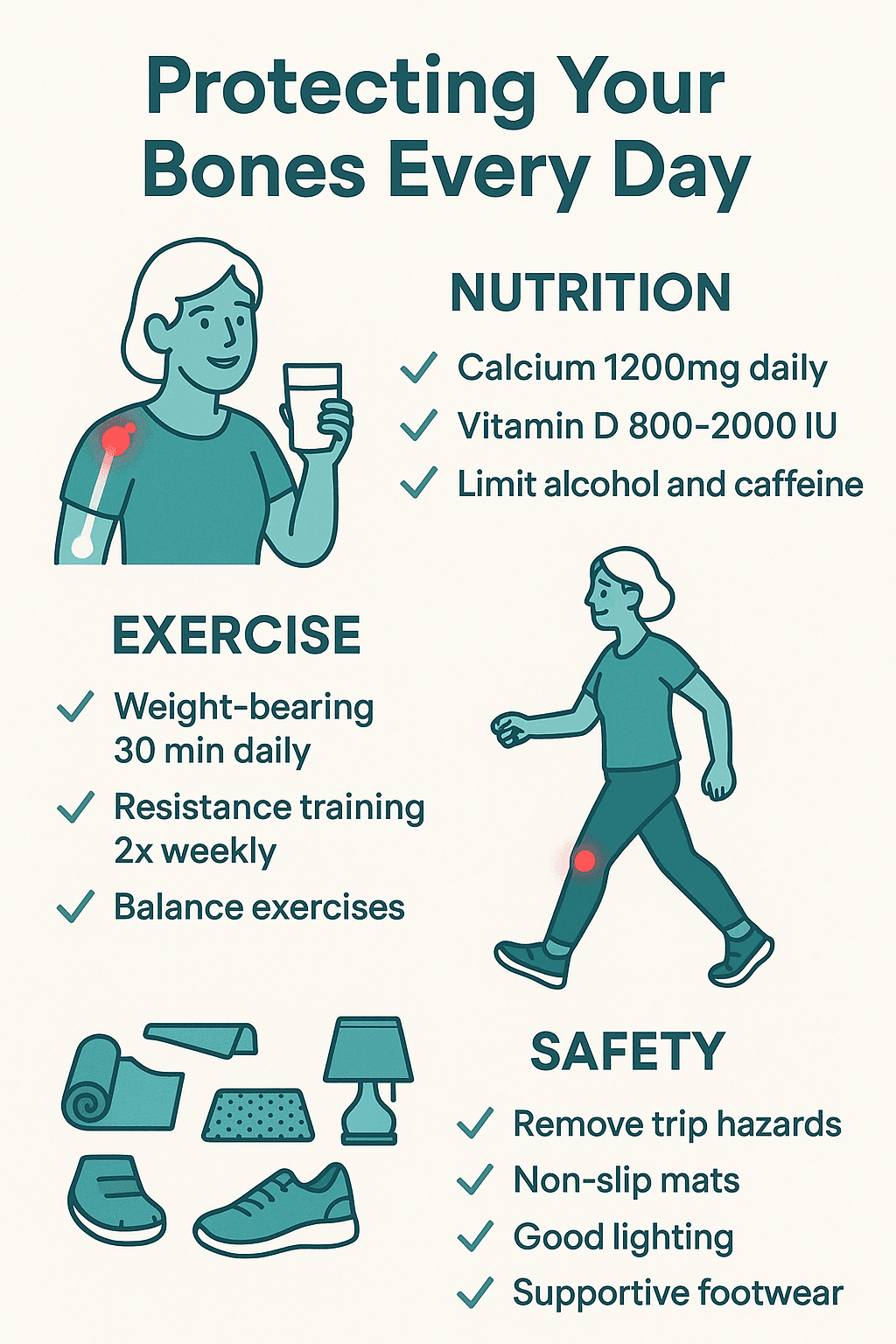
Calcium
Calcium is the primary mineral in bone. Recommended daily intake:
– Adults 19–50: 1,000 mg/day
– Women 51+: 1,200 mg/day
– Men 71+: 1,200 mg/day
Best sources: dairy products, fortified plant milks, canned fish with bones (salmon, sardines), leafy greens (kale, bok choy), almonds, tofu made with calcium sulphate.
Note: Calcium is best absorbed in doses of 500 mg or less at a time. Supplements should be considered only if dietary intake is consistently inadequate.
Vitamin D
Vitamin D is essential for calcium absorption. In Canada, most adults — especially north of the 45th parallel (which includes Newmarket, ON) — are vitamin D deficient, particularly in winter months.
Recommended intake: 800–2000 IU/day for adults over 50 (Osteoporosis Canada recommendation). Testing your serum vitamin D level (25-OH vitamin D) guides appropriate supplementation.
Frequently Asked Questions
Does osteoporosis cause pain?
Osteoporosis itself is usually painless. Pain arises when a fracture occurs. Vertebral compression fractures can cause sudden acute back pain, or may be “silent” — discovered only on imaging. Chronic back pain and postural changes can result from multiple vertebral fractures.
Can bone density improve with treatment?
Yes. Medication (bisphosphonates, denosumab, newer anabolic agents) combined with exercise and optimal nutrition can improve bone density and significantly reduce fracture risk. Exercise alone typically maintains density and prevents further loss — the goal varies depending on starting density and individual factors.
Is it safe to exercise with osteoporosis?
Yes — and it is essential. The right exercise, prescribed and supervised appropriately, is one of the best things you can do. The risk of fracture from appropriately prescribed exercise is very low, while the benefits — improved bone density, balance, strength, and fracture prevention — are very high.
For patient education only. Not medical advice.