Menopause: A Complete Guide to Understanding Your Body’s Transition
What Is Menopause?
Menopause is defined as 12 consecutive months without a menstrual period, marking the end of ovarian follicular activity and the permanent cessation of menstruation. The average age in Canada is 51–52, with a normal range of 45–55.
Perimenopause (the transition leading up to menopause) begins typically 4–8 years before the final period, when ovarian hormone production becomes irregular and eventually declines. This is when most symptoms appear.
Post-menopause refers to all years following the final period.
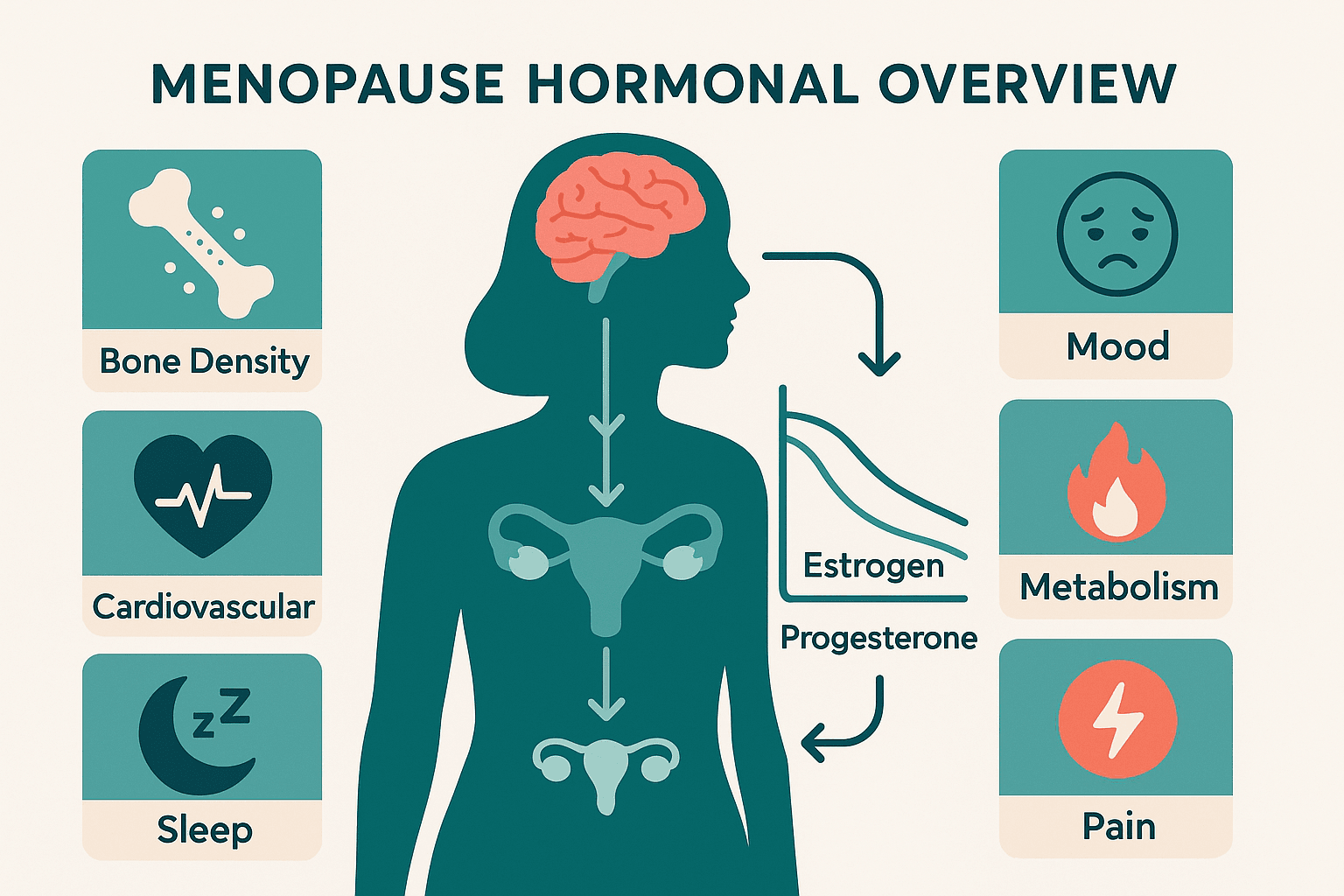
The central hormonal change is the decline of estrogen (particularly estradiol) and progesterone. These hormones affect virtually every system in the body — which is why the symptoms of menopause are so widespread.
Treatments at Wellness Place
Wellness Place’s multi-disciplinary team is uniquely suited to menopause care — because menopause affects the whole body, and optimal management draws on naturopathic medicine, physiotherapy, chiropractic, and pelvic floor physiotherapy working together.
Naturopathic Medicine
The naturopathic approach to menopause is the cornerstone of care at Wellness Place, addressing the hormonal, metabolic, sleep, and mood dimensions of the transition:
Bioidentical hormone support: Natural, plant-derived hormones bioidentical to the body’s own estradiol and progesterone can be used under careful monitoring to address vasomotor symptoms, sleep, mood, and genitourinary changes. Your naturopathic doctor will assess your individual risk profile and health history to guide this decision.
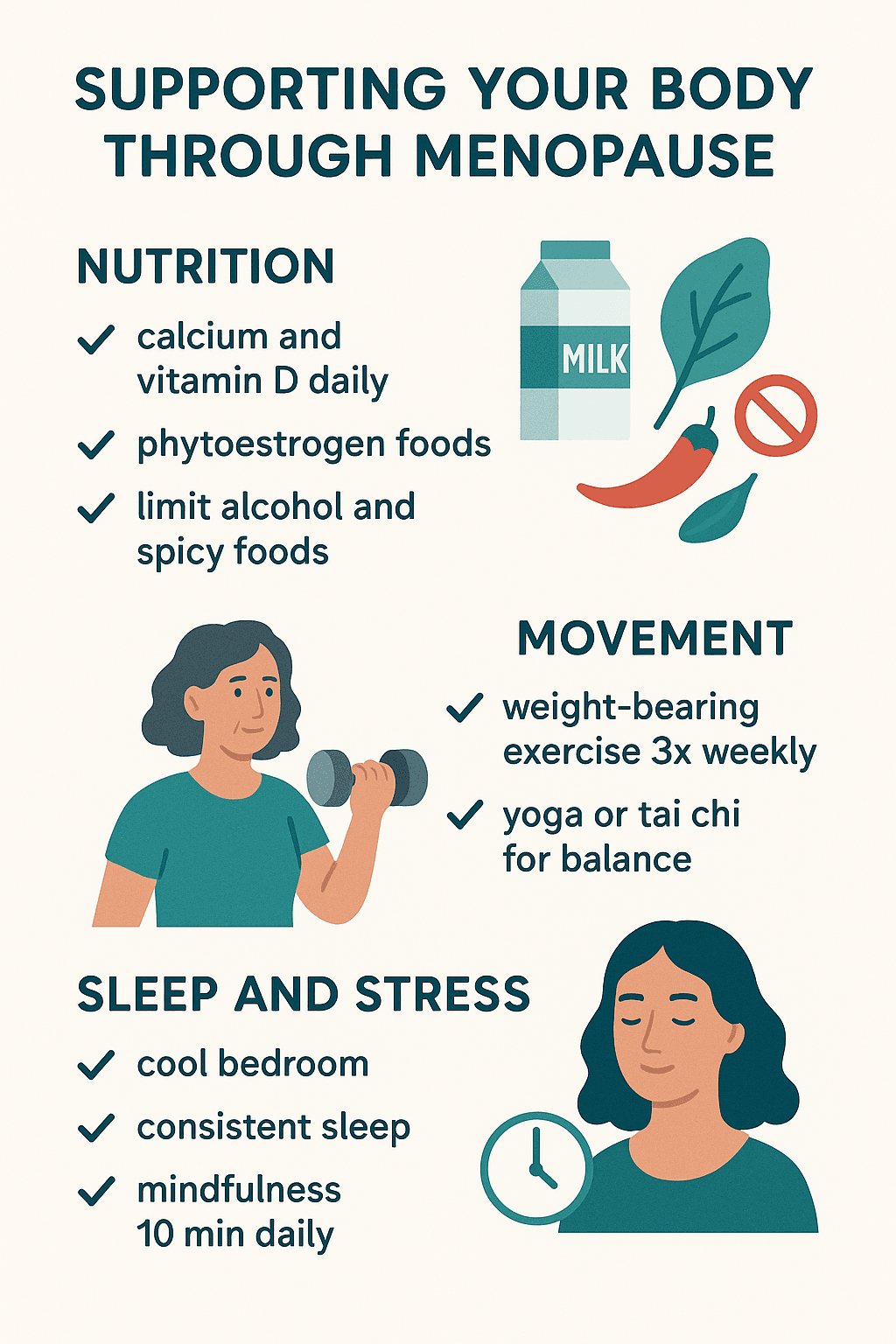
Phytoestrogens: Plant compounds with weak estrogenic activity — found in soy, flaxseed, and specific botanical preparations. Evidence supports modest reduction in hot flash frequency and severity.
Black Cohosh (Actaea racemosa): One of the best-studied herbs for menopause, with evidence for hot flash and mood symptom reduction.
Maca root: Adaptogenic herb with evidence for reducing menopause symptoms including hot flashes, sleep disruption, and low mood — through neuroendocrine mechanisms rather than direct estrogenic activity.
Magnesium: Supports sleep, mood, bone density, and reduces hot flash frequency.
Omega-3 fatty acids: Anti-inflammatory support for joint pain, cardiovascular health, and mood.
Vitamin D and calcium: Essential for bone health during the period of peak bone loss.
Sleep optimization: A comprehensive naturopathic sleep protocol addressing insomnia from the hormonal, neurological, and lifestyle angles — melatonin, adaptogens, sleep hygiene, and targeted hormone support.
Cardiovascular and metabolic health: Estrogen has cardioprotective effects; its decline increases cardiovascular risk. Naturopathic assessment and management of lipid profiles, blood pressure, blood sugar, and inflammatory markers addresses these risks proactively.
Physiotherapy
Joint pain and stiffness: Estrogen loss accelerates joint inflammation and muscle deconditioning. Physiotherapy provides targeted exercise therapy for the joints most affected by menopause — hands, knees, hips, and spine.
Bone health: Progressive resistance training is the most effective non-pharmacological intervention for preventing the bone density loss of menopause. Your physiotherapist will design a weight-bearing and strength program calibrated to your current fitness level and bone density.
Exercise and cardiovascular fitness: Regular aerobic exercise reduces hot flash frequency and severity, supports weight management, improves sleep, and reduces cardiovascular risk. Physiotherapy guidance helps you exercise safely and effectively through the transition.
Chiropractic
The musculoskeletal changes of menopause — joint stiffness, back pain, postural changes from osteopenia — respond well to chiropractic care. Regular joint mobilization and adjustment maintains spinal mobility and reduces the pain and stiffness that can become significant in the post-menopausal years.
Pelvic Floor Physiotherapy
Genitourinary syndrome of menopause (GSM) is one of the most undertreated aspects of menopause — and one of the most effectively managed with pelvic floor physiotherapy:
- Pelvic floor muscle training to address post-menopausal incontinence and prolapse
- Vaginal health management — use of vaginal moisturizers, lubricants, and in some cases vaginal estrogen (discussed with your naturopath or GP)
- Scar tissue and pelvic floor remodelling if previous pelvic trauma or surgery is involved
Frequently Asked Questions
Are my symptoms perimenopause or something else?
Many menopause symptoms (particularly mood changes, fatigue, brain fog, sleep disruption) overlap with thyroid disease, anaemia, anxiety disorders, and other conditions. A thorough assessment — including hormonal and metabolic blood work — is valuable to confirm that the symptom picture is menopause-driven before attributing everything to the transition.
Do I have to take hormone therapy?
No — hormone therapy (whether conventional or bioidentical) is a choice, not a requirement. For women with severe symptoms, it is often transformative. For women with contraindications or who prefer non-hormonal approaches, excellent results are achievable through the naturopathic toolkit. Your naturopathic doctor will discuss the full range of options and your individual risk profile.
How long does menopause last?
Perimenopause typically lasts 4–8 years. Hot flashes and some symptoms peak around the time of the final period and gradually diminish over subsequent years for most women — though some women have symptoms for 10+ years. Genitourinary symptoms (vaginal dryness, urinary changes) may persist indefinitely without treatment, but are very effectively managed.
Will I gain weight during menopause?
Many women gain weight during the menopause transition — partly from hormonal changes that favour abdominal fat accumulation, and partly from age-related muscle loss. The metabolic shift is real, but manageable: progressive strength training, adequate protein intake, and addressing sleep and stress are the most evidence-based strategies.
For patient education only. Not medical advice.