
Depression: More Than Sadness — and More Treatable Than You Think
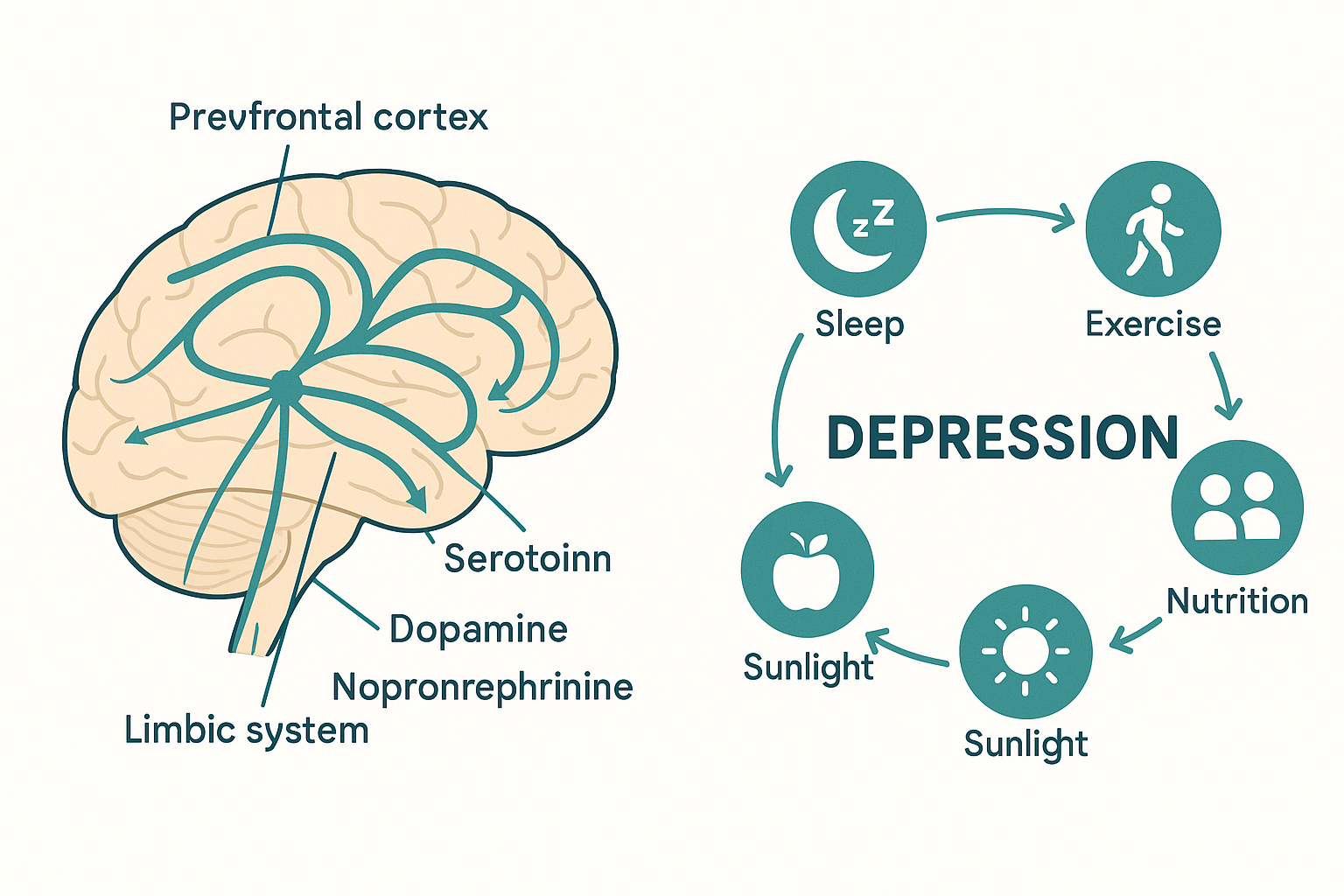
What Is Depression?
Major Depressive Disorder (MDD) is characterized by persistent low mood, loss of interest or pleasure (anhedonia), and a range of cognitive, physical, and emotional symptoms lasting at least two weeks and significantly impairing daily functioning.
The biology of depression is far more complex than the old “low serotonin” explanation. Current models recognize depression as involving:
- Dysregulation of multiple neurotransmitters — serotonin, dopamine, norepinephrine, and GABA
- HPA axis dysregulation — chronic stress elevates cortisol, which is neurotoxic to the hippocampus (the brain’s memory and mood centre)
- Neuroinflammation — elevated inflammatory cytokines (IL-6, TNF-α, CRP) are consistently found in depression and may drive it
- Reduced neuroplasticity — decreased BDNF (brain-derived neurotrophic factor), impairing the brain’s ability to form new connections
- Gut-brain axis disruption — dysbiotic gut microbiome alters serotonin production and vagal signalling to the brain
- Hormonal factors — thyroid dysfunction, sex hormone imbalance, and insulin resistance all contribute to depression
Symptoms of Depression
Depression is not only about mood — it affects the whole person:
Emotional: Persistent sadness, emptiness, or hopelessness; loss of interest in previously enjoyed activities; feelings of worthlessness or excessive guilt; difficulty experiencing positive emotions
Cognitive: Difficulty concentrating, making decisions, or remembering things; negative thinking patterns; in severe cases, thoughts of death or suicide
Physical: Fatigue and low energy; changes in sleep (insomnia or excessive sleeping); appetite changes and weight shifts; psychomotor slowing (moving and speaking more slowly); unexplained aches and pains
Social: Withdrawal from relationships; reduced work or academic performance; loss of interest in social activities
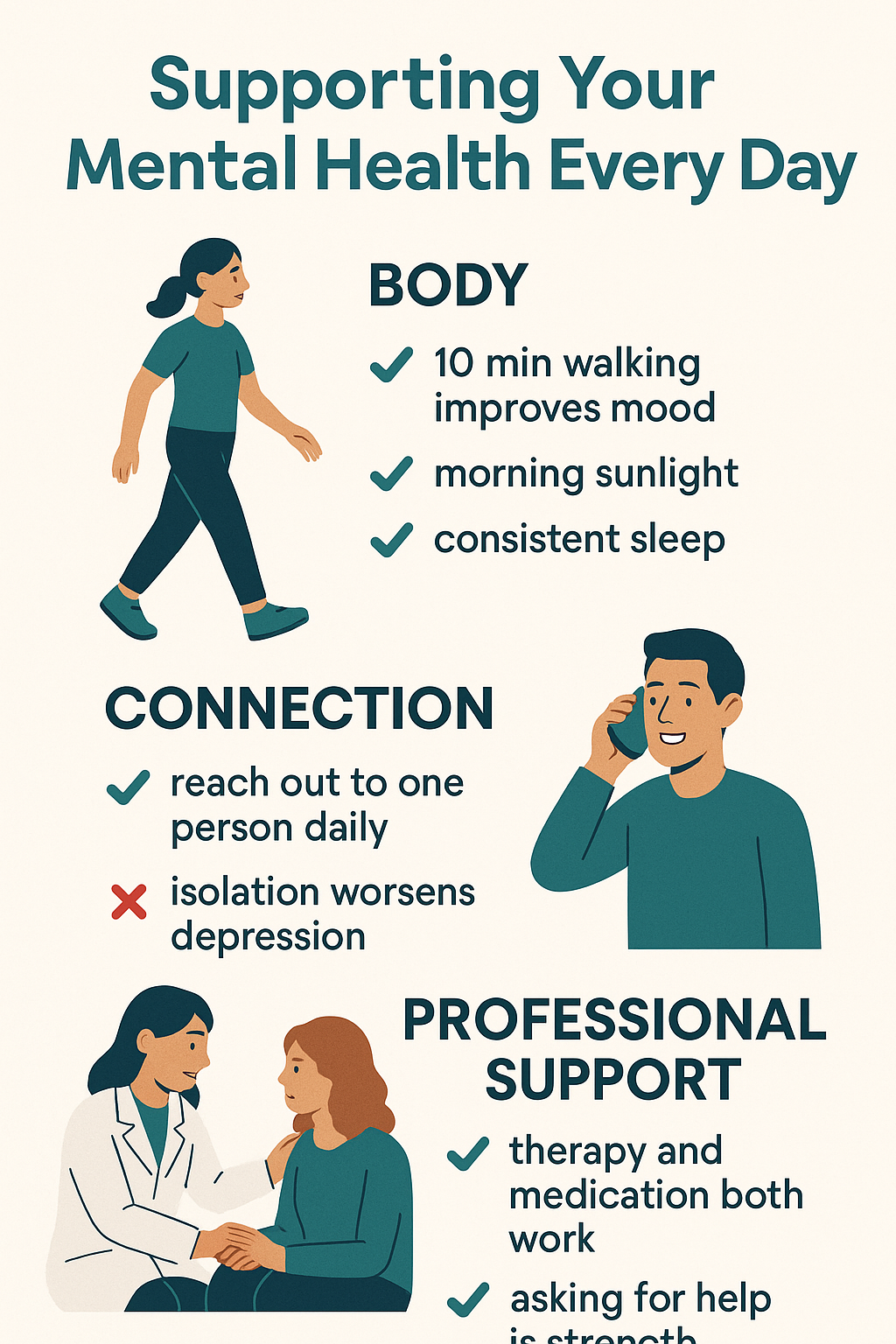
Self-Care for Depression
Exercise — the Most Powerful Non-Pharmacological Intervention
Multiple meta-analyses confirm that regular aerobic exercise reduces depression scores comparably to antidepressant medication. 30 minutes of moderate exercise (brisk walking, cycling, swimming) 3–5 days per week produces measurable antidepressant effects within 4 weeks. Exercise increases BDNF, serotonin, dopamine, and endorphins — addressing multiple biological mechanisms simultaneously.
The challenge with depression is that motivation to exercise is one of the first casualties. Start small: a 10-minute walk outside counts. Accumulate gradually.
Consistent Sleep Schedule
Depression disrupts sleep; sleep disruption worsens depression — a bidirectional relationship. Consistent sleep and wake times, even on weekends, are among the most powerful regulators of circadian biology and mood. See the dedicated Insomnia article.
Light Exposure
Morning sunlight exposure (even on overcast days) resets circadian rhythms and suppresses melatonin — critical for depression, especially SAD. 20–30 minutes outside within 2 hours of waking has measurable effects on mood and energy. Light therapy (10,000 lux lamp for 20–30 min/morning) is effective for SAD and may benefit non-seasonal depression.
Social Connection
Depression drives withdrawal; withdrawal deepens depression. Maintaining at least one meaningful social contact daily — even brief — is protective. Depression lies when it says isolation is what you need.
Anti-Inflammatory Diet
The “dietary inflammatory index” predicts depression risk — diets high in processed foods, refined sugars, and omega-6 oils promote neuroinflammation. A Mediterranean-pattern diet (whole foods, vegetables, olive oil, oily fish, legumes) has demonstrated anti-depressant effects in a landmark RCT (the SMILES trial, 2017).
Frequently Asked Questions
Is depression “just” a serotonin deficiency?
No — this is an outdated model. Current understanding recognizes depression as involving multiple biological systems: neurotransmitters (not just serotonin), inflammatory pathways, hormonal disruption, gut-brain axis, and impaired neuroplasticity. This is why different people respond to different treatments — depression has multiple biological subtypes.
Can supplements really treat depression?
For mild-to-moderate depression, evidence-based supplements (omega-3 EPA, vitamin D, saffron, St. John’s Wort) have RCT support comparable to medication. For moderate-to-severe depression, they are more effective as adjuncts to standard treatment. A naturopathic doctor can assess which approaches are most likely to be effective for your specific biological picture.
How does gut health affect depression?
Profoundly. The gut produces ~90% of the body’s serotonin. Gut bacteria communicate with the brain via the vagus nerve and immune system. Dysbiotic gut flora alter neurotransmitter production, increase systemic inflammation (which drives neuroinflammation), and impair the gut-brain axis. Healing the gut is often an overlooked but high-impact intervention for mood.
For patient education only. Not medical advice.