
Chronic Fatigue: When Tiredness Doesn’t Lift With Rest
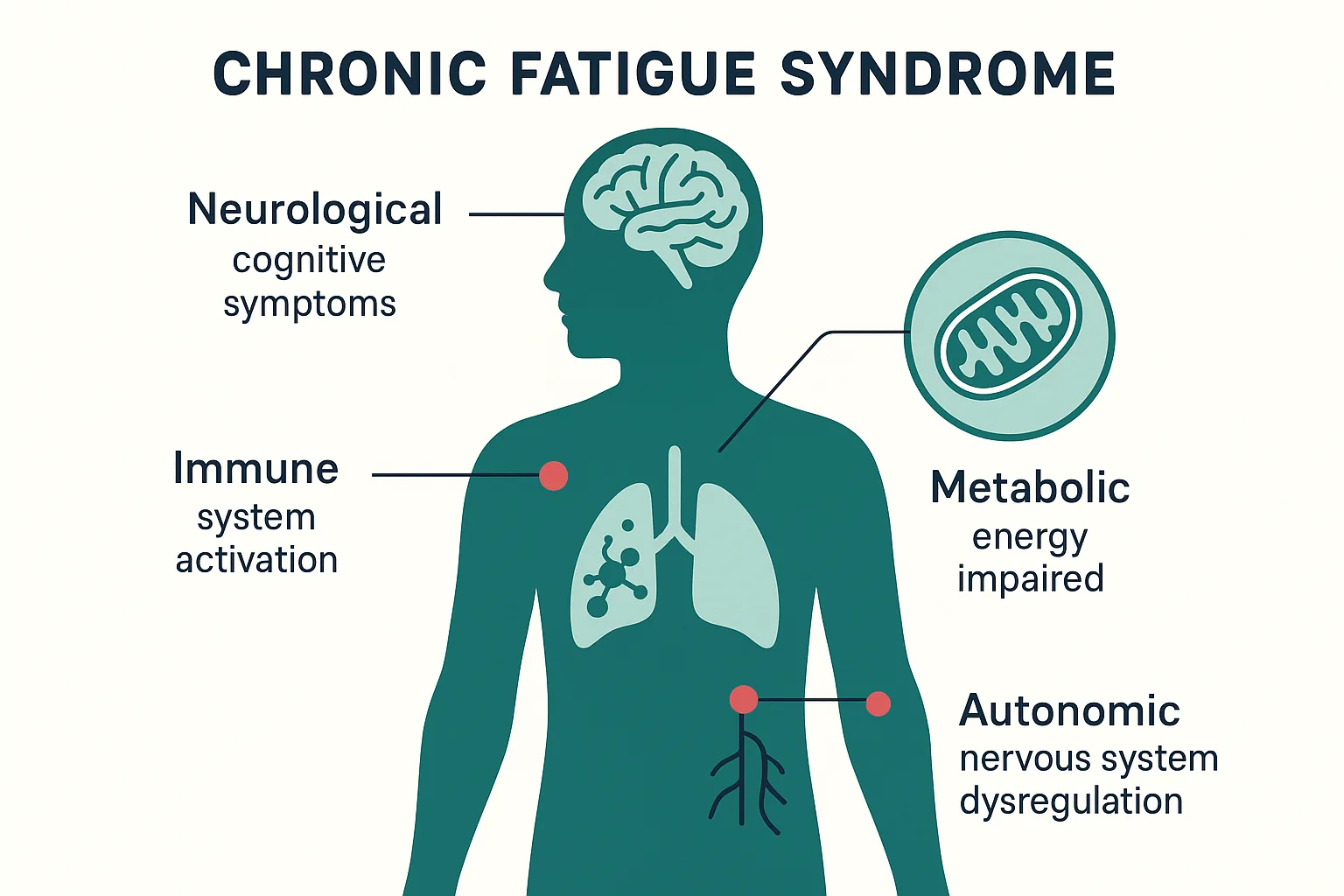
Understanding Fatigue: Not All Fatigue Is the Same
Fatigue is a symptom, not a diagnosis. Different types of fatigue have different causes — and treatments — so accurate assessment is essential:
Physiological fatigue: Normal response to exertion, stress, or sleep loss — resolves with rest. Not pathological.
Functional fatigue: Persistent fatigue driven by identifiable, correctable factors — iron deficiency, thyroid dysfunction, vitamin D deficiency, adrenal dysregulation, poor sleep quality, chronic stress, or suboptimal nutrition. This is the most common category of chronic fatigue and highly responsive to naturopathic treatment.
Post-viral fatigue: Prolonged fatigue following viral illness — including “long COVID” — involving immune dysregulation, mitochondrial impairment, and autonomic dysfunction.
ME/CFS (Myalgic Encephalomyelitis / Chronic Fatigue Syndrome): A severe, debilitating, multi-system illness characterized by post-exertional malaise (symptom worsening after physical or cognitive exertion), cognitive dysfunction, orthostatic intolerance, sleep that doesn’t restore, and immune/neurological abnormalities. This is a distinct medical condition, not simply tiredness.
Treatments at Wellness Place
Naturopathic Medicine
Naturopathic medicine is the primary integrative treatment for chronic fatigue at Wellness Place — offering comprehensive investigation and targeted intervention:
Comprehensive fatigue panel: Your naturopath will order and interpret a thorough panel including: CBC (with red cell indices), ferritin, TIBC, serum iron; thyroid (TSH, free T4, free T3, reverse T3, thyroid antibodies); B12 and folate; vitamin D; cortisol rhythm; fasting glucose and insulin; CRP (inflammation marker); and kidney/liver function. This identifies the correctable contributors that standard testing often misses.
Iron repletion: Optimizing ferritin to 70–100 ng/mL (rather than the bare “normal” minimum) often produces dramatic energy improvement in iron-depleted patients. The form of iron matters — your naturopath will select the preparation best suited to your tolerance and needs.
Thyroid optimization: If thyroid testing reveals subclinical or overt hypothyroidism, or if reverse T3 elevation suggests poor T4-to-T3 conversion (common in chronic stress), naturopathic protocols support thyroid function and conversion. This may include selenium, zinc, iodine, and adaptogenic herbs, or referral to a prescribing physician for thyroid medication.
Mitochondrial support:
– CoQ10 (Ubiquinol): The most important mitochondrial cofactor; production declines with age and is depleted by statin medications. Evidence for fatigue reduction in ME/CFS, fibromyalgia, and heart failure.
– B vitamins (B-complex, particularly B1, B2, B3, B5, B12): Essential cofactors in the Krebs cycle and electron transport chain
– Magnesium: Cofactor for over 300 enzymatic reactions including ATP synthesis
– D-Ribose: A key substrate for ATP regeneration; evidence for fatigue reduction in ME/CFS and fibromyalgia
– L-Carnitine: Transports fatty acids into the mitochondria for energy generation; deficiency associated with fatigue
Adaptogenic herbs: For fatigue driven by HPA axis dysregulation and adrenal burnout:
– Ashwagandha: Reduces cortisol, improves energy, supports thyroid function
– Rhodiola rosea: Particularly effective for mental fatigue, burnout, and physical performance; increases mitochondrial energy production
– Eleuthero: Supports sustained energy and stress resilience
Sleep optimization: A detailed sleep protocol addressing the specific pattern of sleep disruption — see the Insomnia article.
Anti-inflammatory and gut health: Chronic low-grade inflammation and gut dysbiosis are common in post-viral fatigue and ME/CFS. Dietary anti-inflammatory protocols, targeted probiotics, and gut healing support the immune system and reduce the inflammatory burden driving fatigue.
Acupuncture
Acupuncture for chronic fatigue:
- Supports mitochondrial function and cellular energy production through improved tissue oxygenation and blood flow
- Regulates the HPA axis and normalizes cortisol rhythm — addressing adrenal fatigue
- Improves autonomic nervous system balance (addressing the sympathetic overdrive common in chronic fatigue)
- Modulates immune function — supporting resolution of chronic viral reactivation
- Specific evidence for ME/CFS: small but growing body of RCTs showing improvement in fatigue scores, quality of life, and sleep
Points for fatigue management typically include Zusanli (ST36) — the classical “energy point” — along with Guanyuan (CV4), Qihai (CV6), and points to address the specific presentation.
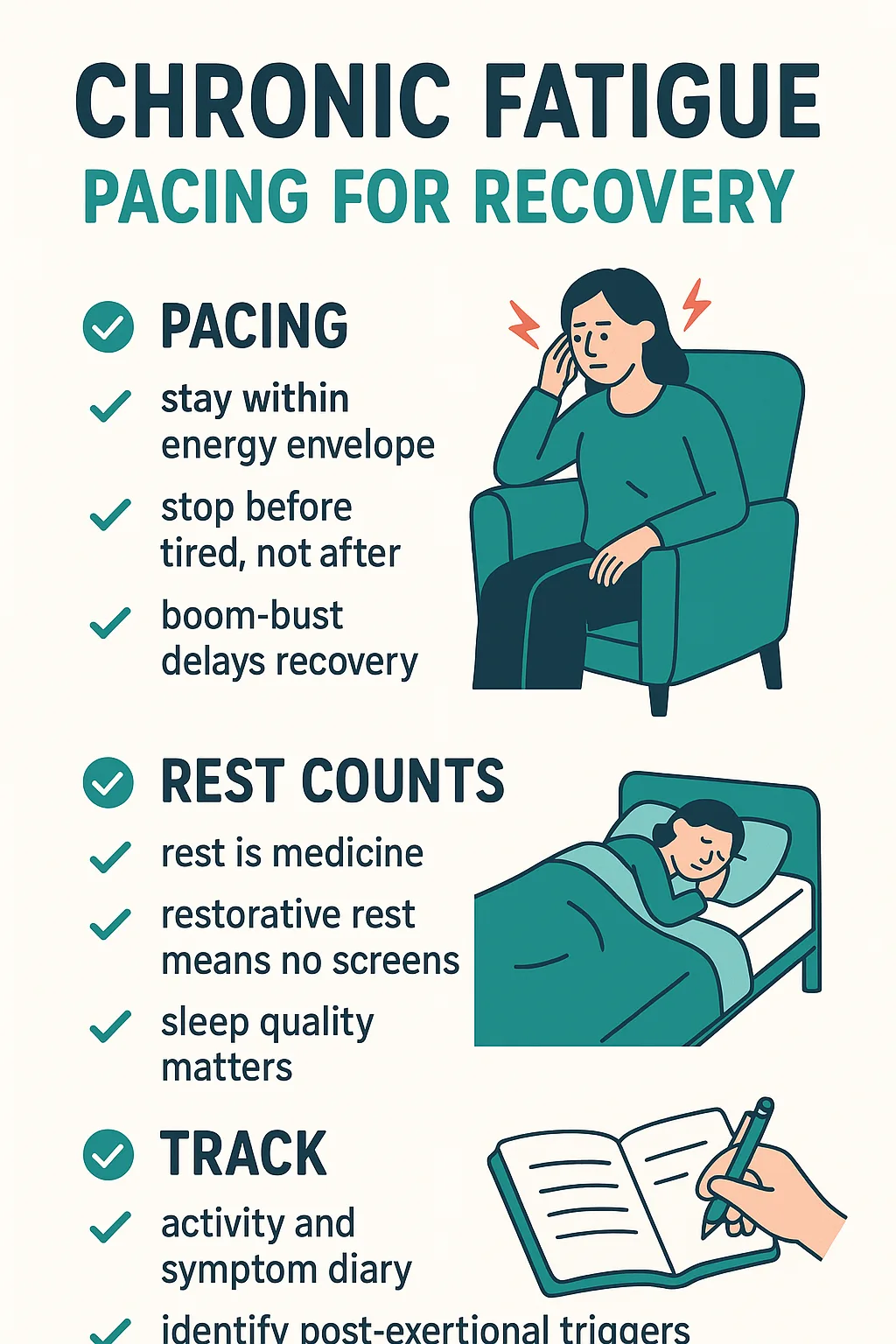
Self-Care for Chronic Fatigue
Pacing
Identify your daily energy limit and consistently stay within it — even on good days. Over-exerting on good days creates post-exertional crashes that set back recovery. Track energy in a simple diary to find your stable baseline.
Optimize Sleep (not just duration — quality)
Address sleep disorders first. A full eight hours of fragmented or unrestorative sleep does not produce the cellular repair of quality sleep. See the Insomnia article.
Anti-Inflammatory Eating
Minimize ultra-processed foods, refined sugars, and omega-6 vegetable oils — all of which promote inflammation that drives fatigue. Prioritize: colourful vegetables, oily fish, olive oil, nuts and seeds, whole grains. Blood sugar stability (regular balanced meals, minimizing refined carbohydrates) prevents the energy crashes of insulin dysregulation.
Hydration
Even mild dehydration significantly worsens fatigue and cognitive function. 1.5–2 litres of water per day as a baseline — more with exercise or heat.
Fatigue Is Not Your Destiny
Chronic fatigue has causes — and when those causes are identified and addressed, energy returns. You don’t have to learn to live with this. Book an appointment →
For patient education only. Not medical advice.