
Fibromyalgia: Understanding Widespread Pain — and Finding Real Relief
What Is Fibromyalgia?
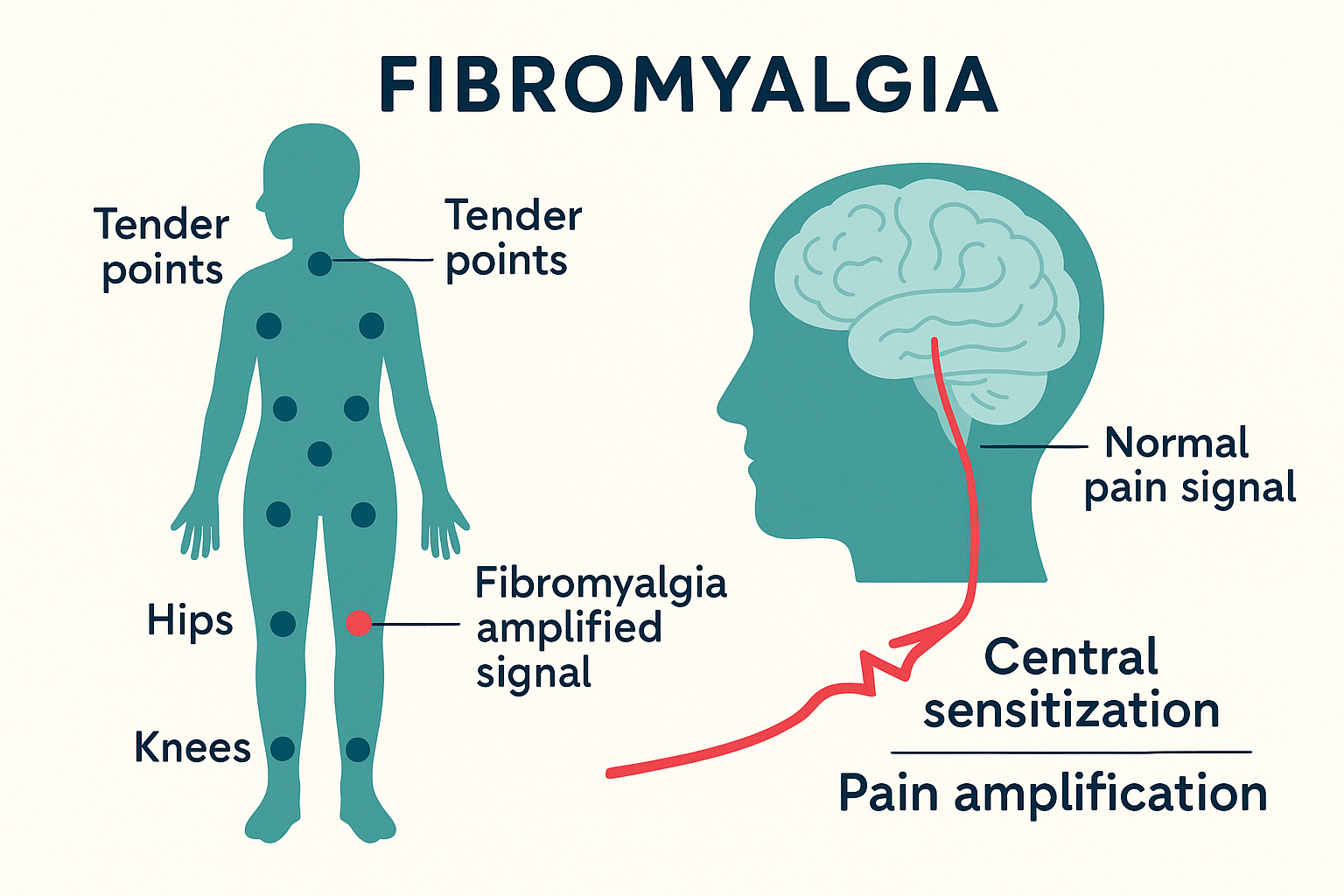
Fibromyalgia is a central sensitization syndrome — a state in which the central nervous system has become dysregulated, amplifying pain signals throughout the body. Think of it as the brain’s pain-processing system stuck in an oversensitive setting: stimuli that would be innocuous in a healthy nervous system are experienced as painful; stimuli that are mildly uncomfortable become severely painful.
Key features:
– Widespread musculoskeletal pain — above and below the waist, on both sides of the body, often migratory and fluctuating
– Fatigue — often profound, unrestorative, and disproportionate to activity
– Sleep disturbance — non-restorative sleep; alpha wave intrusion into deep sleep stages is characteristic
– Cognitive dysfunction — “fibrofog” — difficulty concentrating, memory problems, mental fatigue
– Heightened sensory sensitivity — to pain (hyperalgesia), light, sound, smell, and temperature
Fibromyalgia is not an inflammatory arthritis, not a structural disease, and not detectable on standard blood tests or imaging — which is why it is so often dismissed after “normal” results.
Diagnosis
The 2016 fibromyalgia diagnostic criteria (American College of Rheumatology) require:
1. Widespread pain index (WPI) ≥ 7 and symptom severity scale (SSS) ≥ 5, OR WPI 4–6 and SSS ≥ 9
2. Widespread pain in at least 4 of 5 regions (bilateral upper body, bilateral lower body, axial)
3. Symptoms present at similar level for ≥ 3 months
4. No other disorder that better explains the symptoms
The older “tender point” criteria are no longer used — fibromyalgia is now recognized as a diffuse pain condition, not a localized tender-point disorder.
Self-Care for Fibromyalgia
Gentle, Consistent Movement
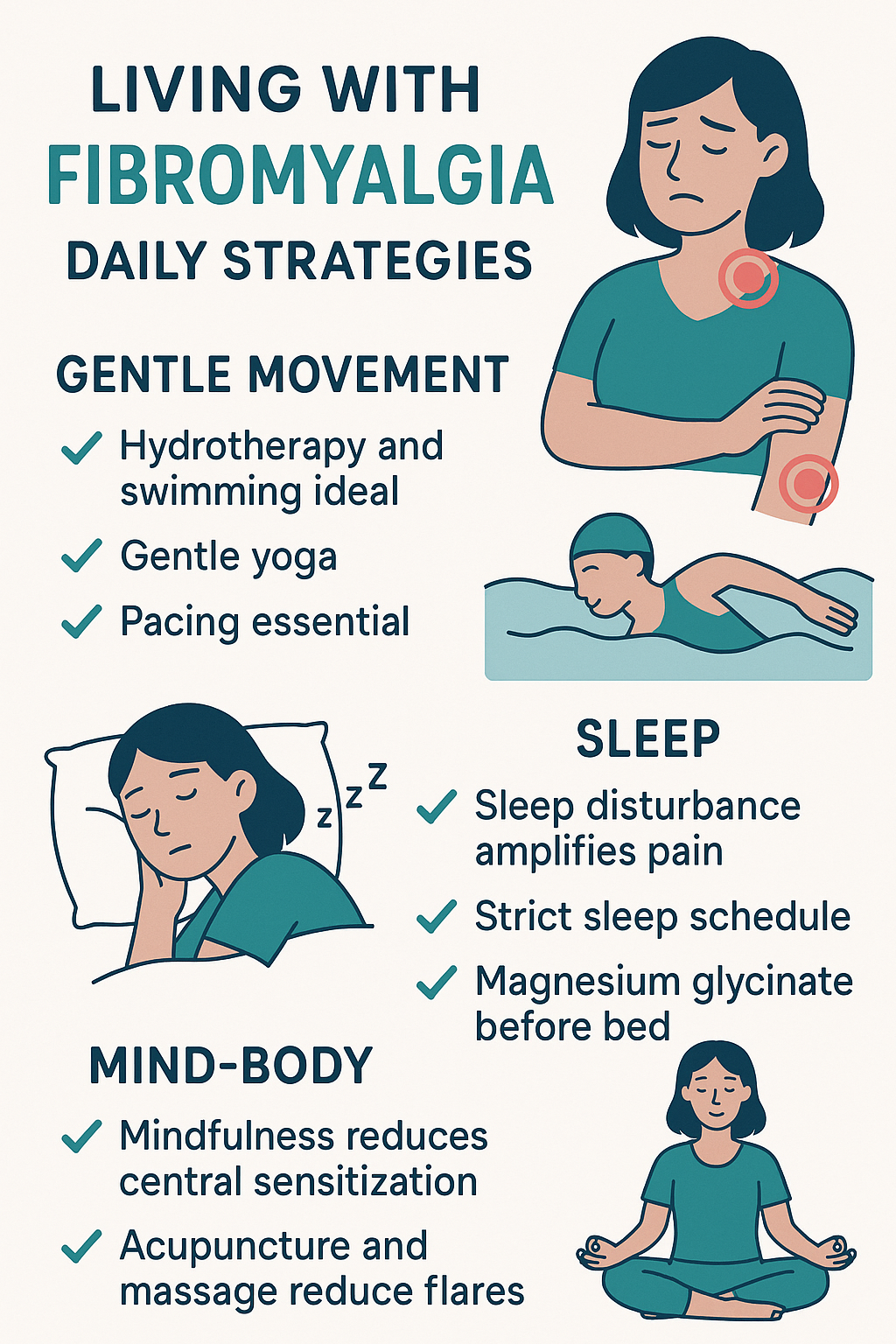
The research is clear: physical inactivity worsens fibromyalgia. But starting too intensely causes flares. The key is starting well below your limit — 10 minutes of gentle walking daily — and adding 1–2 minutes every week or two. Consistency matters more than intensity. Warm water walking, tai chi, and yoga are particularly well-tolerated.
Sleep Hygiene
Prioritize sleep above almost everything else. Consistent sleep and wake times, cool and dark bedroom, magnesium before bed, and addressing any sleep disorders. See the Insomnia article for a complete protocol.
Stress and Nervous System Regulation
The same central sensitization that amplifies pain also amplifies the stress response. Daily parasympathetic practices — even 10 minutes — reduce overall nervous system activation. Yoga nidra, slow breathing, body scan meditation, and time in nature are effective.
Heat
Local heat application (heating pad, warm bath) directly reduces muscle tension and pain sensitivity. A warm bath or shower in the evening is both practically helpful and supports sleep onset.
Pacing
Alternating activity and rest — not pushing through to depletion and then crashing — is essential. The “boom-bust” cycle (overdo → flare → rest → overdo) perpetuates fibromyalgia. Learn your tolerance window and stay within it consistently.
Your Pain Is Real — and Manageable
Fibromyalgia is not imaginary, not “just stress,” and not a life sentence. With the right combination of support, meaningful recovery is possible. Book an appointment →
For patient education only. Not medical advice.