Muscle Tension: When Your Body Holds Its Breath
Why Muscles Become Chronically Tense
Muscles tighten for reasons beyond physical strain:
Protective guarding: After injury, muscles tighten to protect the injured area — a normal acute response. When this persists beyond the acute phase, it becomes a source of chronic pain and restriction in itself.
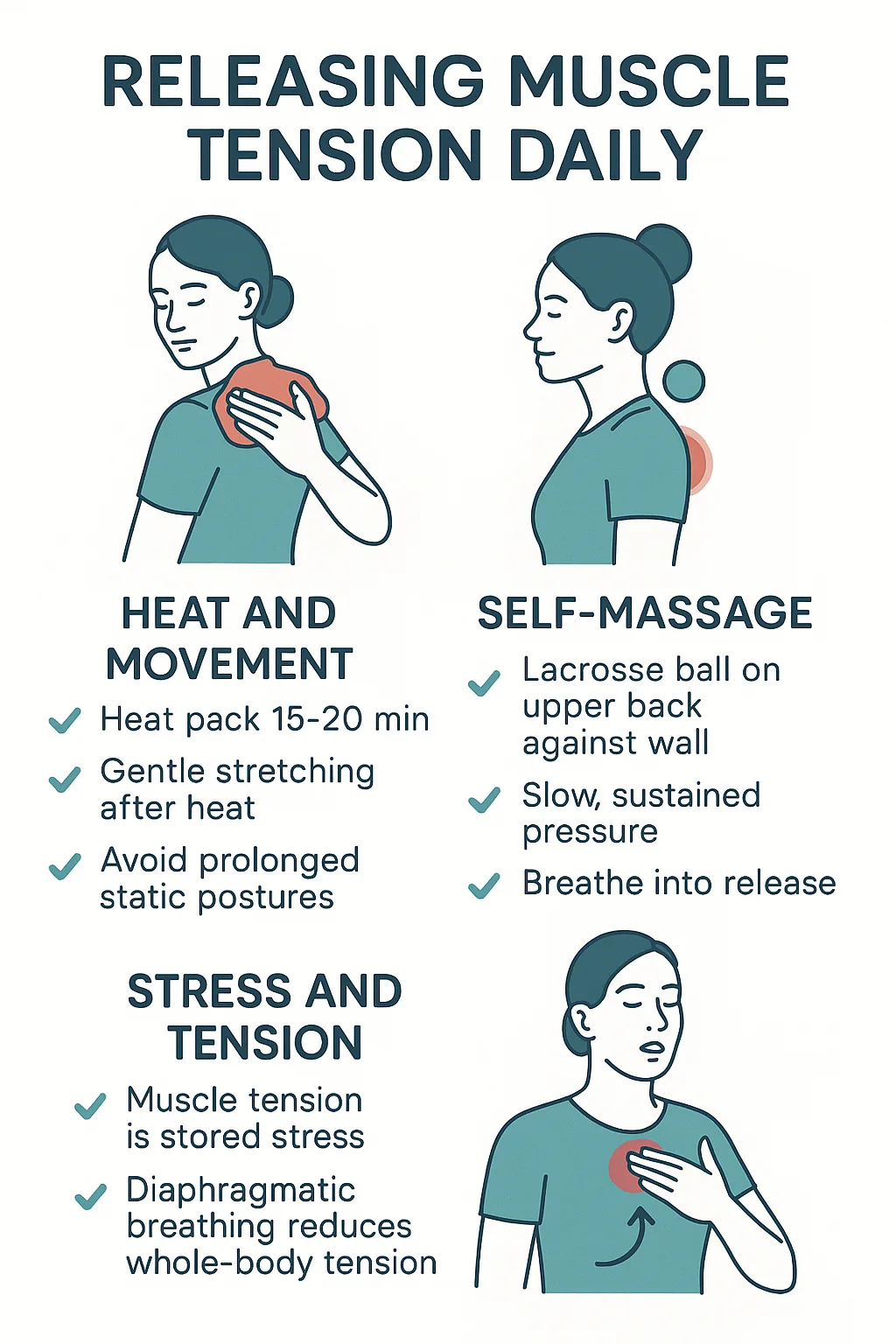
Stress and the nervous system: The sympathetic nervous system (“fight or flight”) triggers muscle tension as part of the threat-response preparation. Chronic stress means chronic sympathetic activation — and chronically elevated resting muscle tone. The trapezius (neck and shoulder), masseter (jaw), and pelvic floor are particularly vulnerable stress-holding muscles.
Postural patterns: Sustained postures — sitting at a desk for hours, forward head position, asymmetric repetitive movements — create predictable patterns of muscular overuse, shortening, and tension.
Central sensitization: In chronic pain conditions, the nervous system amplifies pain signals — and the muscles respond to this amplified input with increased tension, which becomes a self-perpetuating cycle.
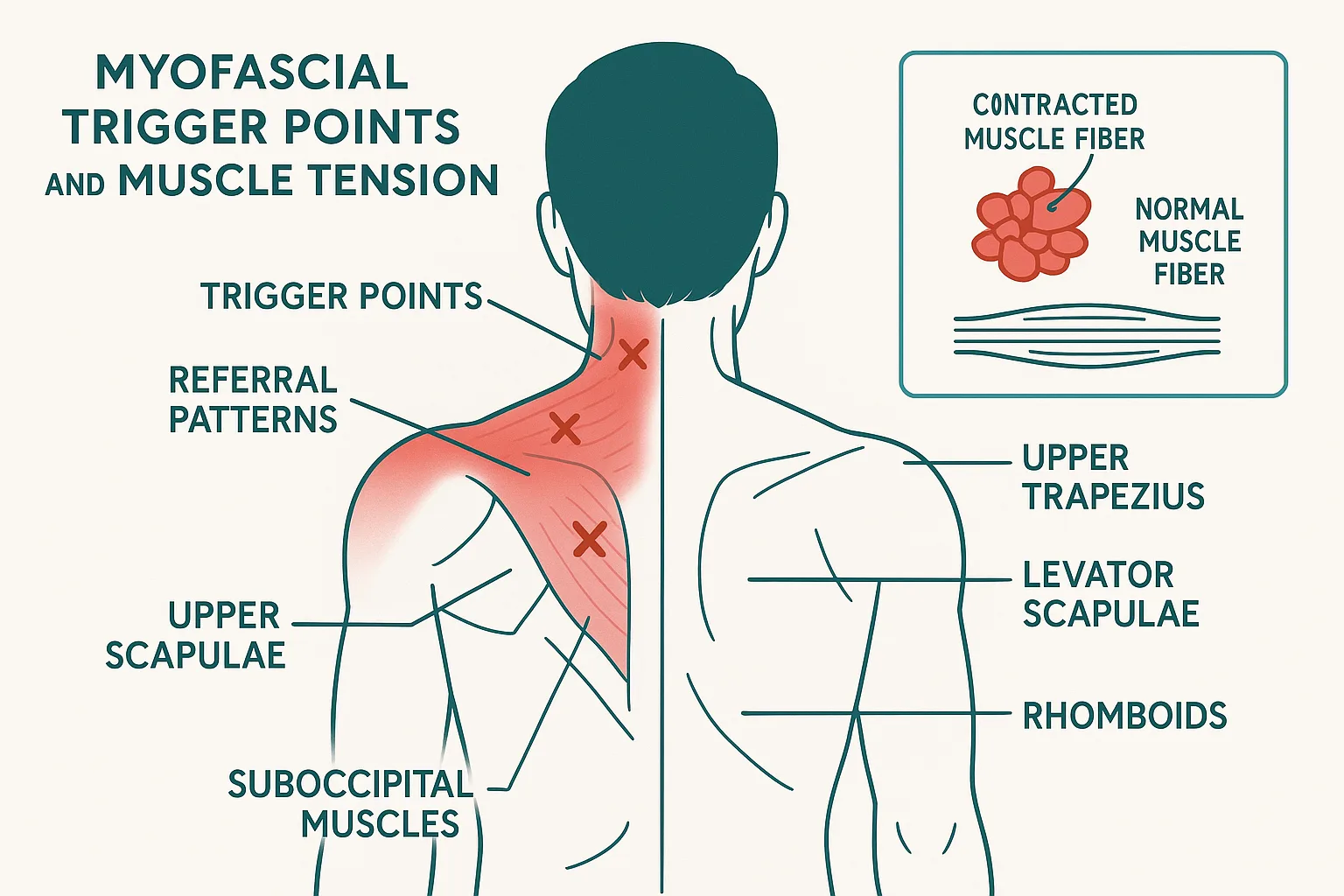
Trigger points: Myofascial trigger points are hyperirritable spots in a muscle — palpable nodules within a taut band that produce local and referred pain when compressed. The referred pain patterns of trigger points are predictable: trigger points in the upper trapezius refer pain up the neck and into the head; sub-occipital trigger points produce tension-type headache; gluteal trigger points refer into the leg mimicking sciatica.
Treatments at Wellness Place
Massage Therapy (RMT)
Registered massage therapy is the most direct treatment for muscle tension, addressing it at the tissue level:
- Therapeutic massage: Systematic work on hypertonic muscles reduces resting muscle tone through mechanical elongation, neurological inhibition, and circulation enhancement. Your RMT adapts pressure and technique to your specific presentation.
- Trigger point release: Sustained compression of active trigger points — followed by passive lengthening — reduces trigger point irritability and the referred pain patterns they generate
- Myofascial release: Slow, sustained pressure into fascial (connective tissue) restrictions allows the connective tissue surrounding muscles to lengthen — addressing the structural component of chronic tension
- Specific work for jaw tension: RMTs trained in TMJ work can address masseter, temporalis, and pterygoid tension — providing significant relief from headaches and jaw pain
Frequency: once or twice a month for maintenance; more frequently during acute tension episodes or when addressing a chronic pattern.
Physiotherapy
Physiotherapy addresses the underlying movement dysfunctions that cause and perpetuate muscle tension:
- Assessment of muscle imbalance: Identifying which muscles are overactive (hypertonic, shortened) and which are underactive (inhibited, lengthened) guides a targeted rehabilitation approach
- Therapeutic exercise: Strengthening inhibited muscles removes the compensatory overuse pattern from the tense muscles — often producing more lasting relief than manual therapy alone
- Manual therapy: Soft tissue mobilization, instrument-assisted soft tissue mobilization (IASTM), and dry needling within physiotherapy scope
- Posture and ergonomics: A physiotherapist will assess and correct the postural habits and workstation setup that perpetuate tension patterns
Acupuncture
Acupuncture is highly effective for muscle tension and trigger point pain:
- Dry needling (acupuncture-style needling of trigger points): The needle inserted into an active trigger point produces a characteristic local twitch response — this involuntary muscle contraction followed by relaxation is both diagnostic and therapeutic. Studies confirm dry needling reduces trigger point irritability and referred pain.
- Systemic acupuncture reduces sympathetic nervous system tone — addressing the neurological driver of tension in stress-related presentations
- Promotes local blood flow and oxygenation — addressing the ischemia (reduced blood flow) that perpetuates trigger point activity
- Reduces prostaglandins and substance P at the local level — anti-inflammatory and pain-reducing effects
Chiropractic
Chiropractic care addresses the joint dysfunction that often underlies and perpetuates regional muscle tension:
- Restricted facet joint mobility in the cervical or thoracic spine reflexively drives protective muscle tension in the surrounding muscles — joint mobilization/adjustment restores mobility and reduces the muscular guarding
- Specific work for the cervicothoracic junction (a common source of tension headaches), thoracic kyphosis correction, and sacroiliac joint dysfunction
- Combines joint mobilization with soft tissue techniques and corrective exercise
Frequently Asked Questions
Is stretching enough to release chronic tension?
Stretching addresses the shortened tissue component but rarely resolves trigger points or the neurological drivers of tension. Most people with chronic tension need a combination of manual therapy (massage, dry needling, or chiropractic) to address the established patterns, targeted exercise to restore muscle balance, and lifestyle modification to address the underlying drivers.
Why does my tension always come back?
Because the causes are still present. Tension is the body’s response to something — repetitive posture, stress, protective guarding, movement dysfunction. Without addressing the underlying driver, manual therapy provides temporary relief. Lasting improvement requires addressing the cause.
Can stress cause physical muscle tension?
Yes — this is physiological, not psychological. The sympathetic nervous system directly increases resting motor neuron firing rate, elevating baseline muscle tension. The trapezius and jaw are particularly responsive to emotional stress. Treating the physical tension without addressing the stress is a partial solution.
For patient education only. Not medical advice.