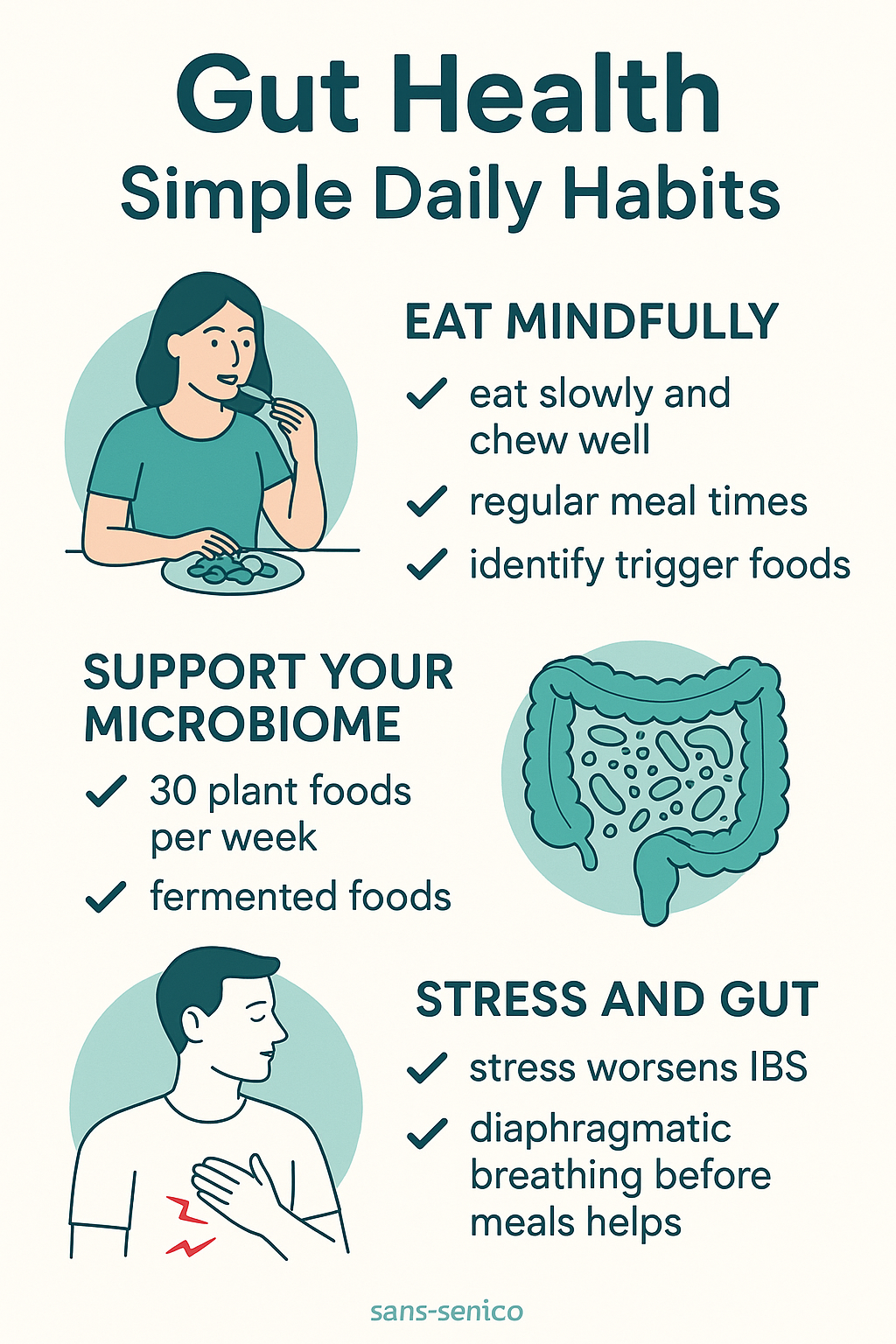
Digestive Issues: When Your Gut Isn’t Working the Way It Should
Medically reviewed by Dr. Tatsiana Vovk, ND, Licensed Naturopathic Doctor · Last reviewed May 26, 2026
The Gut’s Many Roles
Understanding why digestive health is central to overall health requires appreciating the gut’s functions beyond digestion:
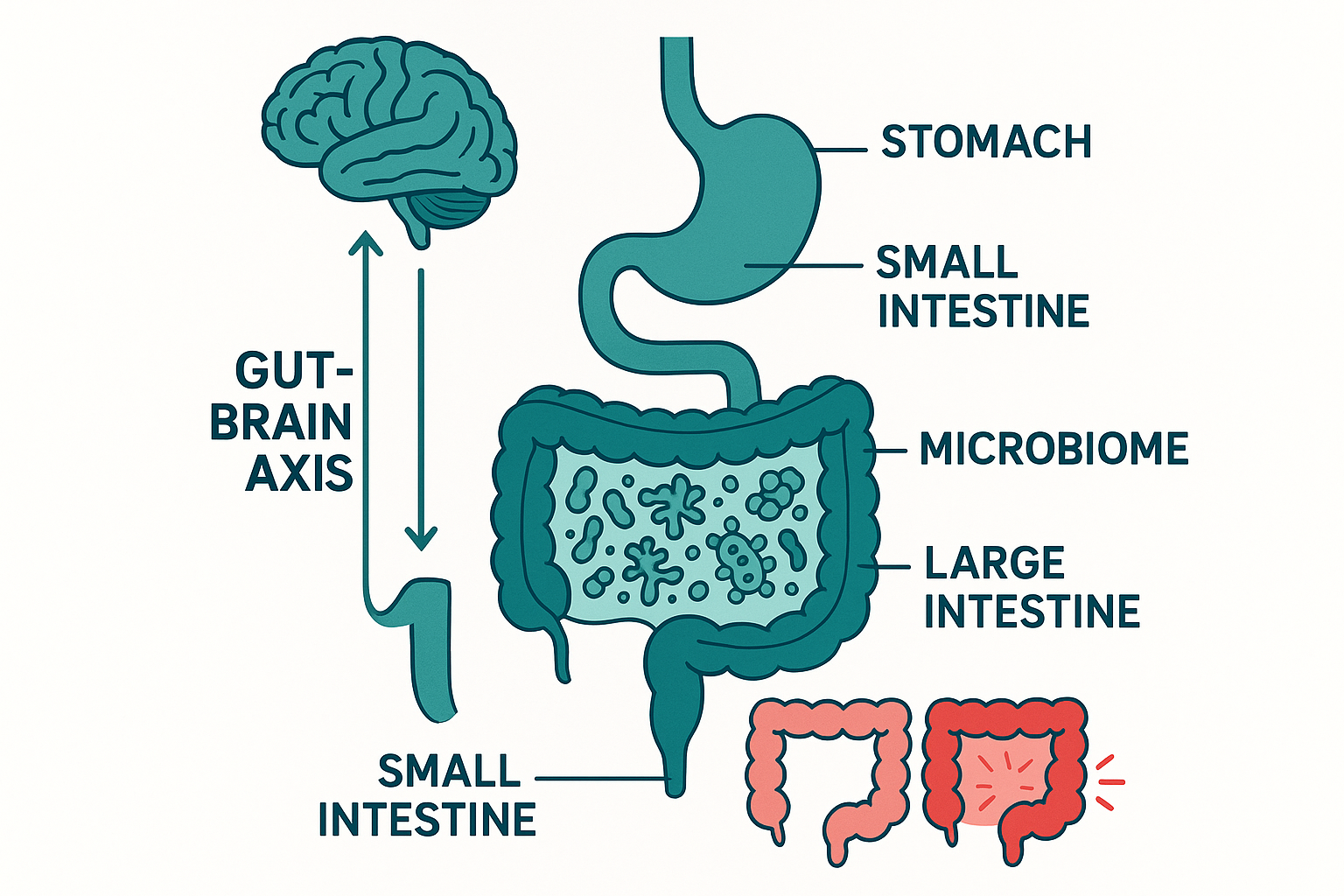
Immune system: Approximately 70% of the immune system resides in the gut — in the gut-associated lymphoid tissue (GALT). The gut microbiome educates the immune system, regulates inflammatory responses, and protects against pathogens. Dysbiosis (microbial imbalance) drives systemic inflammation.
Neurotransmitter production: The gut produces 90% of the body’s serotonin, significant amounts of GABA, and dozens of neuroactive compounds. The gut communicates with the brain via the vagus nerve (the gut-brain axis) — bidirectionally. Gut dysbiosis contributes to anxiety, depression, and cognitive impairment.
Nutrient absorption: Even a good diet cannot overcome poor absorption. Intestinal inflammation, low stomach acid, pancreatic enzyme insufficiency, and dysbiosis all impair the absorption of essential nutrients — producing deficiencies despite adequate intake.
Hormonal metabolism: Estrogen is deconjugated and reabsorbed from the gut — high beta-glucuronidase activity from dysbiotic bacteria recirculates estrogen rather than allowing its excretion, contributing to estrogen dominance.
Treatments at Wellness Place
Naturopathic Medicine
Naturopathic medicine offers the most comprehensive approach to digestive disorders at Wellness Place — identifying root causes and addressing the full complexity of gut function:
Comprehensive gut assessment: Your naturopath will investigate your specific presentation with appropriate testing: hydrogen/methane breath testing for SIBO, comprehensive stool analysis (microbiome composition, markers of inflammation, digestive function), food sensitivity testing, and assessment of stomach acid and pancreatic enzyme adequacy.
The 5R Protocol — Naturopathic Gut Healing:
– Remove: Identify and eliminate dysbiotic organisms (SIBO, pathogenic bacteria, parasites, Candida), inflammatory foods, and dietary triggers
– Replace: Support stomach acid production (betaine HCl), digestive enzymes (lipase, protease, amylase), and bile acids for fat digestion
– Re-inoculate: Restore a diverse, beneficial microbiome with targeted probiotics and prebiotic foods/fibre
– Repair: Support the integrity of the intestinal lining with key nutrients (L-glutamine, zinc carnosine, collagen, deglycyrrhizinated licorice (DGL), aloe vera)
– Rebalance: Address the lifestyle, stress, and dietary patterns that created the gut environment — because without this, recovery is temporary
Probiotic therapy: Far more nuanced than the products at the pharmacy. Different strains have different evidence for different conditions: Lactobacillus plantarum and Bifidobacterium infantis for IBS; Saccharomyces boulardii for post-antibiotic dysbiosis and SIBO; specific strains for IBD. Your naturopath will select the appropriate strain combination.
Low FODMAP or other elimination approaches: The low FODMAP diet has the strongest evidence for IBS symptom reduction (70% response rate). An elimination-reintroduction protocol is the most reliable way to identify personal food triggers. Your naturopath will guide this systematically.
Herbal medicine for the gut:
– Deglycyrrhizinated licorice (DGL): Soothes inflamed mucosa; evidence for ulcers and gastritis
– Peppermint oil (enteric-coated): Specific evidence for IBS-D — antispasmodic effect on intestinal smooth muscle
– Slippery elm and marshmallow root: Mucilaginous herbs that coat and soothe the intestinal lining
– Berberine: Antimicrobial alkaloid effective for SIBO, dysbiosis, and IBS-D
– Curcumin: Anti-inflammatory for IBD and gut inflammation; evidence for reducing IBD flare frequency
Stomach acid support: Many cases of reflux, bloating, and early SIBO involve inadequate stomach acid (hypochlorhydria). Betaine HCl supplementation, bitter herbs before meals, and zinc supplementation support appropriate stomach acid production.
Acupuncture
Acupuncture regulates the enteric nervous system — the gut’s “second brain” — via the vagus nerve and central nervous system:
- Reduces visceral hypersensitivity in IBS — measurably reduces the gut’s pain response to normal stretch and pressure
- Improves gut motility — addressing both constipation and diarrhea through bidirectional motility regulation
- Reduces gut inflammation via anti-inflammatory mechanisms
- Reduces the HPA axis activation that triggers and worsens IBS (the gut-brain axis is bidirectional — brain calms gut, gut calms brain)
- Specific evidence for IBS, functional dyspepsia, Crohn’s disease, and nausea
Red Flags — When Digestive Symptoms Require Urgent Investigation
Some presentations require medical assessment before naturopathic treatment:
- Unexplained weight loss with digestive symptoms
- Blood in stool (red or black/tarry)
- Difficulty swallowing or pain with swallowing
- Persistent vomiting
- New digestive symptoms in someone over 50 without prior GI history
- Nocturnal diarrhea (waking from sleep to defecate)
- Fever and severe abdominal pain
A Healthy Gut Changes Everything
When your digestive system is working well, energy improves, mood lifts, immunity strengthens, and the downstream effects on hormones, skin, and brain function become apparent. It is foundational health. Book an appointment →
For patient education only. Not medical advice.