Restless Legs Syndrome: The Urge You Can’t Ignore — and How to Relieve It
Medically reviewed by Dr. Tatsiana Vovk, ND, Licensed Naturopathic Doctor · Last reviewed May 26, 2026
What Is Restless Legs Syndrome?
Restless Legs Syndrome (RLS), also called Willis-Ekbom Disease, is a neurological sensorimotor disorder characterized by:
- An urge to move the legs — usually accompanied by uncomfortable sensations described as crawling, creeping, pulling, throbbing, aching, or itching (rarely actual pain)
- Symptoms that begin or worsen during rest or inactivity — particularly when sitting or lying down
- Partial or complete relief with movement — walking, stretching, or rubbing the legs temporarily relieves the discomfort
- Symptoms that are worse in the evening and at night — with a characteristic circadian pattern
RLS affects approximately 5–10% of the population and is twice as common in women. It is a significant cause of sleep disruption, with consequent fatigue, mood changes, and reduced quality of life.
Periodic Limb Movement Disorder (PLMD) often accompanies RLS — involuntary repetitive leg movements during sleep (every 20–40 seconds) that fragment sleep without the person being fully aware.
Treatments at Wellness Place
Naturopathic Medicine
Naturopathic medicine offers targeted, well-evidenced approaches to RLS:
Iron optimization — the cornerstone of naturopathic RLS treatment:
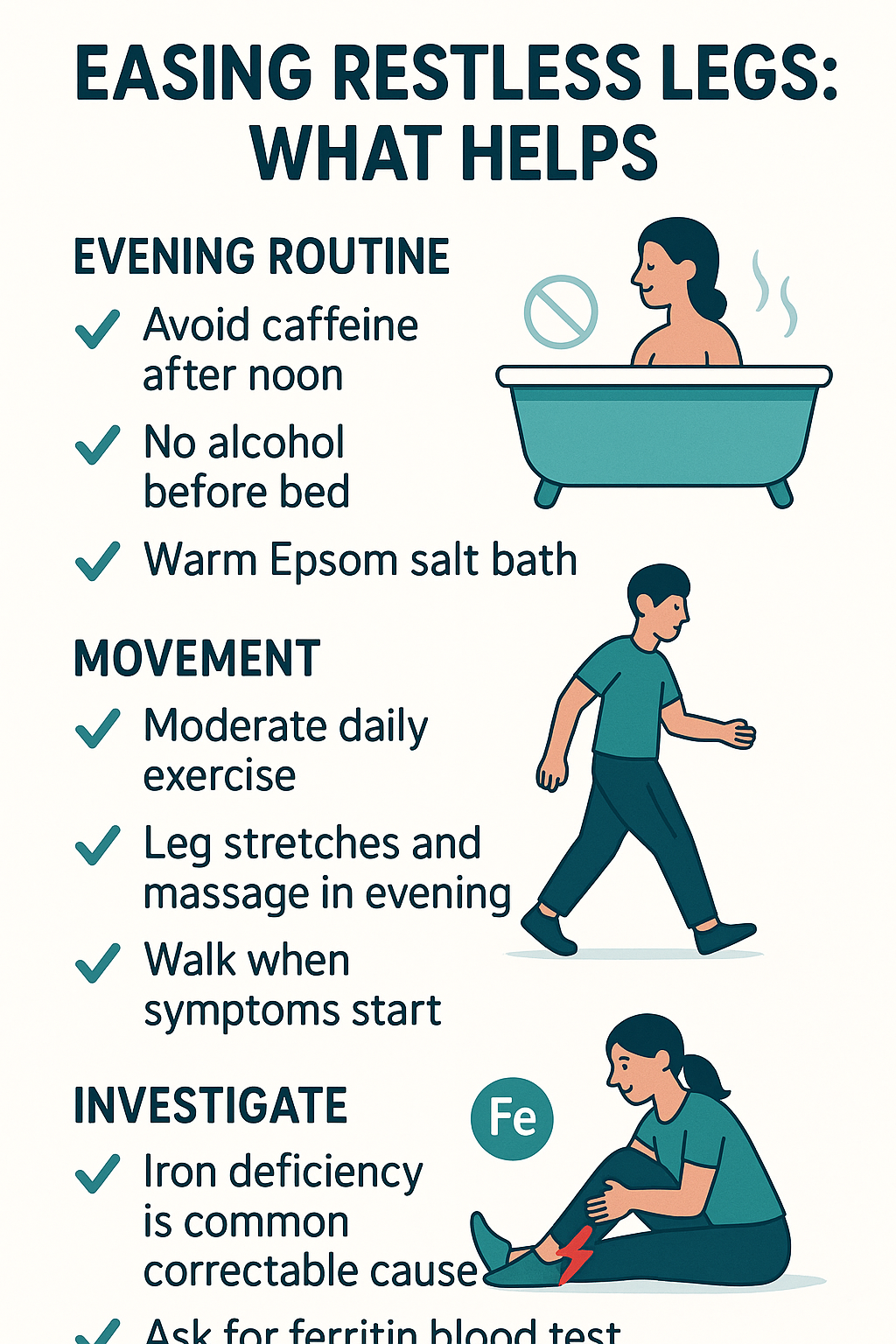
Test ferritin first. If ferritin is below 75 ng/mL (and for symptomatic RLS, consider treating below 100 ng/mL), iron supplementation is the primary intervention. Evidence shows:
– Oral iron supplementation (particularly ferrous bisglycinate, which is well-tolerated) reliably reduces RLS severity scores in iron-deficient patients
– IV iron infusion (referral required) produces the most rapid and dramatic improvement in moderate-to-severe RLS with low ferritin
– Vitamin C (250–500 mg with iron) significantly enhances non-heme iron absorption
Dietary optimization for iron absorption:
– Iron-rich foods: red meat, organ meats, shellfish, lentils, dark leafy greens
– Avoid taking iron with coffee, tea, dairy, or calcium — all significantly impair absorption
– Vitamin C-rich foods alongside plant-source iron enhances absorption
Magnesium glycinate:
Magnesium has neuromuscular relaxing properties and evidence for RLS — particularly for leg cramps and the neuromuscular tension component. 300–400 mg before bed is a safe, well-tolerated first-line supplement. Multiple clinical case series report improvement in RLS with magnesium supplementation.
Folate and B12:
Folate deficiency is associated with RLS — particularly in pregnancy (where folate demands are highest) and in people on anticonvulsant medications that deplete folate. Methylfolate (the active form) is preferred, especially in people with MTHFR variants. B12 deficiency contributes to peripheral neuropathy that worsens RLS-like symptoms.
Vitamin D:
Low vitamin D is more prevalent in RLS patients than controls, and supplementation has produced symptom improvement in several studies. Given the near-universal deficiency in Canadian winters, optimization is a low-risk, potentially high-impact intervention.
Anti-inflammatory approaches:
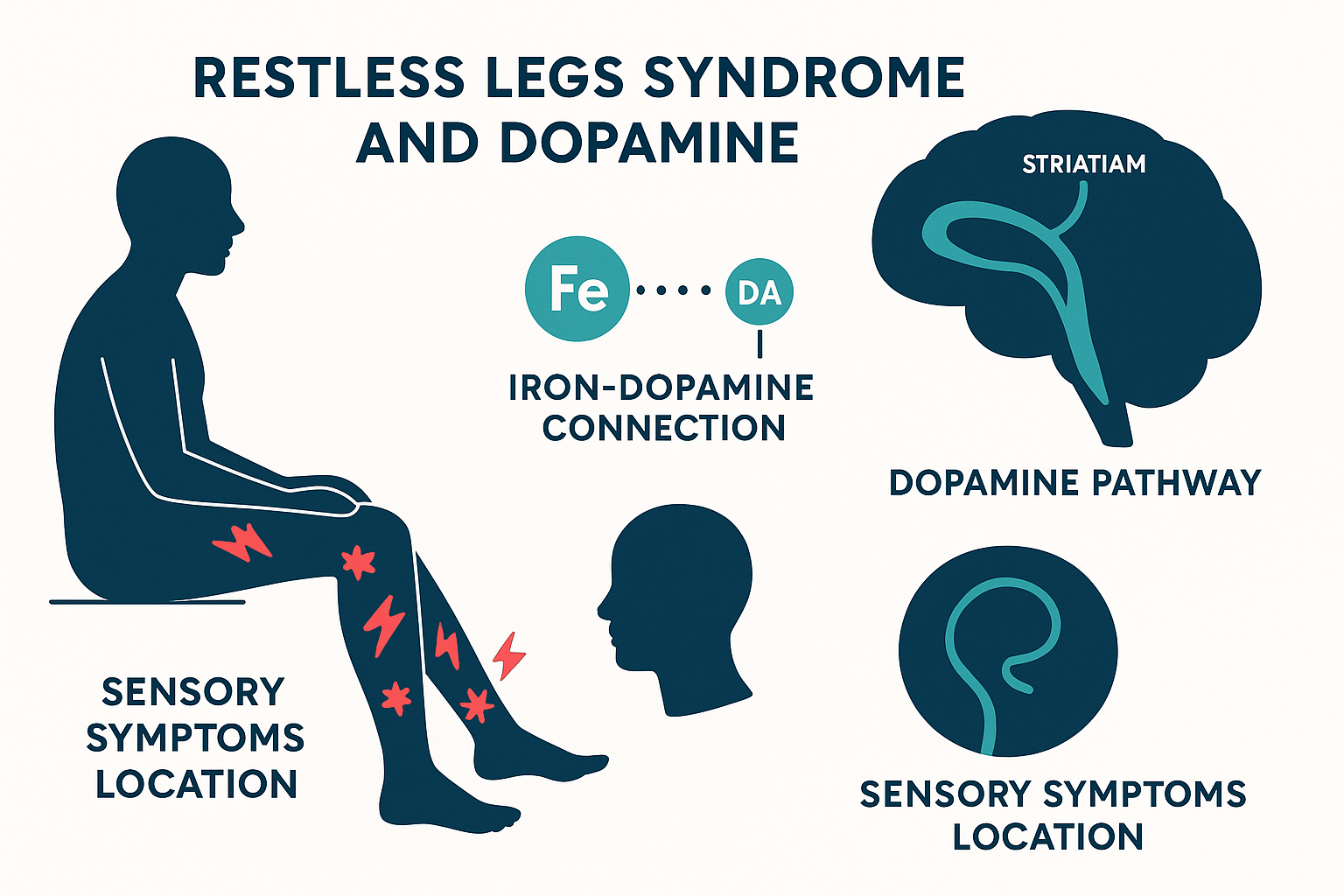
Inflammation may contribute to dopaminergic pathway disruption. Omega-3 fatty acids, curcumin, and an anti-inflammatory diet may reduce the inflammatory component.
Addressing sleep quality:
RLS causes sleep disruption; sleep deprivation worsens RLS (possibly through increased cortisol affecting dopamine). Addressing sleep architecture — magnesium, adaptogens for cortisol, sleep hygiene — supports RLS management.
Acupuncture
Acupuncture has an emerging evidence base for RLS:
- Multiple small RCTs and case series report significant improvement in RLS symptoms, sleep quality, and PLMD with acupuncture
- Proposed mechanisms: dopamine modulation (acupuncture increases dopamine in the striatum), reduction of spinal cord excitability, improved peripheral circulation
- Traditional Chinese medicine classifies RLS as a disorder of liver blood deficiency and blood stagnation — acupuncture points for liver blood nourishment and spleen qi support are typically included
- Specific points commonly used: Sanyinjiao (SP6), Zusanli (ST36), Taichong (LV3), and Yanglingquan (GB34)
A course of 8–12 sessions is typically used for assessment of response.
When to Seek Conventional Care
Naturopathic treatment is most effective for mild-to-moderate RLS and for RLS driven by identifiable correctable causes (iron deficiency, nutritional gaps). Indications for conventional medical assessment:
- Severe RLS significantly impairing sleep and function despite adequate iron optimization and nutritional support
- RLS with suspected secondary cause (kidney disease, peripheral neuropathy, medication-induced)
- Consideration of dopaminergic medications (ropinirole, pramipexole) or alpha-2-delta ligands (gabapentin, pregabalin)
Important note on dopamine agonists: A well-recognized phenomenon called “augmentation” occurs in many long-term users — symptoms paradoxically worsen over time as the medication dose is escalated. This is a major limitation of dopaminergic drug treatment for RLS. Naturopathic approaches that address root causes (especially iron) avoid this problem.
Relief Is Available
Restless legs syndrome is not something you simply have to endure. With targeted assessment — particularly iron status — and appropriate naturopathic and acupuncture treatment, significant and lasting symptom reduction is achievable. Book an appointment →
For patient education only. Not medical advice.