
Sports Injuries: Getting Back in the Game — Faster and Stronger
Medically reviewed by Ksenya Kharnam, BPT, Registered Physiotherapist, Clinical Director · Last reviewed May 26, 2026
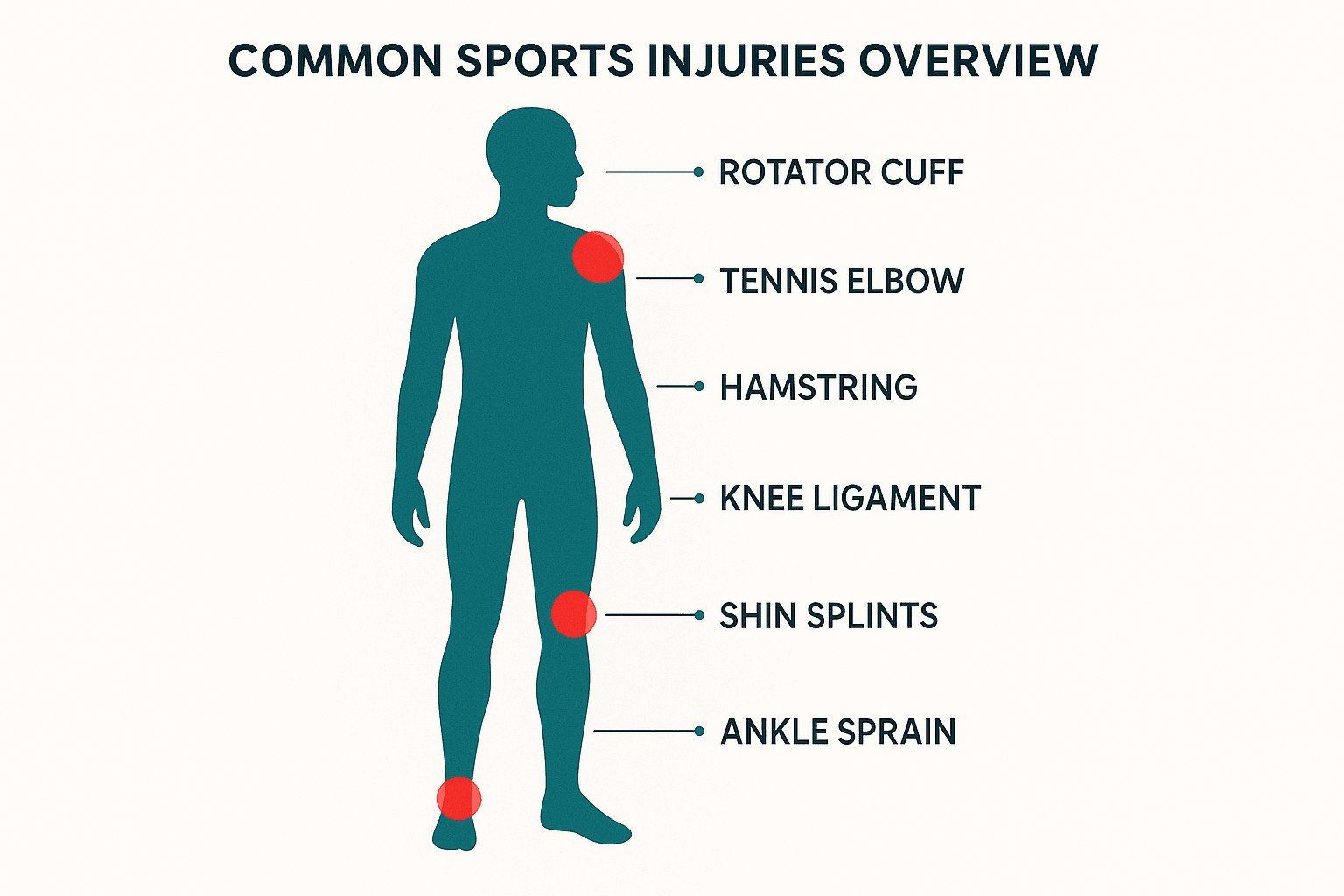
Understanding Sports Injuries: Acute vs Overuse
Sports injuries fall into two broad categories:
Acute (Traumatic) Injuries
These occur from a single, identifiable mechanism — a collision, fall, twist, or impact. Examples:
– Ankle sprains — the most common acute sports injury
– ACL tears — a knee ligament rupture common in cutting and pivoting sports
– Muscle strains — a tear in the muscle fibres, often from explosive acceleration (hamstring, calf, quadriceps)
– Shoulder dislocations — common in contact sports and falls
– Fractures — stress or traumatic
Overuse (Chronic) Injuries
These develop gradually from repetitive stress that exceeds the tissue’s repair capacity. There is no single moment of injury — just a slow accumulation of load:
– Shin splints (medial tibial stress syndrome)
– Stress fractures
– Rotator cuff tendinopathy
– IT band syndrome
– Achilles and patellar tendinopathy
– Stress reactions in bone
Treatments at Wellness Place
Physiotherapy
Sports physiotherapy at Wellness Place takes an athlete-centred approach — the goal is not just to eliminate pain, but to return you to your specific sport at or above your pre-injury level.
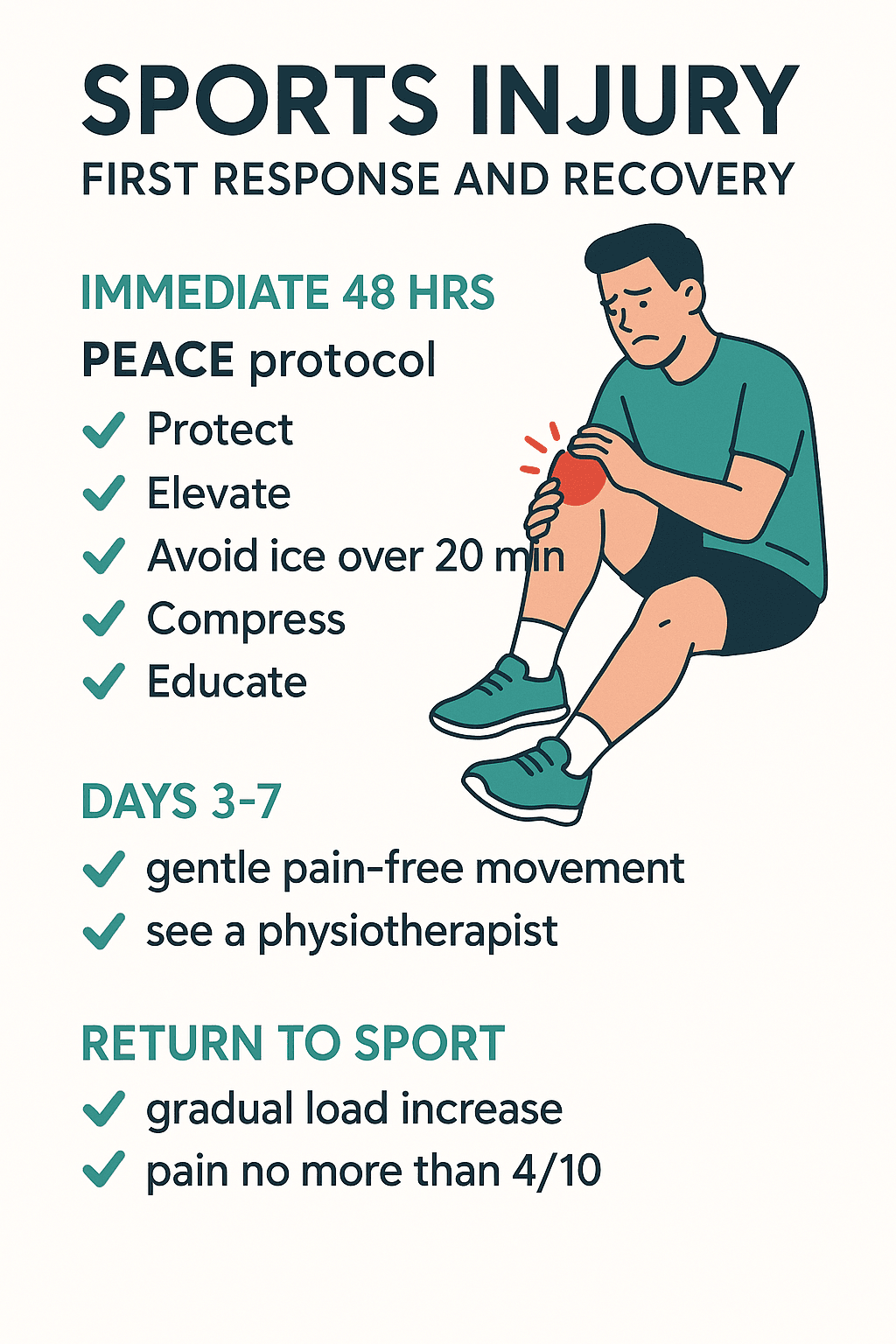
Acute phase (Days 1–7 post-injury):
– PEACE & LOVE protocol (Protect, Elevate, Avoid anti-inflammatories, Compress, Educate / Load, Optimism, Vascularization, Exercise) replaces the old RICE approach
– Pain-free range of motion exercises to prevent stiffening
– Early loading to stimulate healing without disrupting repair
Rehabilitation phase:
– Progressive strength and mobility program specific to the injured tissue
– Neuromuscular re-education — retraining the proprioceptive (balance and coordination) systems disrupted by injury
– Sport-specific movement pattern work
Return-to-sport phase:
– Criteria-based (not time-based) return to training
– Graduated reintroduction of sport-specific demands
– Addressing the biomechanical or training factors that contributed to the injury
Chiropractic
Chiropractic care accelerates sports injury recovery by addressing joint restrictions and biomechanical dysfunction that develop following injury and alter the movement chain. Spinal and peripheral joint adjustments, soft tissue techniques, and functional movement assessment complement physiotherapy rehabilitation — particularly for shoulder, elbow, hip, and ankle injuries.
Shockwave Therapy
For the tendinopathy and chronic overuse injuries that don’t fully resolve with exercise alone, shockwave therapy targets the degenerated tissue directly — stimulating repair at a cellular level. It is particularly effective for chronic tendinopathies that have become a barrier to return to sport.
Self-Care in the First 48 Hours (Acute Injury)
- Protect the injured area from further harm — use crutches, sling, or splint as needed
- Elevate the injured limb above heart level to reduce swelling
- Compress with a bandage if accessible
- Avoid heat, alcohol, and massage in the first 24–48 hours — these increase swelling
- Gentle pain-free movement as early as tolerable
- Anti-inflammatories may be used sparingly in the first 48–72 hours for significant acute injury, but prolonged use may impair tendon and ligament healing
Frequently Asked Questions
Should I use ice or heat on a sports injury?
In the first 48–72 hours after an acute injury: ice (15–20 min at a time, not directly on skin) to reduce swelling and pain. After the acute phase, heat helps loosen tissue before activity. In the chronic/rehabilitation phase, heat before exercise and ice after tends to work well.
Can I train around my injury?
In most cases, yes. Your physiotherapist will identify what you can safely continue doing while the injured tissue heals. Maintaining fitness in other areas (cardiovascular, upper or lower body depending on injury location) preserves conditioning and speeds return to full sport.
How do I avoid getting injured again?
Most sports injuries are preventable with: appropriate training load management, adequate warm-up and cool-down, strength work targeting known weak links (e.g., hip strength for knee injuries), good technique, and adequate recovery. Your physiotherapist will identify your specific risk factors.
For patient education only. Not medical advice.