
Weight Management: Beyond Calories In, Calories Out
Medically reviewed by Dr. Tatsiana Vovk, ND, Licensed Naturopathic Doctor · Last reviewed May 26, 2026
Why Weight Management Is Not Simple
Body weight is regulated by multiple overlapping systems:
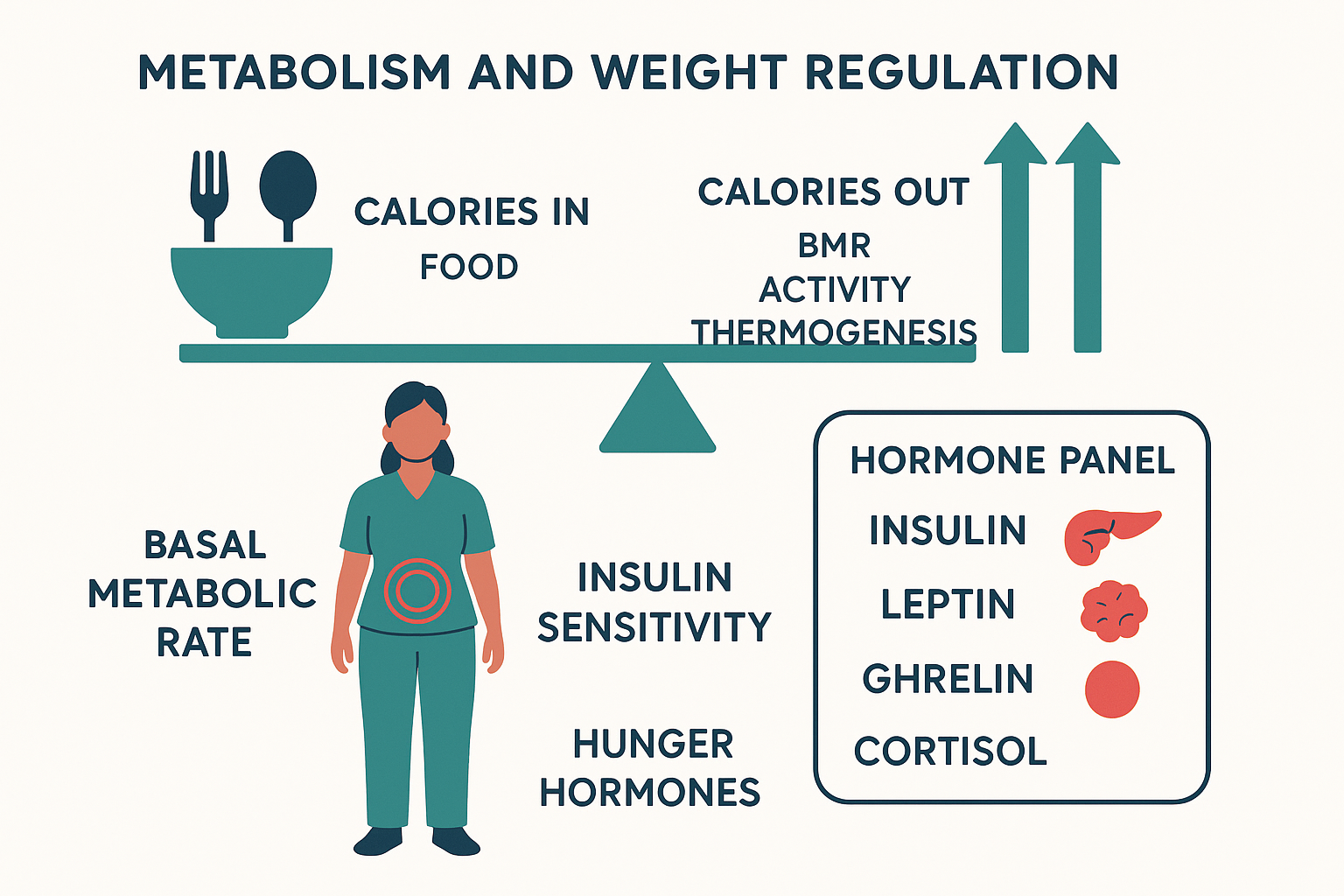
Hormonal regulation:
– Insulin: The primary fat-storage hormone. Chronically elevated insulin (from refined carbohydrate diets, insulin resistance, or metabolic syndrome) actively prevents fat mobilization — regardless of caloric deficit. Insulin resistance is the most common hormonal barrier to weight loss.
– Leptin and ghrelin: Leptin signals satiety to the brain; ghrelin signals hunger. In obesity, leptin resistance develops — the brain stops hearing the “I’m full” signal. Sleep deprivation dramatically increases ghrelin (hunger) and decreases leptin — one night of inadequate sleep increases appetite by 24%.
– Thyroid: Governs metabolic rate. Even subclinical hypothyroidism produces a slowed metabolism, fatigue, cold intolerance, and weight resistance. Many people with thyroid-driven weight issues are in the “normal” range but are functioning suboptimally.
– Cortisol: Elevated cortisol promotes abdominal fat deposition, drives sugar cravings, increases appetite, and impairs insulin sensitivity. Chronic stress is a major and underappreciated driver of weight gain.
– Sex hormones: Declining progesterone and estrogen in perimenopause/menopause shift fat distribution toward the abdomen and reduce muscle mass. Testosterone decline in men produces similar metabolic effects.
Gut microbiome: The composition of the gut microbiome affects how many calories are extracted from food, how hunger hormones are regulated, and how prone the body is to inflammation and insulin resistance. Individuals with “obese microbiome” profiles extract more energy from the same food than those with “lean microbiome” profiles.
Inflammation: Chronic low-grade inflammation drives insulin resistance, leptin resistance, and metabolic dysfunction. The adipose tissue (fat tissue) is itself an endocrine organ — in excess, it secretes pro-inflammatory cytokines that perpetuate the inflammatory state.
Sleep: Inadequate sleep disrupts virtually every hormonal system involved in weight regulation — insulin sensitivity, cortisol, leptin, ghrelin, and BDNF. Sleep deprivation is one of the most powerful drivers of weight gain and the most overlooked.
Treatments at Wellness Place
Naturopathic Medicine
Insulin sensitization — the most important metabolic intervention:
– Inositol (myo-inositol): A naturally occurring compound with strong evidence for insulin sensitization — particularly effective for PCOS-related insulin resistance and metabolic syndrome. Reduces fasting insulin and improves glucose tolerance.
– Berberine: One of the most well-studied natural insulin sensitizers — multiple RCTs show effects comparable to metformin for blood sugar regulation, lipid improvement, and weight loss. Mechanism: AMPK activation (the same pathway as metformin).
– Chromium picolinate: Enhances insulin receptor sensitivity and reduces carbohydrate cravings.
– Alpha-lipoic acid: Antioxidant with insulin-sensitizing properties; improves glucose uptake into muscle cells.
– Magnesium: Deficiency is strongly associated with insulin resistance; repletion improves insulin sensitivity.
Thyroid optimization: If thyroid testing reveals subclinical dysfunction, targeted naturopathic support (selenium for T4-to-T3 conversion, iodine, zinc, ashwagandha) or referral to a prescribing physician addresses the metabolic rate impairment.
Cortisol and stress management: For cortisol-driven weight patterns (abdominal fat accumulation, carbohydrate cravings, weight gain under stress), adaptogenic herbs (ashwagandha, rhodiola), sleep optimization, and HPA axis regulation are foundational.
Gut microbiome restoration: Increasing microbiome diversity through diverse plant foods, fibre, fermented foods, and targeted probiotics shifts the microbiome toward a “lean” profile and reduces the metabolic inflammation driving insulin resistance.
Personalized nutritional medicine: Rather than generic calorie restriction, a naturopathic approach tailors nutrition to your metabolic type, food sensitivities, lifestyle, and specific hormonal pattern:
– Low-glycaemic dietary approaches for insulin-resistant presentations
– Anti-inflammatory elimination protocols for inflammatory-driven metabolic dysfunction
– Protein optimization for muscle preservation and satiety
– Meal timing and intermittent fasting strategies based on circadian biology and individual tolerance
Sleep optimization: Because inadequate sleep undermines every other weight management effort, sleep is addressed as a primary intervention — not an afterthought.
GLP-1 pathway support: The natural compound berberine activates AMPK, and research on bitter melon, gymnema sylvestre, and certain fibre types shows modest GLP-1 mimicking effects — supporting satiety signalling through nutritional means.
Self-Care for Metabolic Health
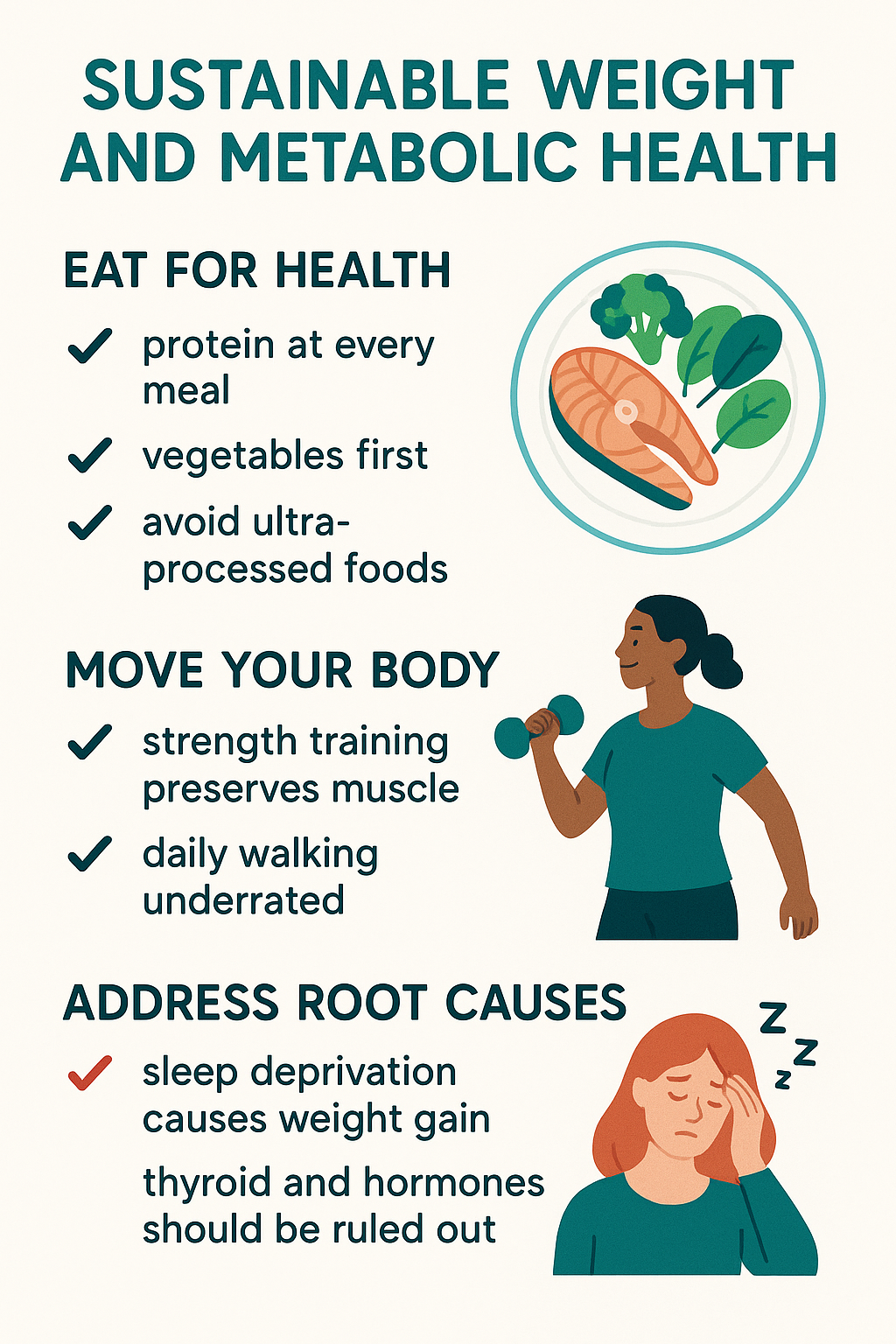
Protein at Every Meal
Protein is the most satiating macronutrient and essential for preserving muscle mass during weight loss. A minimum of 1.2–1.6 g per kg of body weight daily — prioritized at breakfast, which sets appetite hormones for the entire day.
Prioritize Sleep
Non-negotiable. Even partial sleep restriction (6 hours vs. 8) measurably impairs insulin sensitivity and increases appetite hormones within 2–3 days. Weight management attempts without sleep optimization fight biology.
Eat Within a Time Window
Aligning eating to daylight hours and avoiding late-evening eating improves insulin sensitivity through circadian mechanisms — independent of caloric intake. A simple practice: aim to eat within a 10–12 hour window during the daytime.
Reduce Ultra-Processed Foods
Ultra-processed foods (defined by the NOVA classification — industrially manufactured products with additives, emulsifiers, flavourings) drive appetite dysregulation, gut dysbiosis, and inflammation through mechanisms beyond caloric content. Replacing UPFs with whole foods improves satiety and metabolic markers even with no change in caloric intake.
Manage Stress Actively
Cortisol elevation drives fat storage and sugar cravings — physiologically, not psychologically. Stress management is weight management.
Weight Is Not a Willpower Problem
The biological complexity of weight regulation means that a compassionate, evidence-based, individually tailored approach — not blame — produces lasting results. Book an appointment →
For patient education only. Not medical advice.