Adrenal Fatigue: When Your Stress Response Has Burned Out
Understanding the HPA Axis
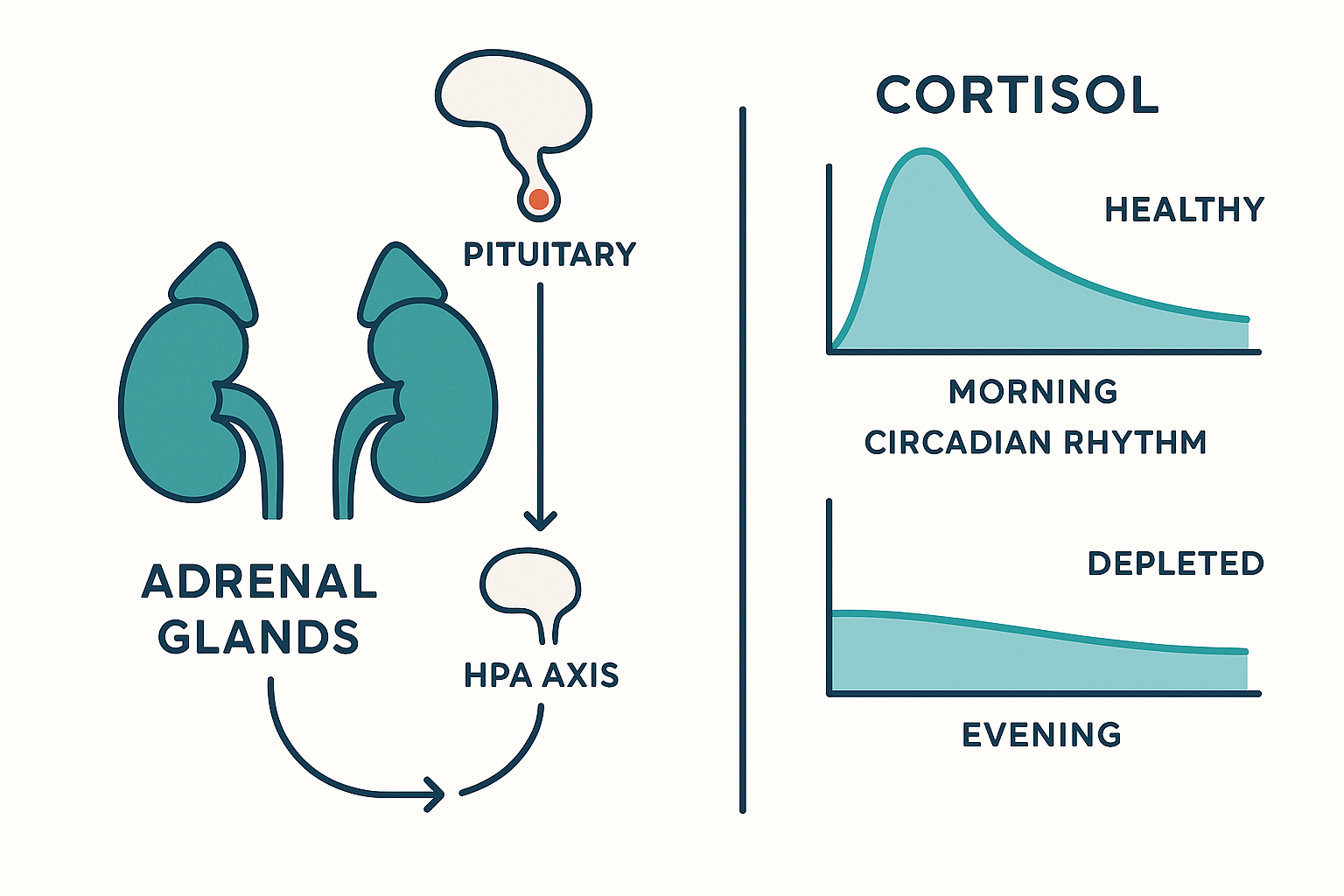
Your body’s stress response is coordinated by the hypothalamic-pituitary-adrenal (HPA) axis — a sophisticated hormonal communication system involving the brain and the adrenal glands (small glands that sit atop each kidney).
When you perceive stress, the hypothalamus signals the pituitary, which signals the adrenal glands to release cortisol — the primary stress hormone. Cortisol mobilizes energy, sharpens attention, and coordinates the body’s response to challenge. Once the stress resolves, cortisol drops and the system resets.
The problem: modern chronic stress keeps the HPA axis activated for months and years at a time. Over time, the system adapts — and dysregulates.
The Stages of HPA Axis Dysfunction
Stage 1 — Elevated cortisol: The HPA axis is chronically activated. Cortisol is high throughout the day and often elevated at night. Symptoms: difficulty falling asleep, second wind in the evening, anxiety, irritability, central weight gain (particularly abdominal), blood sugar instability.
Stage 2 — Disrupted cortisol rhythm: Cortisol production becomes dysrhythmic. The morning peak is blunted (difficulty waking, no morning energy) and the diurnal drop is poorly timed. The system is struggling to maintain appropriate patterns. Symptoms: exhaustion in the morning despite sleep, energy crashes, altered stress tolerance.
Stage 3 — Depleted cortisol: After prolonged dysregulation, cortisol output falls below normal. The adrenal glands are not “burned out” structurally — but the HPA axis has downregulated its output. Symptoms: crushing fatigue, inability to handle any stress, salt cravings (from aldosterone reduction), low blood pressure, prolonged illness recovery.
Treatments at Wellness Place
Naturopathic Medicine
Naturopathic medicine is ideally suited to HPA axis dysregulation — with specific tools to assess and restore normal cortisol patterns:
Cortisol rhythm testing: A single blood cortisol test tells you almost nothing. Four-point salivary cortisol testing (morning, noon, afternoon, evening) or comprehensive DUTCH (Dried Urine Test for Comprehensive Hormones) testing reveals the full 24-hour cortisol pattern. This guides targeted treatment — Stage 1 (elevated cortisol) requires very different interventions than Stage 3 (depleted cortisol).
Adaptogenic herbs — the cornerstone of treatment:
– Ashwagandha (KSM-66 or Sensoril): The most researched adaptogen for HPA axis function. Reduces elevated cortisol by up to 30% in RCTs; reduces morning cortisol spikes; supports sleep quality; improves thyroid conversion; enhances stress resilience. Evidence across multiple RCTs.
– Rhodiola rosea (SHR-5 extract): Particularly effective for Stage 2 fatigue and burnout — improves mental and physical performance under stress; reduces the perception of effort; reduces fatigue on standardized scales.
– Eleuthero (Siberian ginseng): Supports sustained adrenal output and immune resilience — appropriate for later-stage depletion.
– Licorice root: Extends cortisol activity by inhibiting its breakdown — specifically useful in Stage 3 (depleted cortisol) presentations.
– Holy basil (Tulsi): Reduces cortisol and anxiety; supports blood sugar stability disrupted by cortisol dysregulation.
Nutritional support for adrenal function:
– Vitamin C: The adrenal glands have the highest concentration of vitamin C of any organ; it is consumed during cortisol synthesis. High-dose supplementation supports adrenal recovery.
– Vitamin B5 (pantothenic acid): Required for steroid hormone synthesis including cortisol. Often depleted in sustained stress states.
– Magnesium: Cortisol depletes magnesium; magnesium deficiency amplifies cortisol reactivity — a vicious cycle. Supplementation is essential.
– Zinc: Supports adrenal and immune function; often depleted in chronic stress.
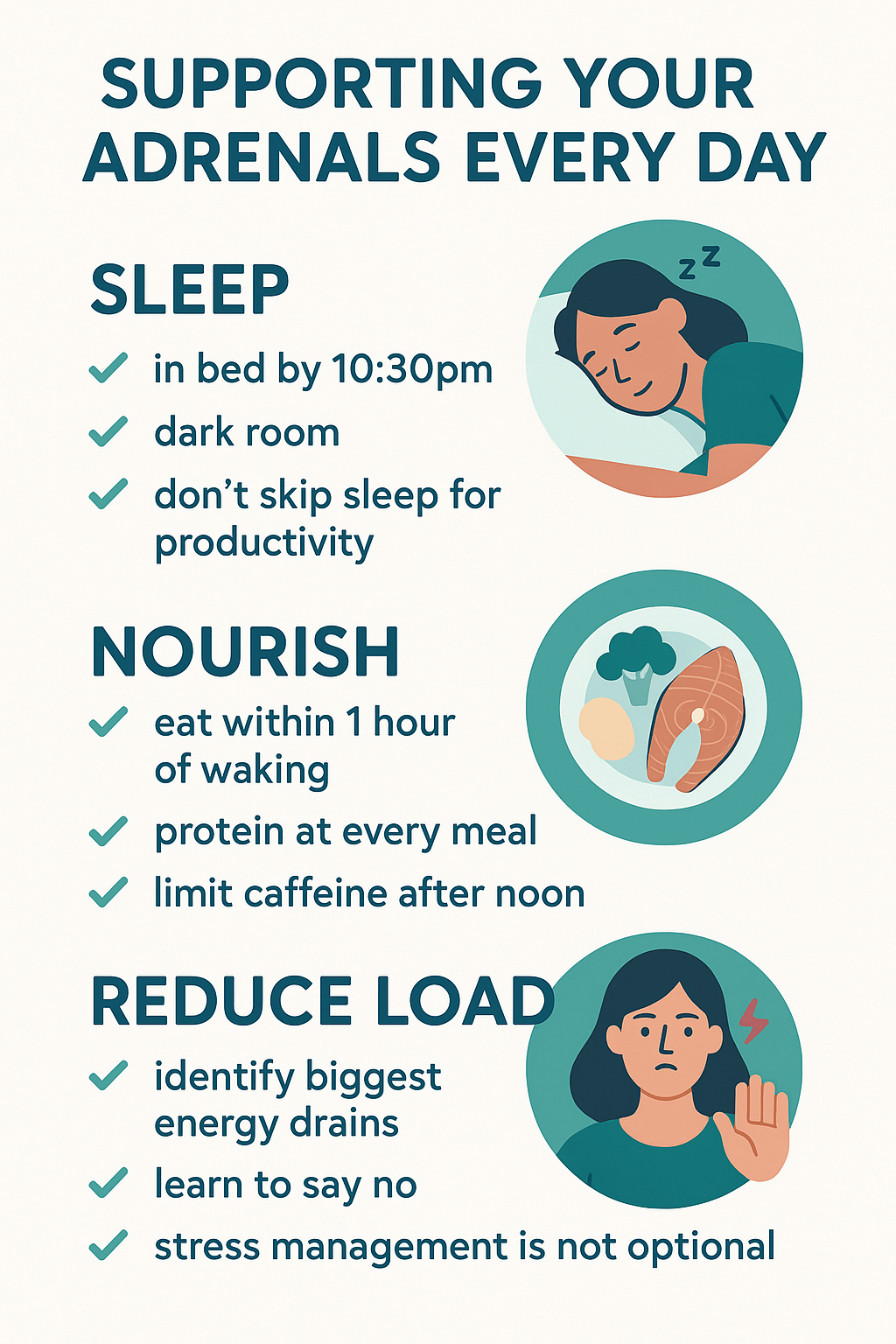
Sleep restoration: Recovery from HPA dysregulation is impossible without addressing sleep — the HPA axis resets during sleep. A targeted sleep protocol is always part of adrenal recovery.
Blood sugar regulation: Cortisol dysregulates blood sugar — and blood sugar instability perpetuates cortisol secretion. Dietary approaches that stabilize glucose (adequate protein and fat, reduced refined carbohydrates, regular meals) are foundational.
Thyroid optimization: Elevated cortisol suppresses thyroid function. As the HPA axis is restored, thyroid function often improves — but may need specific support during recovery.
Lifestyle pacing: A prescription for genuine recovery periods — not just “less stress,” but structured time for the nervous system to deactivate. This may feel counter-cultural but is physiologically necessary.
Acupuncture
Acupuncture directly regulates the HPA axis through its effects on the hypothalamus and limbic system:
- Reduces elevated cortisol in Stage 1/2 presentations
- Supports appropriate cortisol patterning — improving the morning peak and diurnal decline
- Activates the parasympathetic nervous system — providing the nervous system “rest” that the depleted adrenal-fatigued patient cannot access by willpower alone
- Improves sleep quality — essential for HPA recovery
- Reduces the anxiety and hypervigilance that perpetuate cortisol elevation
A course of weekly acupuncture over 6–8 weeks, with reassessment of the cortisol rhythm, is a typical protocol.
Frequently Asked Questions
Is “adrenal fatigue” a real diagnosis?
“Adrenal fatigue” as a term is not recognized in conventional medicine — and true adrenal insufficiency (Addison’s disease) is a distinct, serious condition. However, the clinical presentation of HPA axis dysregulation is real, measurable with cortisol testing, and highly responsive to naturopathic treatment. The debate is largely about naming, not about whether the underlying phenomenon exists.
How long does recovery take?
Stage 1 and early Stage 2 presentations often respond significantly within 4–12 weeks of targeted treatment. Stage 3 (prolonged depletion) typically requires 3–12 months of consistent treatment and lifestyle change. Recovery is faster when sleep, nutrition, supplementation, and stress reduction are addressed simultaneously.
Can I exercise while recovering?
Yes — gentle to moderate exercise is beneficial and important. High-intensity training, marathon preparation, and CrossFit-style training should be paused until energy and stress tolerance have restored. Your naturopath will help you calibrate appropriate exercise during recovery.
For patient education only. Not medical advice.