Allergies: Understanding Your Immune System’s Overreaction — and Calming It
Understanding Allergic Disease
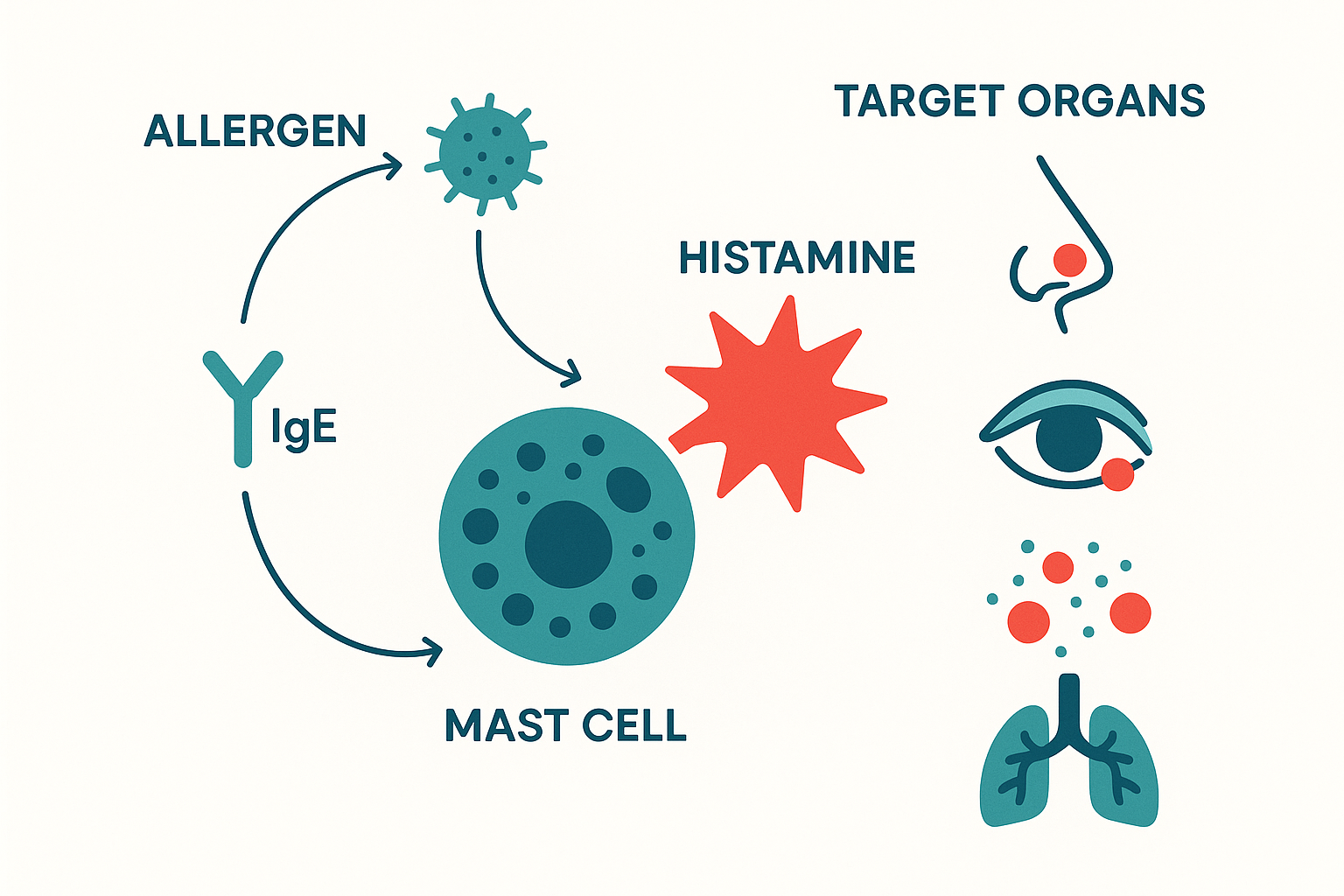
Allergic responses are mediated by IgE antibodies and mast cell/basophil activation — triggered when an allergen binds to IgE on the surface of these immune cells, releasing histamine and other inflammatory mediators. This produces the classic allergy symptoms: sneezing, runny nose, itching, hives, and in severe cases, anaphylaxis.
Atopy is the genetic predisposition to develop allergic disease — allergic rhinitis (hay fever), asthma, eczema, and food allergies. These conditions frequently co-occur and are part of the “atopic march” — eczema in infancy often progresses to allergic rhinitis in childhood and asthma in adolescence and adulthood.
The hygiene hypothesis explains the modern allergy epidemic: reduced childhood exposure to diverse microorganisms (from over-sanitation, antibiotics, Caesarean birth, formula feeding, and indoor living) shifts the developing immune system toward Th2 (allergic) responses rather than the Th1 (pathogen-fighting) and Treg (regulatory) responses that prevent allergy.
Food sensitivities (IgG-mediated reactions) differ from true food allergies (IgE-mediated). Food sensitivities are typically delayed reactions (hours to days) producing inflammatory symptoms — digestive issues, headaches, brain fog, fatigue, skin changes — rather than immediate allergic responses.
Treatments at Wellness Place
Naturopathic Medicine
Naturopathic medicine addresses allergies by rebalancing the immune system — shifting from an allergic (Th2-dominant) toward a regulatory (Treg-dominant) immune profile:
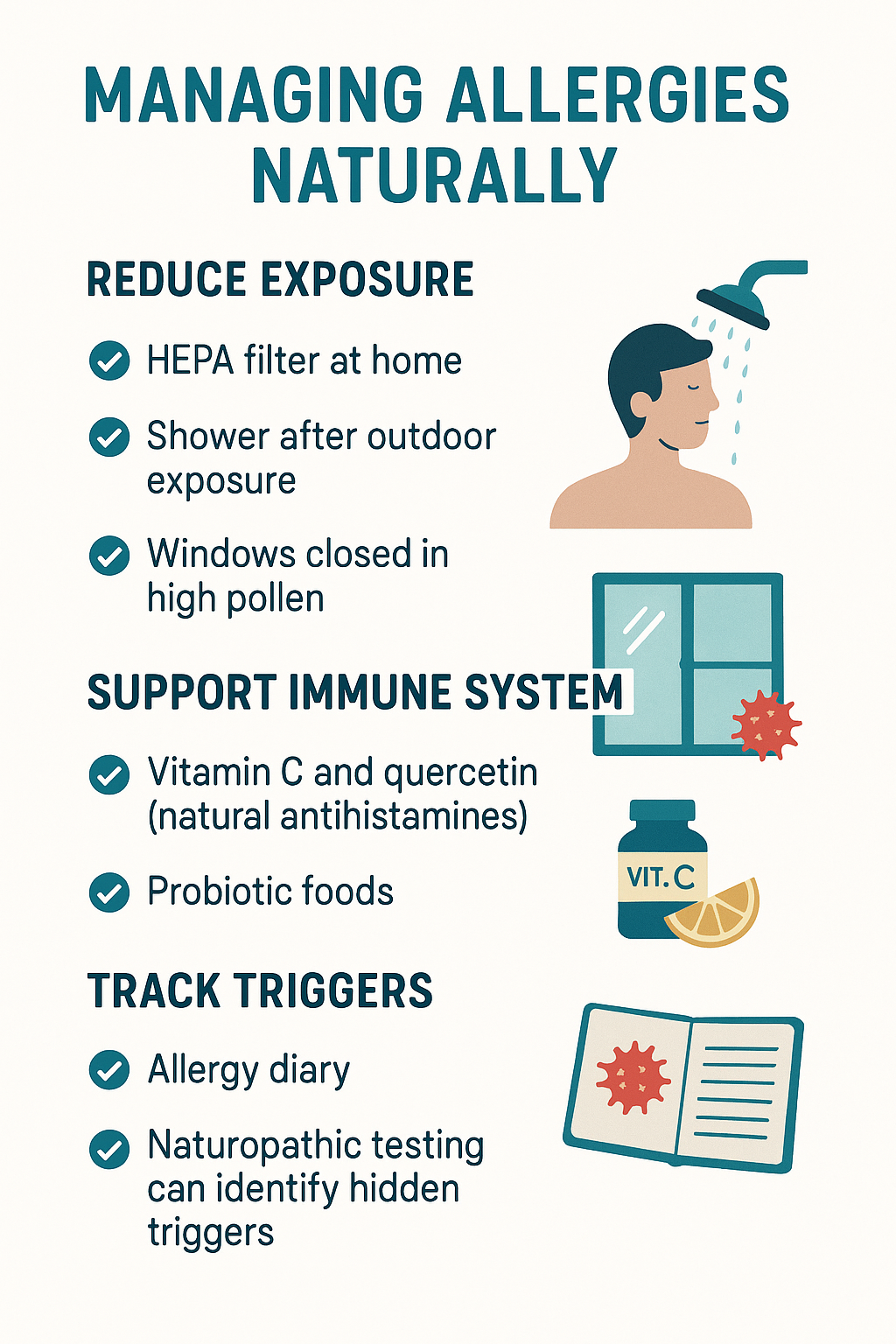
Quercetin: A flavonoid with potent mast cell-stabilizing and antihistamine properties — inhibits mast cell degranulation and reduces histamine release. Evidence for allergic rhinitis, hives, and asthma. More effective with consistent supplementation than used symptomatically.
Vitamin C: A natural antihistamine — reduces histamine release and promotes histamine degradation. High-dose vitamin C (2–4 g/day) reliably reduces allergy symptoms during high-exposure seasons.
Stinging nettle (Urtica dioica): Evidence for allergic rhinitis symptom reduction — freeze-dried leaf preparations have RCT support. Mechanism involves histamine and COX-2 inhibition.
Bromelain: Pineapple-derived enzyme with antihistamine and anti-inflammatory effects — reduces nasal congestion and sinus inflammation; often combined with quercetin.
Vitamin D: Strongly immunomodulatory — shifts the immune system toward Treg (regulatory) responses and reduces Th2 allergic polarization. Deficiency is consistently associated with increased allergy severity. Optimization is a high-impact, low-effort intervention.
Probiotics for allergy:
– Lactobacillus rhamnosus GG and Lactobacillus acidophilus NCFM have the strongest evidence for reducing allergic rhinitis symptoms and eczema severity in children and adults
– The gut microbiome educates the immune system toward tolerance vs. allergy — restoring microbiome diversity is a long-term immune rebalancing strategy
– Probiotic treatment started before and during the allergy season has the best evidence
Gut healing: Intestinal permeability allows food antigens and LPS into circulation — maintaining systemic immune activation and allergic sensitization. Healing the gut (L-glutamine, zinc carnosine, collagen, probiotic restoration) reduces the antigenic load on the immune system.
Food sensitivity investigation: Testing for IgG food reactions (or structured elimination-reintroduction) identifies the food-driven inflammatory component of allergic conditions — particularly relevant for eczema, chronic sinusitis, and asthma. Eliminating reactive foods can significantly reduce the total allergic burden.
DAO support: Histamine intolerance (impaired histamine metabolism due to low diamine oxidase) produces allergy-like symptoms triggered by histamine-containing foods. DAO enzyme supplementation and a low-histamine dietary approach may be part of treatment.
Methylation and MTHFR: Poor methylation (often from MTHFR gene variants) impairs histamine clearance — since histamine breakdown requires methylation. Addressing methylation with methylfolate and methylcobalamin may be relevant.
Acupuncture
Acupuncture has a growing evidence base for allergic conditions:
- Allergic rhinitis: Multiple RCTs and a large German study confirm acupuncture significantly reduces symptoms of allergic rhinitis — comparable to antihistamine use, with more durable effects
- Eczema: Reduces itch intensity, inflammatory markers, and flare frequency
- Asthma: As an adjunct, reduces symptom frequency and improves peak flow — not a replacement for medical management
- Mechanism: modulates Th1/Th2 balance toward Th1 and Treg responses; reduces IgE levels; inhibits mast cell degranulation; reduces histamine and inflammatory cytokines
Pre-seasonal treatment (beginning 4–6 weeks before pollen season) is more effective than reactive treatment during peak symptoms.
Red Flags — When Allergies Require Urgent Medical Attention
- Anaphylaxis: Hives, throat swelling, difficulty breathing, rapidly falling blood pressure after allergen exposure — call 911 and use epinephrine auto-injector if prescribed
- Asthma that is poorly controlled or worsening requires specialist assessment
- New-onset food allergy in adulthood warrants medical allergy testing
A Calmer Immune System Is Possible
Allergies are not a fixed sentence — the immune system is plastic and responds to the right interventions. Managing your allergic constitution, rather than just treating symptoms, produces lasting change. Book an appointment →
For patient education only. Not medical advice.