Brain Fog: When Your Mind Won’t Cooperate
What Is Brain Fog?
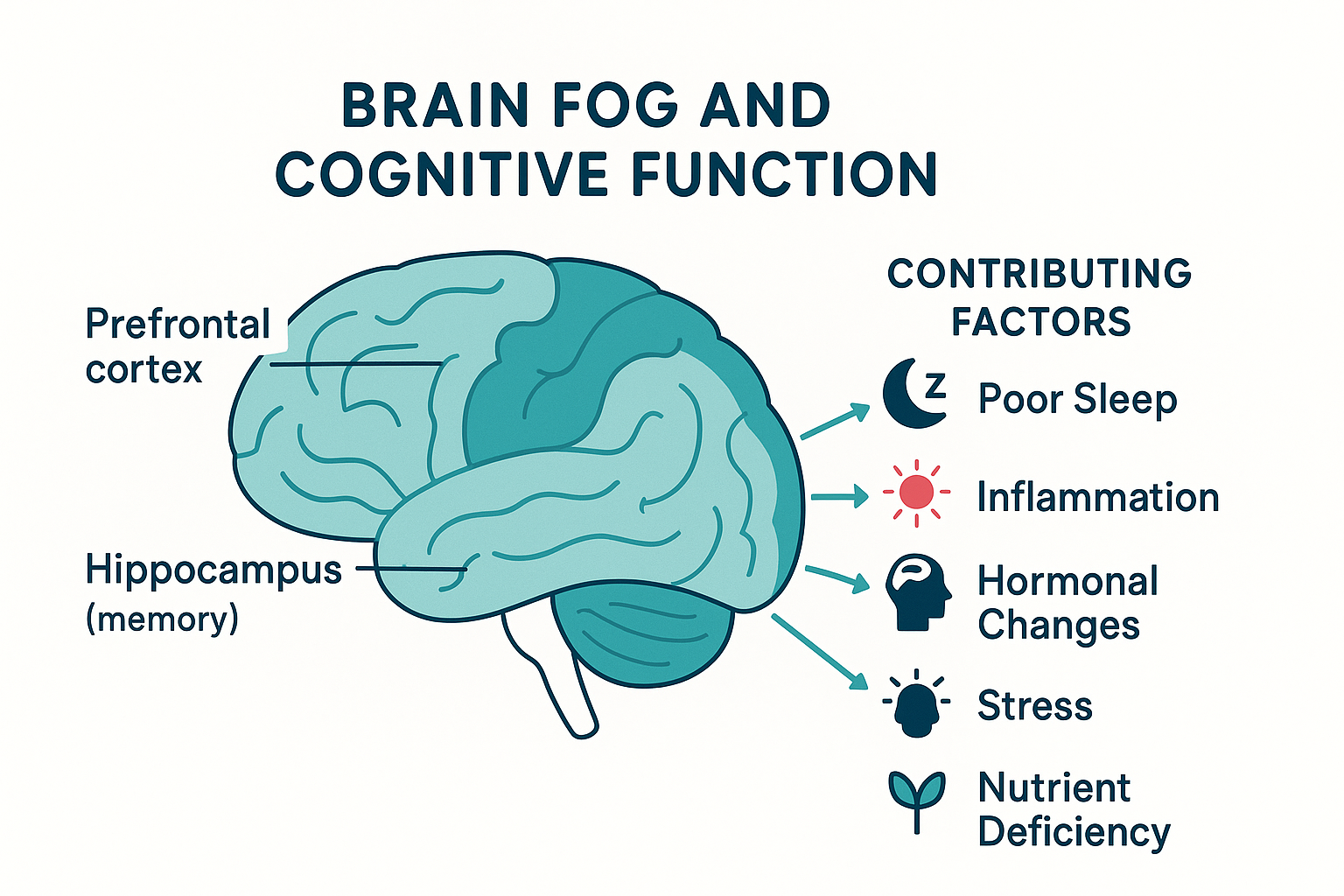
“Brain fog” is not a medical diagnosis — it is a symptom cluster describing subjective cognitive impairment. It includes:
- Difficulty concentrating or sustaining attention
- Mental fatigue — thinking feels effortful and slow
- Memory difficulties — working memory, word-finding, short-term recall
- Processing speed reduction — slower to respond, absorb information, or make decisions
- Disorientation or detachment — a sense of being mentally “absent” or disconnected from your environment
Brain fog differs from dementia or neurological disease — it is typically reversible, fluctuates with physical state, and responds to targeted treatment of underlying causes.
Treatments at Wellness Place
Naturopathic Medicine
Naturopathic medicine is uniquely positioned to investigate and treat brain fog — because it investigates the causes, rather than just managing the symptom:
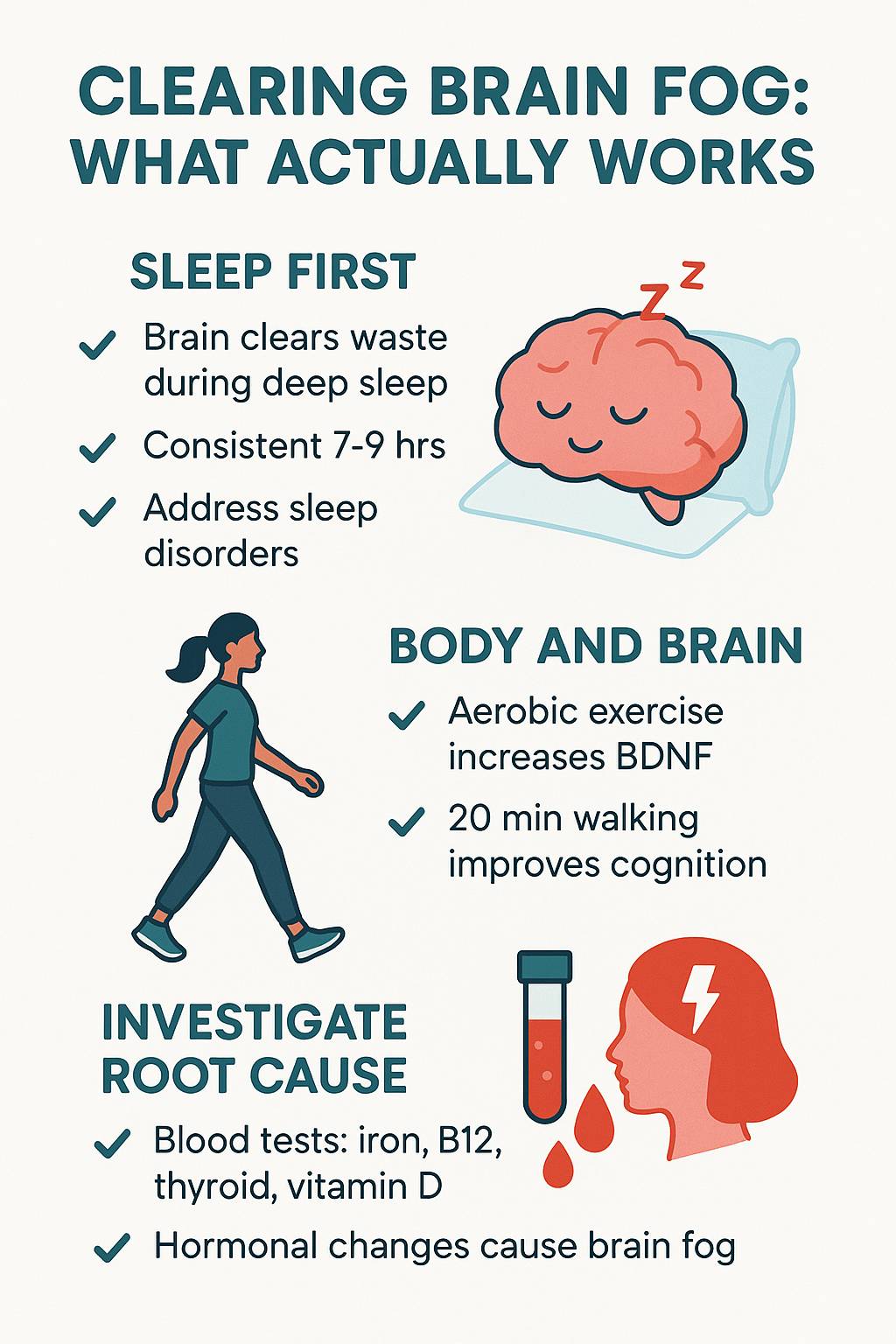
Comprehensive cognitive investigation: Your naturopath will order a targeted panel to identify common correctable causes: iron studies (ferritin, serum iron, TIBC), CBC, thyroid (TSH, free T4, free T3, thyroid antibodies), B12 and folate, vitamin D, fasting glucose and insulin, HbA1c, CRP, homocysteine, and cortisol rhythm.
Iron optimization: Ferritin optimized to 70–100 ng/mL (not the bare laboratory minimum) often produces striking improvements in cognitive function within 4–8 weeks.
Thyroid optimization: Normalizing thyroid function to the optimal range — not just “within reference” — regularly resolves brain fog in hypothyroid patients.
Nutrient repletion: Targeted B12 (methylcobalamin preferred), folate, vitamin D, zinc, and B vitamin complex address the most common nutritional deficiencies driving cognitive impairment.
Brain-supporting botanicals and nutrients:
– Ginkgo biloba: The most studied botanical for cognitive function — improves cerebral blood flow and has antioxidant and neuroprotective properties. Evidence for attention, processing speed, and memory.
– Bacopa monnieri (Brahmi): Ayurvedic herb with strong evidence for memory and learning — particularly effective for the information retention aspects of brain fog. Effects develop over 6–12 weeks.
– Lion’s mane mushroom (Hericium erinaceus): Stimulates nerve growth factor (NGF) — supporting neuroplasticity and cognitive function. Growing evidence for mild cognitive impairment and subjective brain fog.
– Omega-3 DHA: Essential structural component of neuronal membranes; DHA deficiency impairs synaptic function and cognitive performance. EPA reduces neuroinflammation.
– Phosphatidylserine: A phospholipid critical for neuronal membrane fluidity and signal transduction; evidence for memory and processing speed.
– CoQ10: Mitochondrial cofactor; cognitive function is highly energy-dependent.
Blood sugar regulation: A dietary approach prioritizing metabolic stability — adequate protein and fat, reduced refined carbohydrates, avoiding blood sugar spikes — reliably reduces brain fog in insulin-resistant or glucose-dysregulated patients.
Gut healing and microbiome support: Addressing dysbiosis through dietary change, targeted probiotics, and gut-healing protocols reduces neuroinflammation via the gut-brain axis.
Hormonal optimization: For perimenopausal women, addressing estrogen fluctuation and progesterone deficiency often restores cognitive function that was attributed to aging or stress.
Acupuncture
Acupuncture improves cerebral blood flow and has neuroprotective and anti-inflammatory effects:
- Increases cerebral blood flow — supporting oxygen and nutrient delivery to brain tissue
- Reduces systemic and neuroinflammation through cytokine modulation
- Regulates the HPA axis and reduces cortisol-mediated cognitive impairment
- Supports autonomic nervous system balance — particularly relevant in post-viral brain fog and dysautonomia
- Points for cognitive support include Baihui (GV20), Shenting (GV24), and points targeting specific organ systems based on the underlying pattern
Frequently Asked Questions
Is brain fog a sign of early dementia?
Brain fog is a symptom with many causes — most of which are temporary, correctable, and unrelated to dementia. However, persistent, worsening cognitive symptoms — particularly memory loss, disorientation, and personality change — warrant medical assessment to rule out neurological causes. The brain fog described here is functional impairment in the absence of structural neurological disease.
Will supplements help?
Targeted supplementation based on your specific deficiencies and biology can produce significant improvement. There is no universal supplement — what helps depends on what’s driving the fog. Broad “brain health” products without testing often miss the actual cause. A naturopathic assessment is more likely to identify the specific intervention that works for you.
How quickly can brain fog improve?
This depends heavily on the cause. Iron deficiency improvement can be dramatic within 4–6 weeks. Thyroid optimization: 4–8 weeks. B12 repletion: weeks to months. Blood sugar regulation: days to weeks. Post-viral neuroinflammation: months to years, depending on severity. Identifying the cause is what determines the timeline.
For patient education only. Not medical advice.