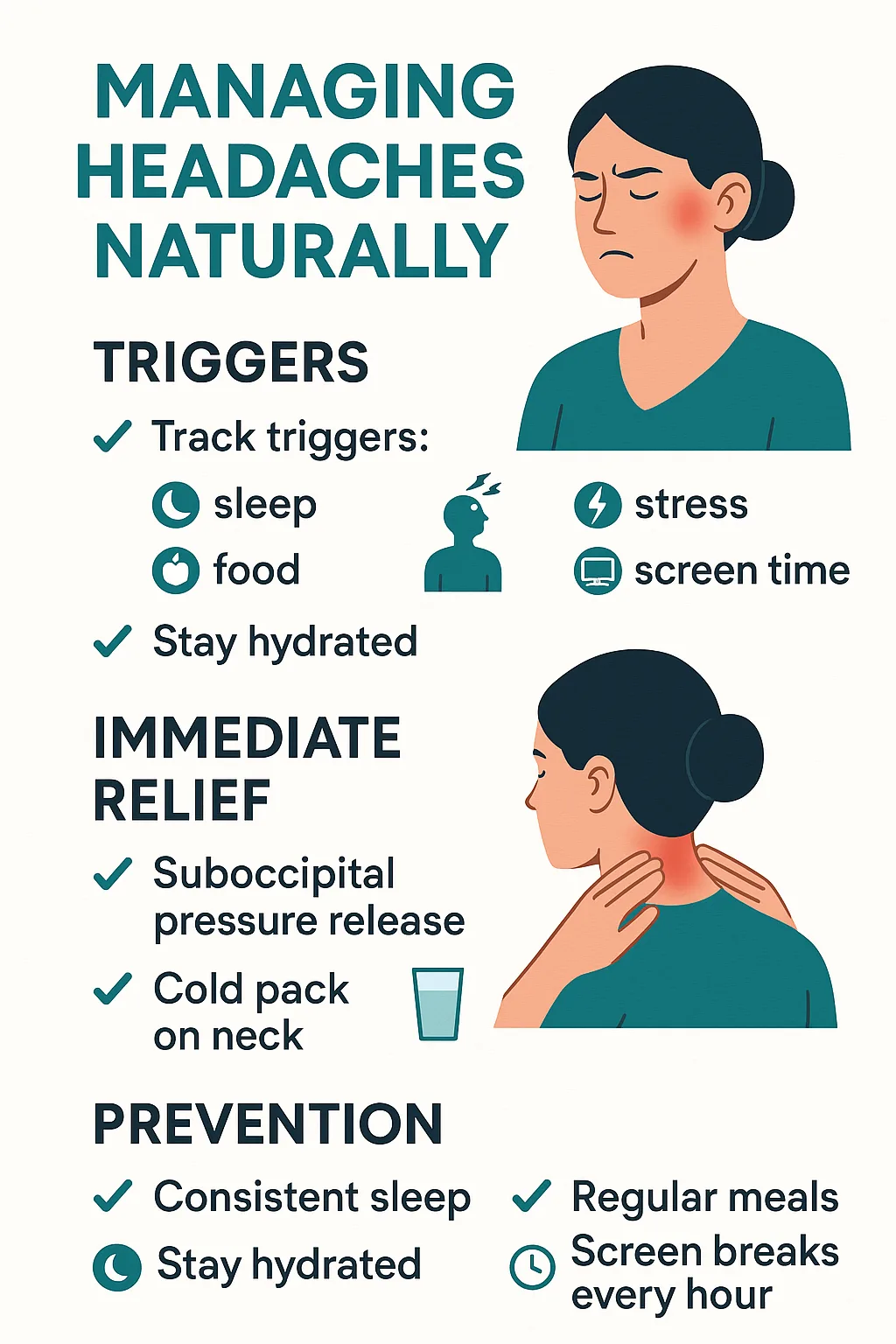
Headaches: Understanding What Type You Have — and What Actually Helps
Medically reviewed by Dr. Serguei Naoumov, DC, Licensed Chiropractor · Last reviewed May 26, 2026
The Major Types of Headache
Tension-Type Headache (TTH)
The most common — accounting for up to 80% of headaches. Tension headaches are described as a dull, pressing, or tightening sensation, often described as “a band around the head” or “a weight on the skull.” They are bilateral (both sides), mild to moderate in intensity, and don’t worsen with physical activity (unlike migraines). Nausea is not typical.
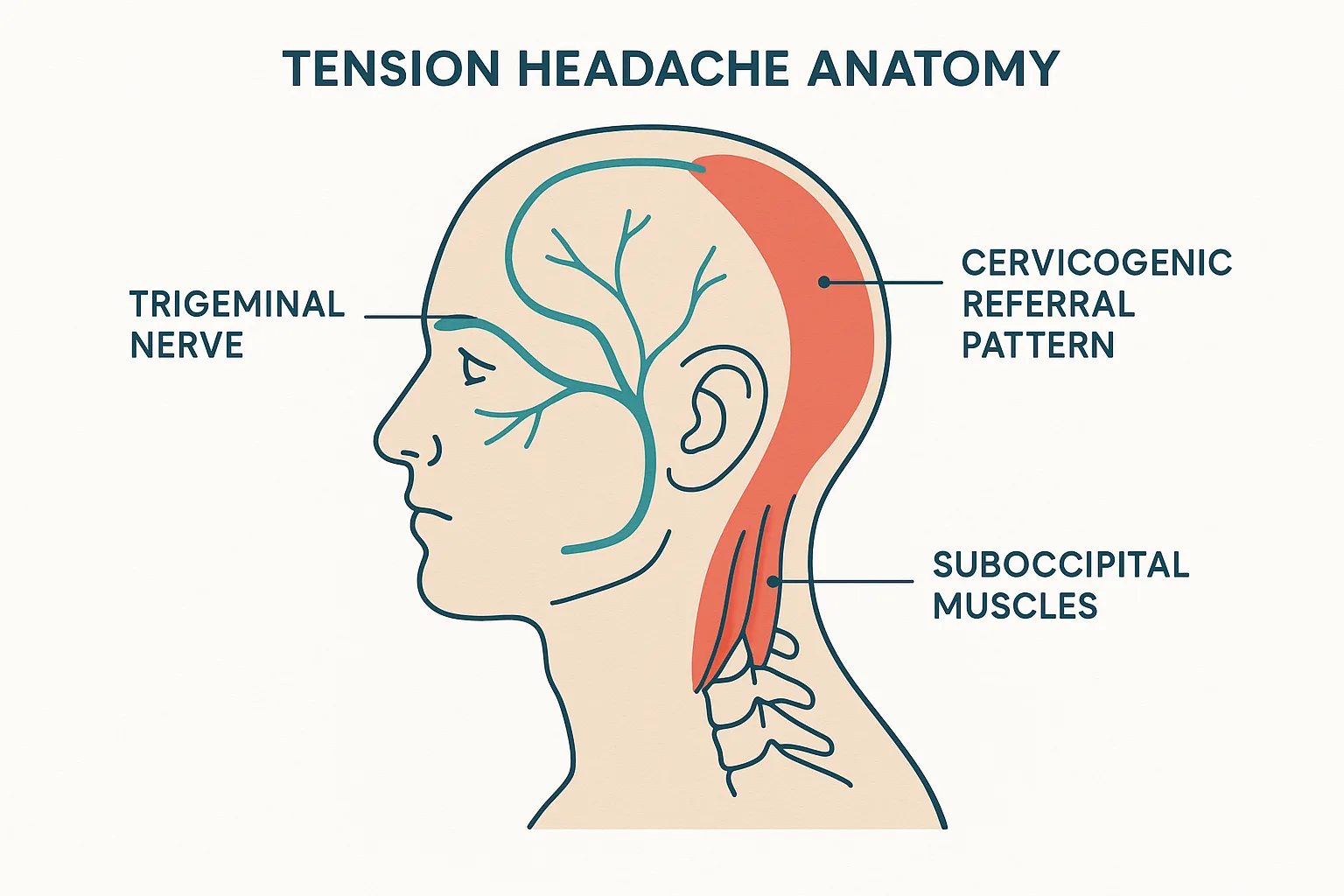
Common triggers: Stress, poor posture, muscle tension in the neck and shoulders, eye strain, dehydration, skipping meals, poor sleep.
Episodic vs Chronic: When tension headaches occur more than 15 days per month for more than 3 months, they are classified as chronic tension-type headache — a more complex condition requiring more comprehensive management.
Cervicogenic Headache
Pain that originates in the cervical spine (neck) and is referred into the head. Cervicogenic headaches are felt on one side, typically starting at the base of the skull and radiating into the forehead, temple, or eye. They are triggered or worsened by neck movements or sustained positions, and accompanied by neck stiffness and tenderness.
The C1-C3 cervical joints, discs, and upper cervical muscles are the most common sources — the nerve pathways from these structures connect to the trigeminocervical nucleus, which is why neck problems produce head pain.
Migraine
See the dedicated Migraines article for comprehensive coverage. In brief: migraine is a neurological disorder producing recurrent attacks of moderate-to-severe, often one-sided, throbbing head pain lasting 4–72 hours, typically accompanied by nausea, vomiting, and sensitivity to light and sound. Up to one-third of migraineurs also experience an aura — neurological symptoms (visual disturbances, tingling, speech changes) preceding or accompanying the pain.
Treatments at Wellness Place
Chiropractic
Chiropractic care is particularly well-suited to cervicogenic headaches and has strong evidence for tension-type headaches. Cervical and thoracic spinal manipulation reduces joint restriction in the upper cervical spine — the primary pain generator in cervicogenic headache — and has been shown in multiple trials to produce significant headache reduction.
Your chiropractor will assess your cervical mobility, posture, and the specific segments contributing to your headache pattern. Manual therapy combined with therapeutic exercise for the deep neck flexors and postural muscles is the most evidence-based approach for cervicogenic and tension headache management.
Acupuncture
Acupuncture has exceptionally strong evidence for headache management — ranking among the most effective treatments for both tension-type and cervicogenic headaches, and as a preventive treatment for migraines (see dedicated Migraines article).
For tension headaches, acupuncture releases trigger points in the upper trapezius, suboccipital muscles, sternocleidomastoid, and temporalis — the muscles most implicated in tension-type and cervicogenic patterns. For chronic daily headache, a course of acupuncture typically reduces frequency and severity significantly over 6–8 sessions, with effects lasting months to years.
Specific effective acupuncture points for headache include GB20 (base of skull), LI4 (hand webspace), GB34, and point selection along the affected meridian depending on headache location.
Naturopathic Medicine
The naturopathic approach addresses headache triggers and underlying physiology:
Hormonal factors: Menstrual cycle-related headaches and migraines are extremely common; hormone testing and support can significantly reduce their frequency.
Food triggers: Common culprits include alcohol (especially red wine and dark spirits), caffeine excess or withdrawal, aged cheeses, processed meats (nitrates), artificial sweeteners, and MSG. A food diary and elimination approach identifies personal triggers.
Magnesium: Magnesium deficiency is significantly more common in headache sufferers. Magnesium supplementation (particularly magnesium glycinate) has good evidence for reducing migraine frequency and tension headache severity.
Riboflavin (B2): High-dose riboflavin (400 mg/day) is an evidence-based preventive strategy for migraine.
Stress and sleep: Both profoundly affect headache frequency — naturopathic management addresses these as treatment targets.
Red Flags: Seek Urgent Medical Assessment for:
- Sudden, severe “thunderclap” headache — the worst headache of your life, sudden onset — possible subarachnoid haemorrhage
- Headache with stiff neck, fever, light sensitivity — possible meningitis
- Headache with confusion, personality change, or progressive neurological deficit — possible brain tumour or stroke
- New headaches in someone over 50 — needs investigation
- Headache worsening progressively over days to weeks
- Headache following head trauma
- Headache with vision loss or double vision
Get to the Bottom of Your Headaches
Headaches that are interfering with your work, sleep, or quality of life deserve proper assessment — not just pain management. Our team will identify what’s driving your headaches and address it at the source. Book an appointment →
For patient education only. Not medical advice.