
Neck Sprain and Stiff Neck: Why It Happens and How to Get Moving Again
What Is a Neck Sprain?
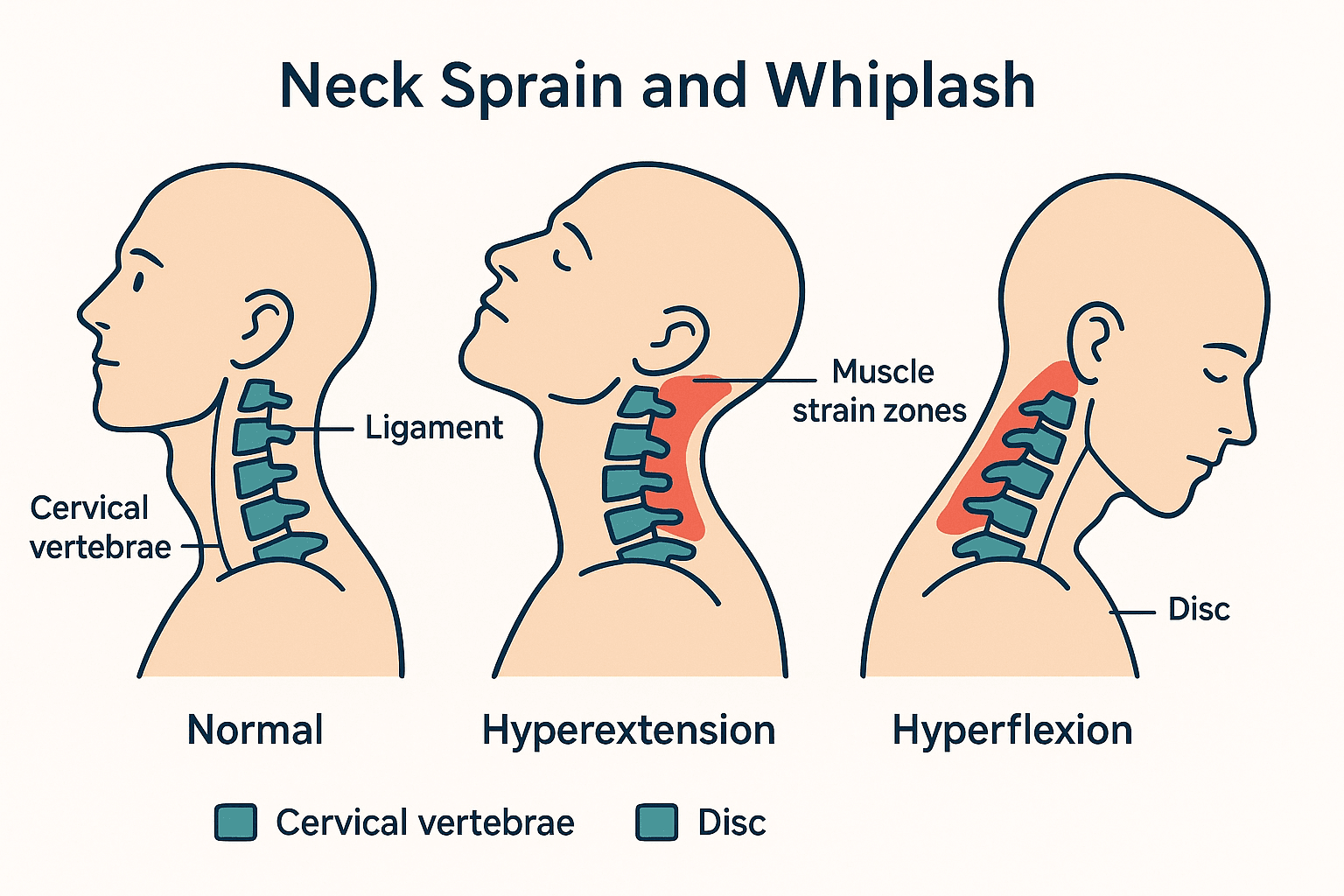
A neck sprain is an injury to the ligaments, capsules, muscles, or discs of the cervical spine — typically from a sudden force or awkward movement that loads these structures beyond their tolerance.
The most well-known mechanism is whiplash — the rapid acceleration-deceleration force that occurs in vehicle collisions, contact sports, falls, and similar events. The head moves rapidly on the neck, straining the soft tissues in one or more directions.
But a neck sprain can also occur from:
– Sleeping in an awkward position (often called “wry neck” or “torticollis” when severe)
– A sudden reaching or twisting movement
– A sports impact or fall
– Sustained postures at a desk or device that gradually strain the cervical structures
Symptoms of Neck Sprain / Wry Neck
- Neck pain and stiffness — often severe, limiting rotation and side-bending
- Muscle spasm — the neck held guarded in a deviated or stiff position
- Headache — particularly at the base of the skull
- Shoulder and upper back aching — referred from the cervical structures
- Dizziness or unsteadiness — can occur with upper cervical injuries; requires careful assessment
- Arm symptoms (in Grade III): tingling, numbness, or weakness in the arm
Self-Care in the First Few Days
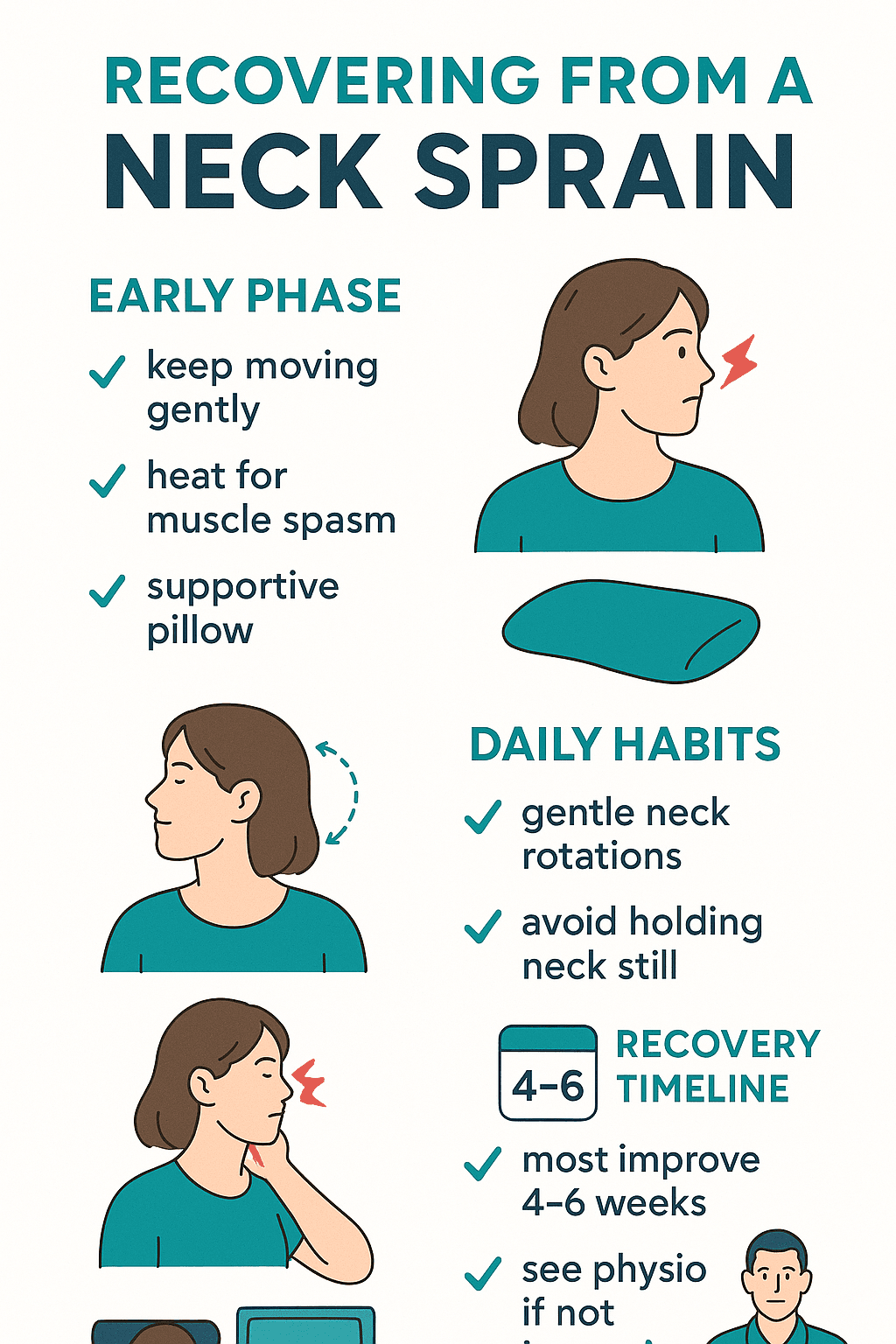
Early movement is better than rest. Research consistently shows that active, early mobilization produces better outcomes than collar immobilization for whiplash injuries.
- Gentle range-of-motion exercises: Slowly and gently move your neck through its comfortable range — nodding, side-tilting, small rotations. Within tolerable pain. Several times per day.
- Heat: A warm pack or shower on the neck muscles reduces spasm and makes movement more comfortable.
- Avoid prolonged immobility: Don’t stay in one position for long periods — take movement breaks frequently.
- Pillow support: A supportive cervical pillow maintaining neutral neck alignment during sleep prevents the additional stiffening of overnight immobility.
- Return to normal activity as tolerated — avoiding activity prolongs recovery.
Frequently Asked Questions
How long does a stiff neck take to resolve?
Acute wry neck (from sleeping awkwardly or sudden movement): typically 2–5 days with gentle movement and treatment. Grade I–II whiplash: 4–12 weeks with active management. A subset of whiplash patients develop chronic pain — early, active treatment and positive expectations are the strongest predictors of a good outcome.
Should I wear a soft collar?
No — prolonged collar use is no longer recommended. It weakens neck muscles, reduces proprioceptive input, and prolongs recovery. Wear it only if recommended for short-term support during acute severe pain, and wean off it as soon as possible.
My neck sprain was minor — do I still need treatment?
Early treatment of even mild whiplash or neck sprain significantly reduces the risk of developing chronic, persistent symptoms. It is much easier to treat early than to manage a condition that has become entrenched.
For patient education only. Not medical advice.