Scoliosis: Understanding the Curved Spine — and How to Manage It
What Is Scoliosis?
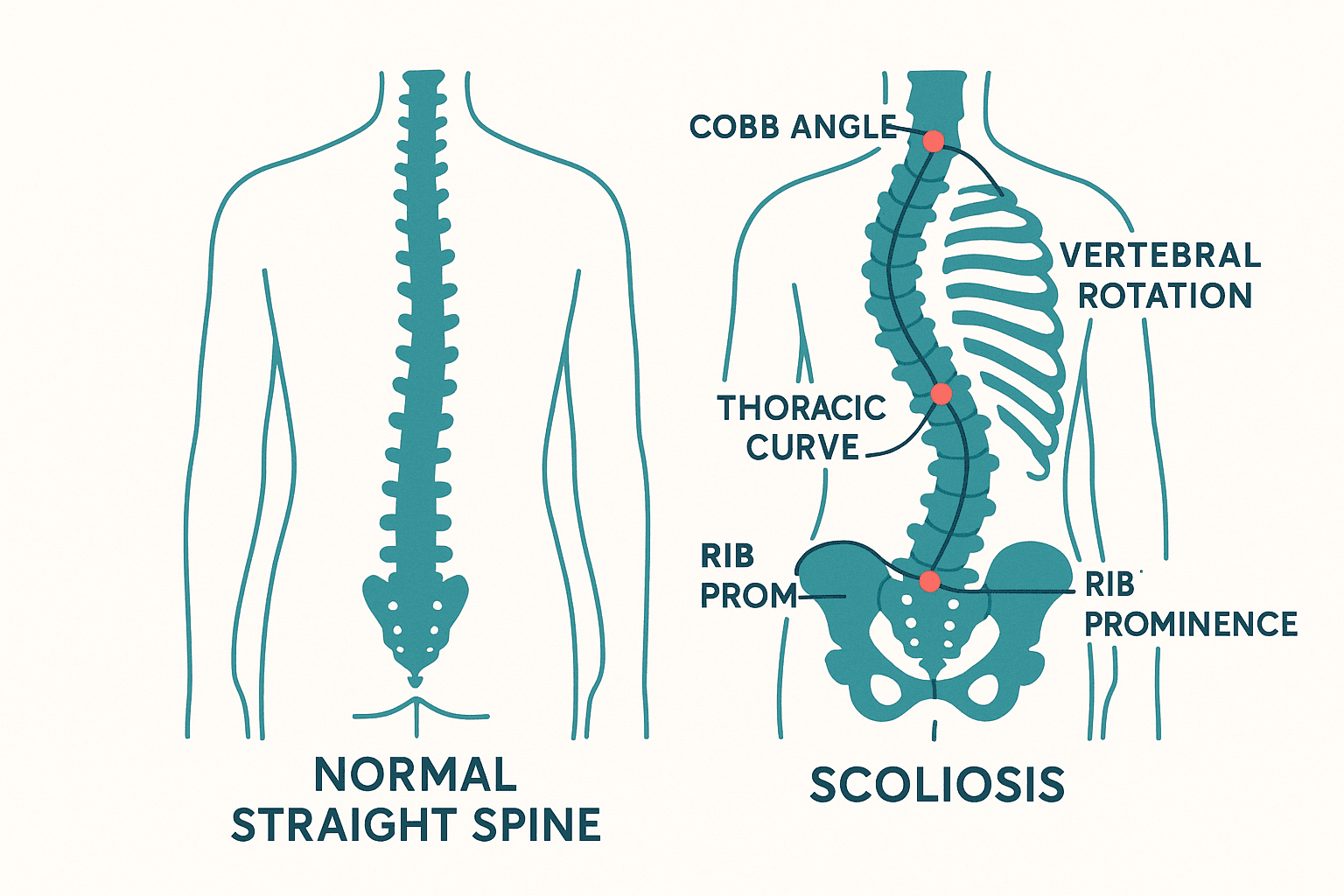
Scoliosis is a lateral (side-to-side) curvature of the spine measuring more than 10 degrees on a standing X-ray, often with rotation of the vertebrae. The spine curves to the left, right, or in an S-shape. It is not simply “bad posture” — scoliosis involves structural changes within the vertebrae themselves.
Cobb angle — the standard measurement of spinal curvature on X-ray — is used to classify severity:
– Less than 20°: Mild — observation; physiotherapy and exercise
– 20–40°: Moderate — bracing (in skeletally immature patients still growing); active management
– Greater than 40–50°: Severe — possible surgical consultation
Symptoms
In children and adolescents:
– Visible uneven shoulders or hips
– One shoulder blade more prominent than the other
– Uneven waistline
– Back pain (less common than in adults, but present in up to 30%)
– Fatigue with prolonged standing or sitting
In adults:
– Back pain — often the primary complaint
– Muscle imbalance and tension on the concave (inner) side of the curve
– Leg pain, numbness, or tingling if nerve roots are affected
– Cosmetic concerns and postural asymmetry
– Reduced exercise tolerance in severe curves (from reduced lung capacity)
Living Well with Scoliosis
Exercise
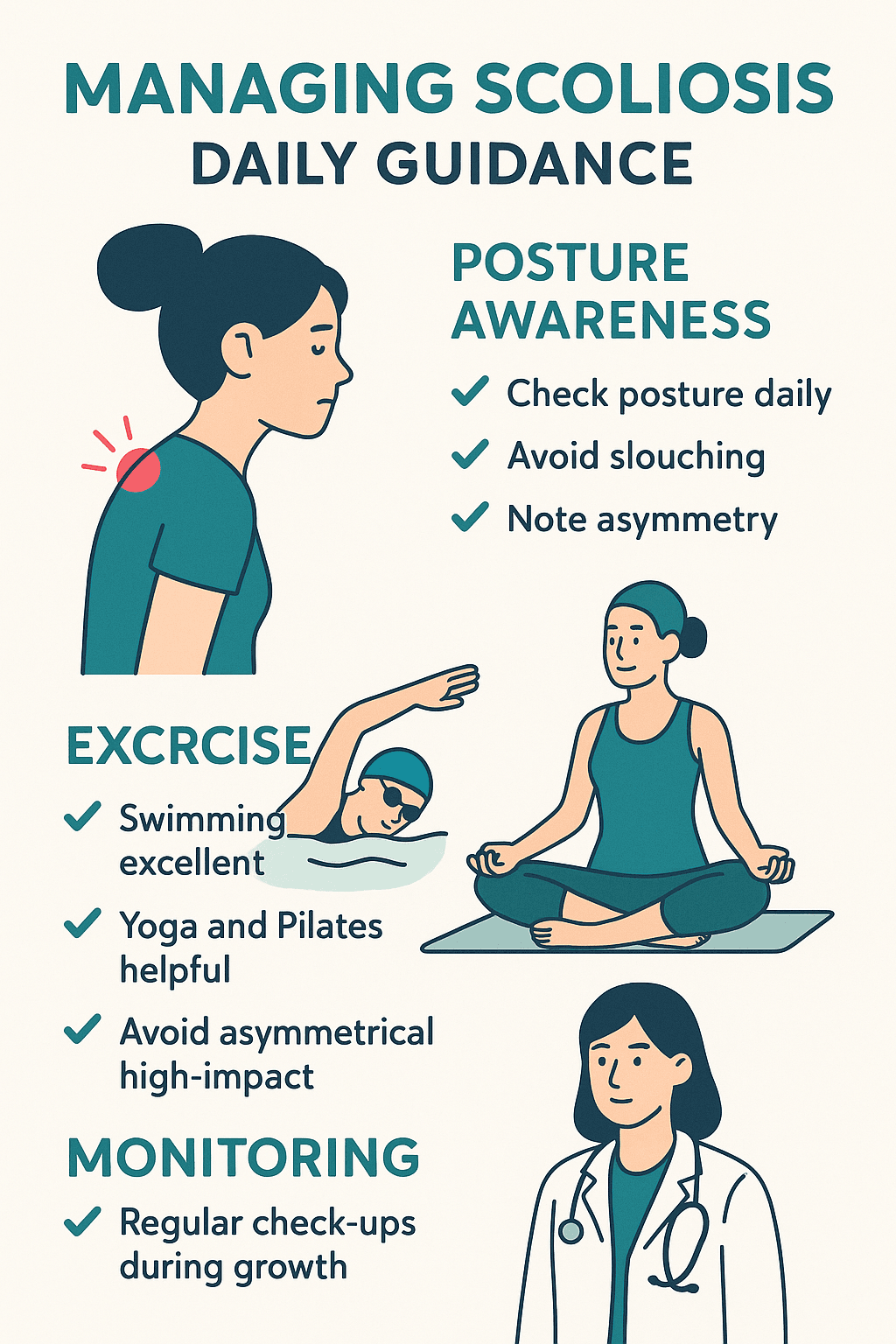
People with scoliosis should stay active. Swimming is often recommended as the buoyancy reduces spinal load while allowing symmetrical movement. Yoga and Pilates — when adapted for scoliosis — build core strength and body awareness. High-impact activities are generally fine for mild to moderate curves; your physiotherapist will advise.
Monitoring
- Children and adolescents with scoliosis should have regular check-ups with an orthopedic specialist and/or scoliosis physiotherapist during the growth years
- Adults with scoliosis should monitor for progression, particularly around menopause when bone loss can allow adult curves to progress
Sleep Position
Side-lying with a pillow between the knees is generally most comfortable. Sleeping on the convex side of the curve can be more comfortable as it opens the concave facet joints.
Start Managing Your Scoliosis Confidently
Scoliosis managed well — with the right exercise program and appropriate monitoring — has minimal impact on most people’s quality of life. Our chiropractors and physiotherapists will assess your curve and design a personalized management plan. Book an appointment →
For patient education only. Not medical advice.