
Prenatal Pelvic Health: Why Physiotherapy During Pregnancy Changes Everything After
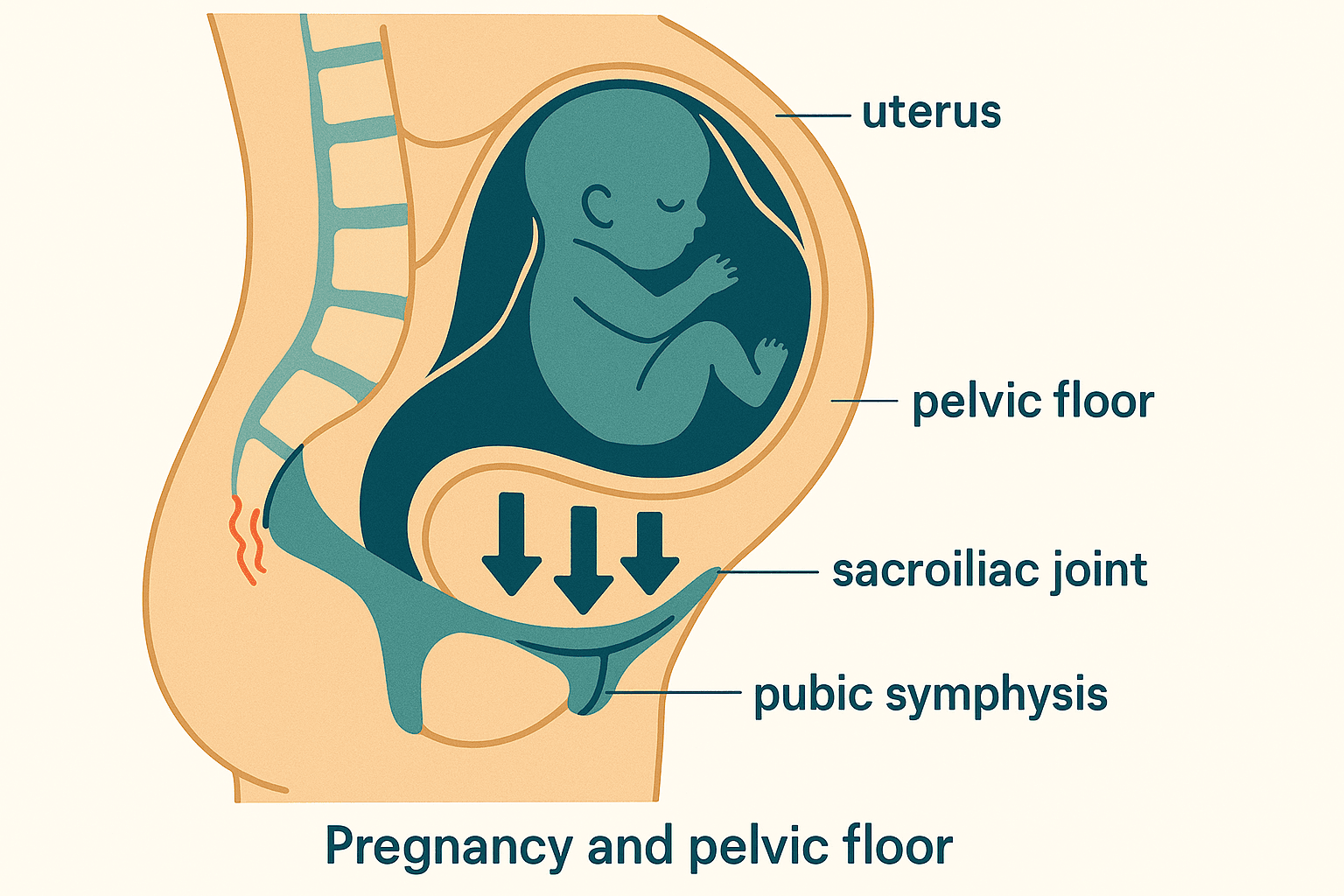
What Pregnancy Does to the Pelvic Floor
Hormonal Changes
Relaxin — a hormone produced in increasing amounts during pregnancy — loosens the ligaments throughout the pelvis and body to allow pelvic expansion during delivery. This is essential for birth but also increases joint laxity throughout the lower spine and pelvis, making them more vulnerable to strain.
Increasing Load
As the baby grows, the downward pressure on the pelvic floor increases substantially. By the third trimester, the pelvic floor is supporting the weight of the uterus, baby, placenta, and amniotic fluid — a significant and sustained load that can lead to muscle fatigue, pressure symptoms, and reduced continence control.
Postural Changes
The growing belly shifts the centre of gravity forward, increasing lumbar lordosis (low back curve), altering hip and pelvic mechanics, and changing how the deep core — including the pelvic floor — works to stabilize the spine.
Pelvic Girdle Pain
Pelvic girdle pain (PGP) — pain in the sacroiliac joints, pubic symphysis, or coccyx — affects up to 20% of pregnant women. It can be debilitating, limiting walking, climbing stairs, and turning over in bed. It is caused by the combination of ligament laxity (from relaxin), asymmetric loading, and reduced pelvic stability — and responds very well to pelvic floor physiotherapy.
Common Prenatal Conditions Physiotherapy Treats
Symphysis Pubis Dysfunction (SPD)
Pain at the front of the pelvis (pubic symphysis), often sharp with weight transfer — walking, climbing stairs, standing on one leg. Managed with pelvic stability exercises, a pelvic support belt, and activity modification.
SI Joint Pain
Sacroiliac joint pain — one or both sides of the lower back/buttock — is very common in pregnancy. Manual therapy and specific stability exercises reduce pain and maintain function.
Back Pain
Low back pain affects up to 70% of pregnant women. Physiotherapy assessment identifies the specific source — disc, facet, SI joint, or muscular — and targets treatment accordingly.
Incontinence During Pregnancy
Leaking urine with coughing, sneezing, or exercise is common during pregnancy — particularly in the third trimester. Pelvic floor training significantly reduces both prenatal and postnatal incontinence.
Self-Care During Pregnancy
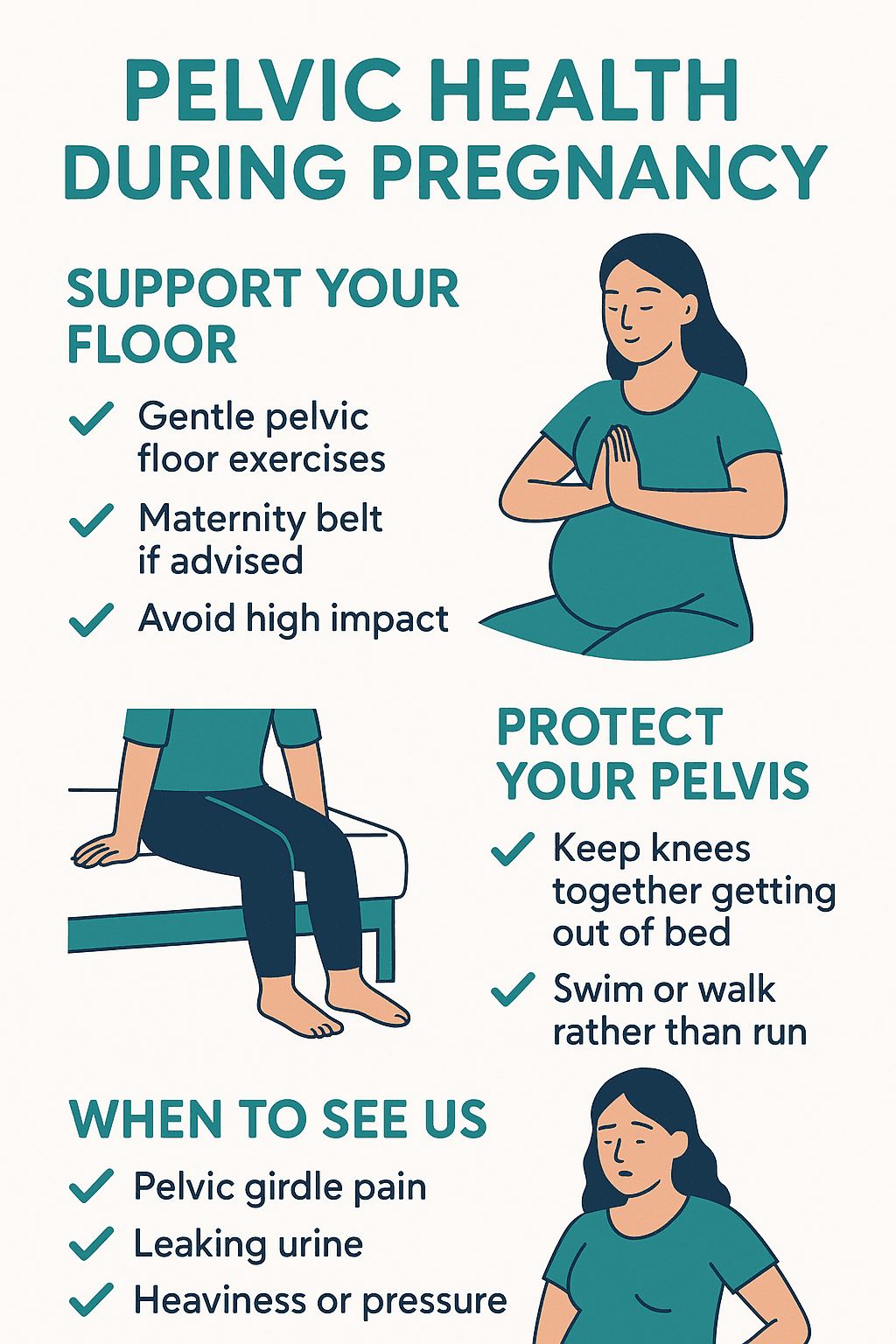
Pelvic Floor Exercises Daily
Performed correctly (see pelvic floor dysfunction article), daily pelvic floor training throughout pregnancy reduces postpartum incontinence by approximately 30–50%. Equally important: practice fully releasing the pelvic floor.
Avoid Asymmetric Loading
- Step into the car with both feet together (not one leg at a time)
- Sit to put on shoes and pants
- Carry loads equally on both sides
Sleep Position
Left side-lying (with a pillow between knees and one supporting the abdomen) reduces pressure on the inferior vena cava, supports pelvic alignment, and is the most comfortable position for most pregnant women from mid-pregnancy onward.
Invest in Your Pelvic Health Before Birth
The best time to care for your pelvic floor is during pregnancy — not after problems develop. One or two prenatal sessions can transform your experience during and after birth. Book an appointment →
For patient education only. Not medical advice.