Postpartum Recovery: Your Body After Birth — What’s Normal, What’s Not, and How to Heal
Medically reviewed by Ksenya Kharnam, BPT, Registered Physiotherapist, Clinical Director · Last reviewed May 26, 2026
What Happens to the Body After Birth
After Vaginal Delivery
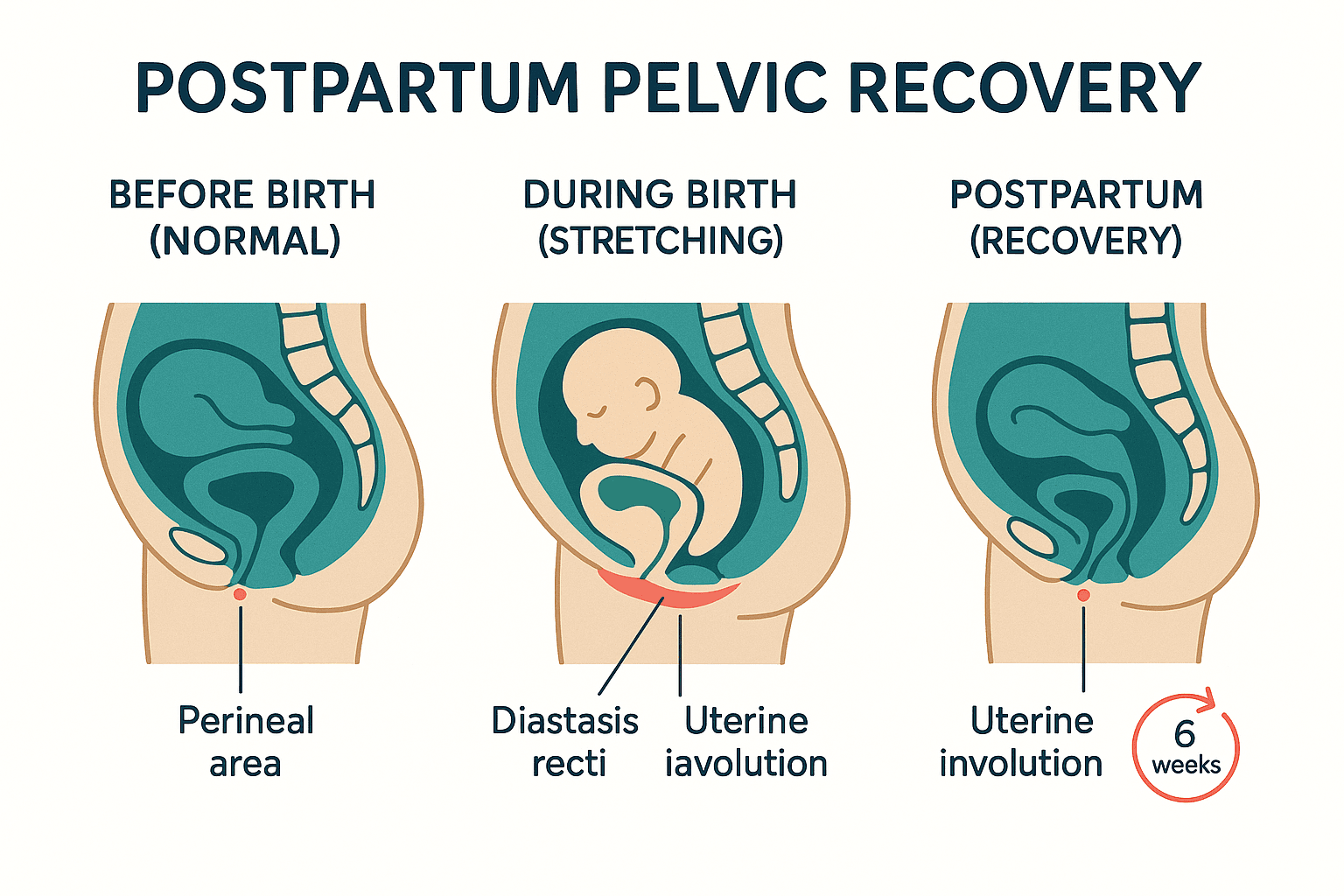
The pelvic floor has undergone extraordinary stress. The pudendal nerve (which innervates the pelvic floor muscles) and the muscles themselves are stretched to several times their resting length. Even without tearing, significant stretching and micro-trauma occur.
Perineal tears: Classified from first degree (skin only) to fourth degree (involving the anal sphincter and rectal mucosa). Third and fourth degree tears require surgical repair and careful postpartum rehabilitation.
Immediate postpartum changes: Oedema (swelling), bruising, perineal pain, and temporary weakness of the pelvic floor are expected. Haemorrhoids are common. The uterus begins contracting (afterpains) to return to its pre-pregnancy size over 6–8 weeks.
After Caesarean Section
A C-section is major abdominal surgery — involving cutting through 7 layers of tissue. Recovery requires:
– Scar tissue management (a neglected area of postpartum care)
– Abdominal muscle rehabilitation — the transversus abdominis is cut during the procedure
– Pelvic floor rehabilitation — the pelvic floor was still loaded through pregnancy, regardless of delivery mode
Hormonal Changes
Estrogen and progesterone levels drop dramatically after delivery, and breastfeeding maintains them low. Effects include:
– Vaginal dryness and reduced tissue elasticity
– Mood changes (the hormonal component of postpartum blues and depression)
– Joint laxity that persists during breastfeeding
– Sleep disruption, fatigue, and cognitive effects
Diastasis Recti
Separation of the rectus abdominis muscles — which occurs to some degree in nearly all pregnancies — is present postpartum in most women. The degree of separation and, critically, the functional integrity of the linea alba (whether the connective tissue can generate tension) determines whether rehabilitation exercises should be modified.
Naturopathic Medicine in Postpartum Recovery
The postpartum period places enormous demands on a woman’s nutritional reserves — growing and birthing a baby depletes iron, zinc, omega-3 fatty acids, vitamin D, and B vitamins. The naturopathic approach to postpartum recovery addresses:
Iron replenishment: Many postpartum women are significantly iron-depleted, contributing to fatigue, brain fog, and mood disturbance. A targeted iron protocol (with appropriate forms and co-factors) restores levels effectively.
Omega-3 fatty acids: DHA supports postpartum brain recovery and is preferentially transferred to breast milk, often depleting the mother’s levels.
Hormonal support: Herbs and nutritional protocols to support the transition from the high-hormone state of pregnancy to the low-hormone state of breastfeeding, reducing the severity of postpartum hormonal symptoms.
Milk supply support: Galactagogues (substances that support milk production) and nutritional optimization for breastfeeding mothers.
Mood and sleep support: Natural approaches to postpartum mood disturbance — particularly postpartum blues (first 2 weeks) and postpartum depression — in conjunction with appropriate medical monitoring and support.
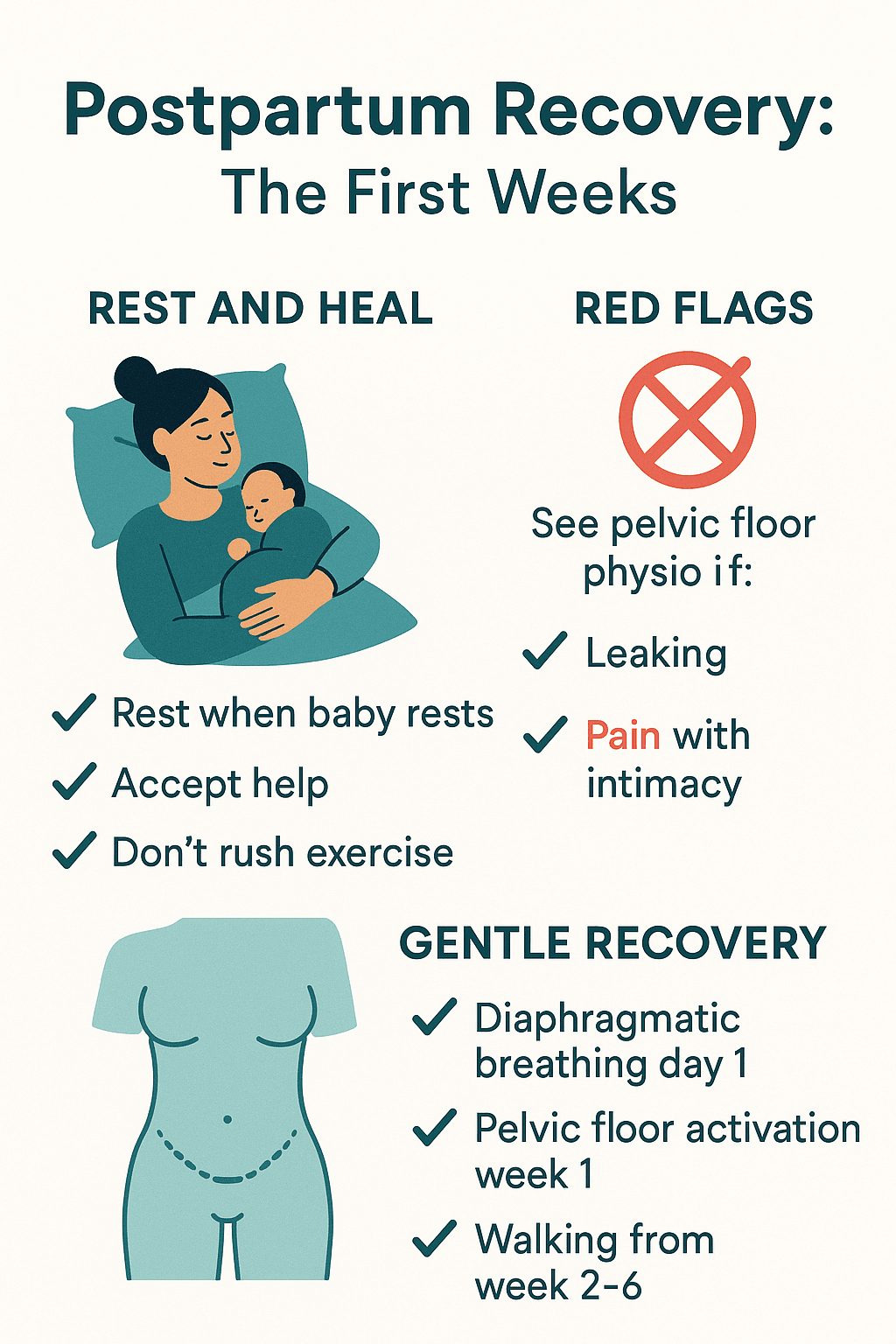
Red Flags: Seek Urgent Care if You Experience:
- Heavy bleeding (soaking more than a pad per hour) — possible postpartum haemorrhage
- Fever over 38°C with pain — possible infection
- Wound opening, oozing, or signs of infection (C-section or perineal scar)
- Calf pain or swelling with shortness of breath — possible deep vein thrombosis (blood clot)
- Severe headache or vision changes — possible postpartum pre-eclampsia
- Thoughts of harming yourself or your baby — postpartum depression/psychosis; seek immediate support
For patient education only. Not medical advice.