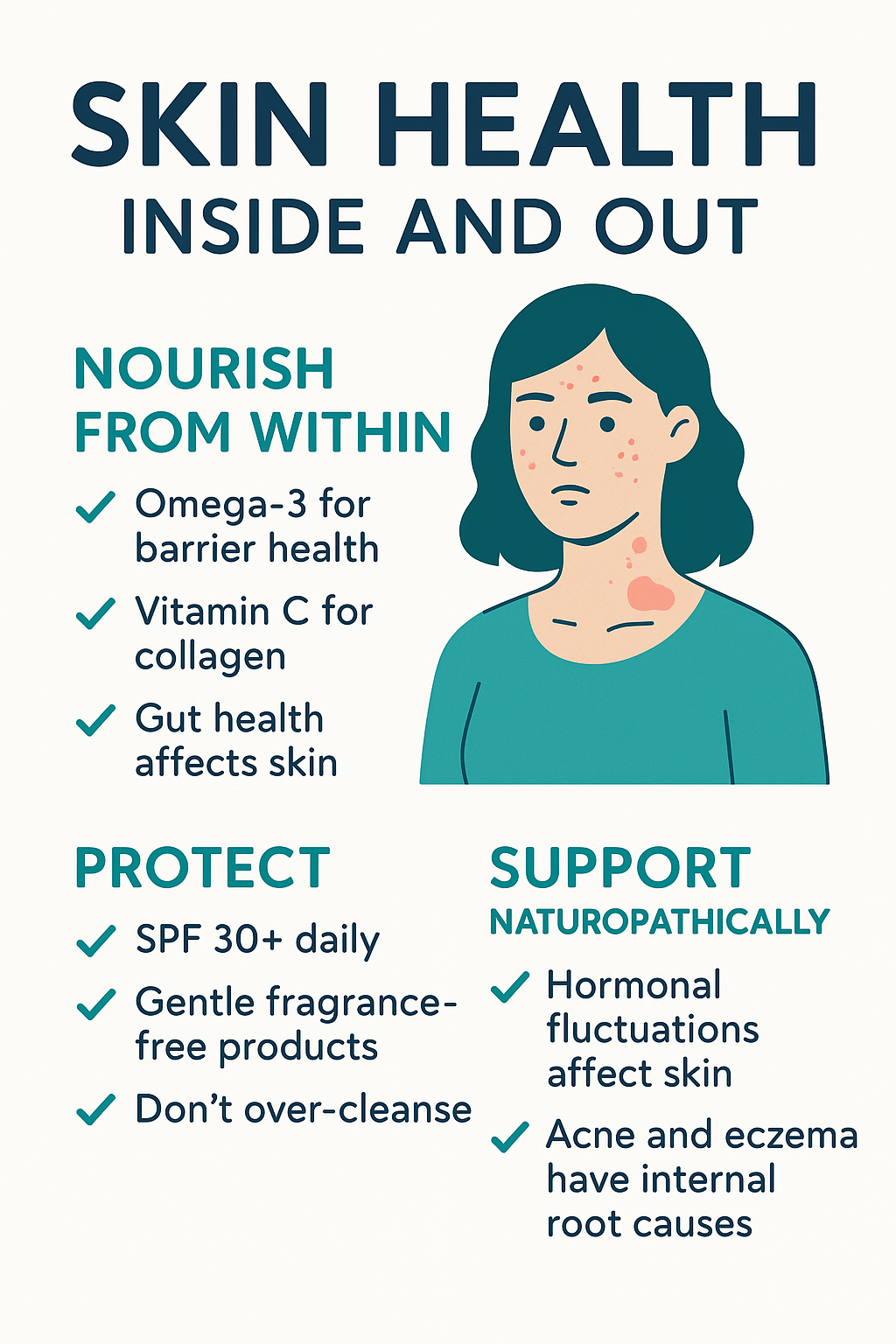
Skin Health: What Your Skin Is Trying to Tell You — and How to Help It
Your skin is the largest organ in your body, and it rarely suffers in silence. Breakouts, rashes, dryness, premature aging, eczema flares — these aren’t just surface problems. They’re often the most visible sign that something deeper is out of balance: your gut, your hormones, your immune system, or your stress response.
The good news is that skin health responds remarkably well to a whole-body approach. When the right internal conditions are in place, many people see dramatic improvements without aggressive topical treatments.
What’s Actually Happening in Your Skin
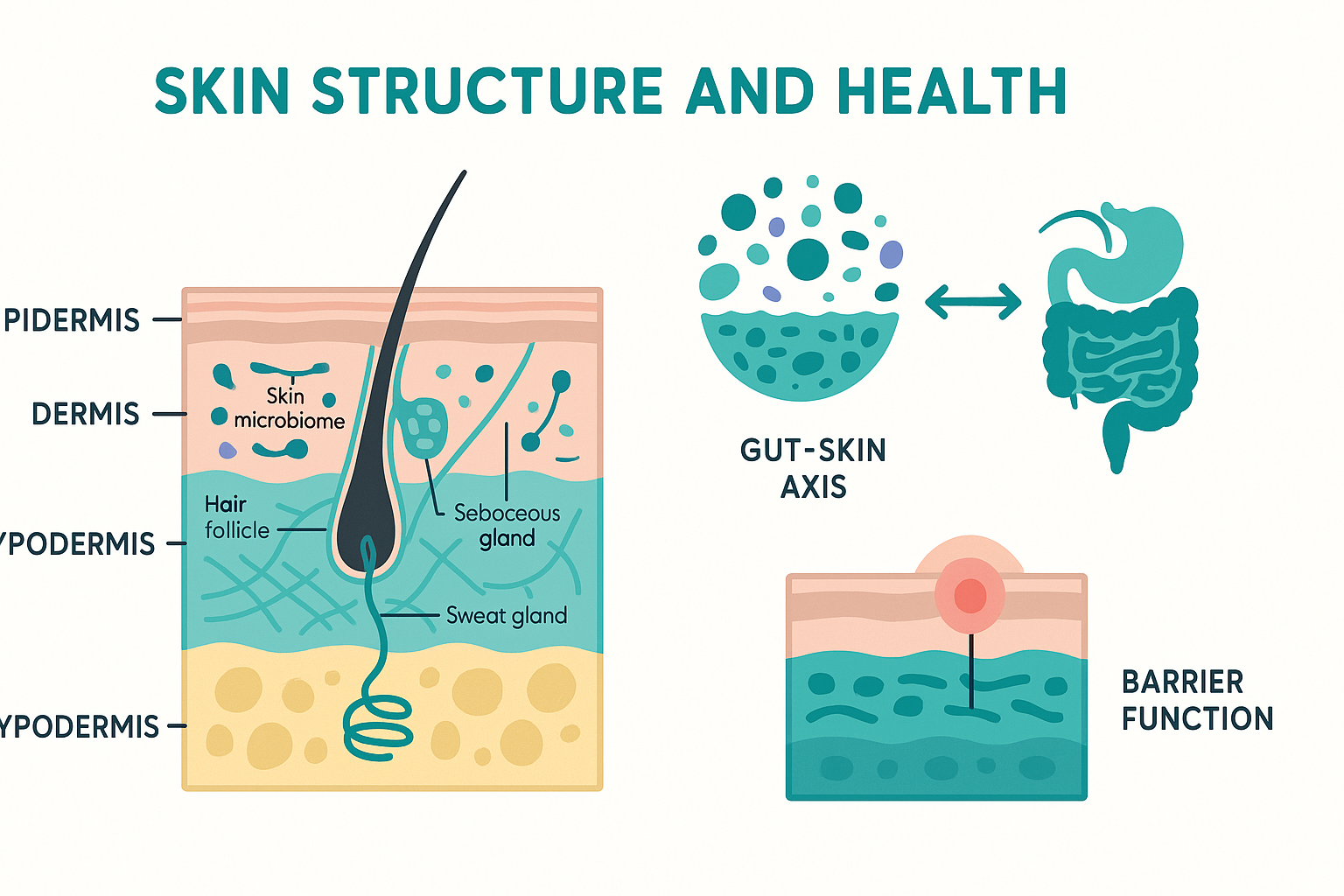
Your skin is made up of three layers. The outermost layer — the epidermis — is your barrier against the world. Below it, the dermis contains collagen, elastin, blood vessels, and sebaceous (oil) glands. The deepest layer, the hypodermis, is mostly fat and connective tissue that cushions and insulates.
Healthy skin depends on several things working together:
- A strong barrier function — the epidermis maintaining its integrity so moisture stays in and irritants stay out
- Good circulation — delivering oxygen and nutrients to skin cells
- Balanced sebum production — too little means dry, cracked skin; too much contributes to acne
- A healthy skin microbiome — billions of bacteria that live on the skin surface and protect it from pathogens
- Adequate collagen turnover — new collagen being synthesised as old collagen breaks down
When any of these break down, the result shows on your skin.
The Gut-Skin Connection
One of the most significant shifts in dermatology over the past decade has been the recognition of the gut-skin axis — the bidirectional relationship between gut health and skin health.
Research consistently shows that people with conditions like acne, eczema, psoriasis, and rosacea have measurable differences in their gut microbiome compared to people without these conditions. An inflamed or dysbiotic gut drives systemic inflammation, which surfaces — literally — through the skin.
Common gut-related skin patterns:
– Acne — often linked to high-glycaemic diets, dairy, and gut dysbiosis
– Eczema (atopic dermatitis) — strongly associated with leaky gut and immune dysregulation
– Rosacea — frequently connected to small intestinal bacterial overgrowth (SIBO)
– Psoriasis — linked to chronic systemic inflammation with gut involvement
– Dull, congested skin — often reflects sluggish digestion and poor elimination
Hormones and Your Skin
Hormonal shifts are one of the most common and least addressed drivers of skin changes. Estrogen supports collagen production and skin thickness — which is why many women notice significant skin changes during perimenopause and menopause. Androgens (including testosterone) stimulate sebaceous glands, which is why hormonal acne tends to cluster around the jaw and chin.
Common hormonal skin patterns include:
– Cyclical breakouts around menstruation
– Sudden onset of adult acne in your 30s or 40s
– Skin dryness, thinning and loss of elasticity during perimenopause
– Increased sensitivity or flushing with hormonal fluctuation
What Damages Skin Health
Understanding what harms your skin is as important as knowing what helps it:
- High-glycaemic diet — sugar and refined carbohydrates spike insulin, which drives oil production and inflammation
- Dairy — particularly linked to acne in some people, possibly through IGF-1 and hormonal content
- Chronic stress — cortisol breaks down collagen and disrupts the skin barrier
- Poor sleep — the skin repairs itself during deep sleep; chronic sleep deprivation accelerates aging
- UV exposure without protection — the single largest driver of premature skin aging and skin cancer
- Over-cleansing — disrupts the skin microbiome and strips natural oils, paradoxically worsening many conditions
- Alcohol — dehydrates the skin and drives inflammation
- Smoking — severely impairs circulation and collagen synthesis
How We Support Skin Health at Wellness Place
Skin conditions that haven’t responded to topical treatments often have internal root causes that need to be addressed. Our naturopath and acupuncturist both work with skin health from the inside out.
Naturopathic Medicine
Naturopathic medicine excels at skin health because it looks upstream from the symptoms. Your naturopath will investigate possible drivers including gut microbiome imbalances, food sensitivities, hormonal patterns, nutritional deficiencies (zinc, vitamin A, omega-3s, vitamin D), and inflammatory markers. Treatment is highly individualised — what clears one person’s acne may not work for another, and a good naturopath takes the time to find out why your skin is behaving the way it is. Learn more about naturopathic medicine at Wellness Place.
Acupuncture
Traditional Chinese medicine has treated skin conditions for thousands of years through acupuncture. From a modern perspective, acupuncture reduces systemic inflammation, regulates the stress response (lowering cortisol), and improves circulation to the skin. It is particularly useful for inflammatory skin conditions like acne, eczema, and rosacea, as well as for the skin changes that accompany hormonal transitions like menopause. Many people notice improved skin texture and radiance as a secondary benefit of acupuncture for other conditions. Learn more about acupuncture at Wellness Place.
Nutrition for Skin Health
What you eat is reflected in your skin, often within days. The most evidence-backed nutritional strategies for skin health:
Eat more of:
– Fatty fish (salmon, sardines, mackerel) — omega-3 fatty acids reduce inflammation and support barrier function
– Colourful vegetables and berries — antioxidants protect against oxidative skin damage
– Vitamin C-rich foods — essential for collagen synthesis (citrus, kiwi, capsicum, broccoli)
– Zinc-rich foods — supports wound healing and controls oil production (pumpkin seeds, legumes, meat)
– Fermented foods — yogurt, kefir, kimchi, sauerkraut support the gut microbiome which influences skin
– Healthy fats — avocado, olive oil, nuts support the lipid barrier of the skin
Reduce or eliminate:
– Refined sugar and high-glycaemic foods
– Dairy (particularly skim milk — test for 4-6 weeks to assess impact)
– Ultra-processed foods and seed oils high in omega-6
Your Daily Skin Habits
Cleanse gently — once daily is sufficient for most people. Twice daily if you wear makeup or exercise. Use lukewarm water and a mild, fragrance-free cleanser. Avoid scrubbing.
Moisturise immediately after washing — while skin is still slightly damp, to lock in hydration. Choose fragrance-free formulas appropriate for your skin type.
SPF every day, not just summer — UV exposure is cumulative and year-round. SPF 30+ on face, neck and hands daily is the most impactful anti-aging investment you can make.
Don’t over-supplement — more is not always better with skin supplements. High-dose biotin, for instance, can actually worsen acne in some people. Work with a practitioner before adding supplements.
Sleep — aim for 7-9 hours. Growth hormone (released during deep sleep) drives skin cell renewal. Chronic sleep deprivation is one of the fastest routes to accelerated skin aging.
Manage stress — chronic cortisol elevation is directly catabolic to collagen. This is one of the clearest pathways between psychological stress and visible skin aging.
When to Seek Help
See a practitioner if:
– You have acne that isn’t responding to over-the-counter treatments, especially if it is cystic or leaving scars
– You’re experiencing new or worsening eczema, psoriasis or rosacea
– Your skin has changed significantly around a hormonal transition (pregnancy, postpartum, perimenopause)
– You have a rash that persists more than 2 weeks or keeps recurring
– You’re noticing unusual moles or lesions — see a dermatologist promptly for these
Questions People Often Ask About Skin Health
Q: Do I need to see a dermatologist or can a naturopath help?
Dermatologists are essential for diagnosing skin conditions, ruling out skin cancer, and managing conditions that need prescription medication. Naturopaths complement this by addressing internal drivers that dermatology doesn’t always have time to explore. Many people benefit from both. For persistent acne, eczema, rosacea or hormonal skin changes, naturopathic medicine is often the missing piece.
Q: How long does it take to see results from dietary changes?
Skin cells turn over approximately every 28 days, so give dietary changes at least 6-8 weeks to see a meaningful difference. Gut changes (which drive many skin improvements) take 3-6 months to become established. Consistency matters more than perfection.
Q: Are expensive skincare products worth it?
The evidence base for skincare is thinner than the marketing suggests. The most impactful topical ingredients are SPF, retinoids (prescription or over-the-counter retinol), vitamin C serum, and a good moisturiser. Beyond these, the returns diminish quickly. Internal health has more impact on your skin than most topical products.
Q: Can stress really cause acne?
Yes — this is well-established. Stress increases cortisol, which increases sebum production and drives inflammation. It also disrupts the gut microbiome and impairs sleep, both of which affect skin. Managing stress is a legitimate and important part of managing acne and other inflammatory skin conditions.
This guide is for informational purposes and does not replace a professional assessment. Persistent or concerning skin conditions deserve proper evaluation. If you’d like to explore the internal drivers of your skin health, book an assessment with our naturopath or acupuncturist at Wellness Place in Newmarket.