
Hip Pain and Hip Bursitis: Causes, Diagnosis, and Physiotherapy Solutions
Roll onto your side at night and the outer point of your hip lights up. Climb a flight of stairs and it grumbles. Sit with your legs crossed and it gets worse. This is one of the most common hip complaints we see in Newmarket, and it is rarely what people expect. Our hip pain guide covers the wider picture.
What is actually going on at the side of your hip
The bony bump you feel on the outside of your hip is called the greater trochanter. Several things attach to or sit on top of it: the tendons of your gluteus medius and gluteus minimus (the small buttock muscles that keep your pelvis level when you walk), and a fluid-filled cushion called a bursa that lets the tendons glide over the bone.
For years, any pain here was labelled “hip bursitis”. Current thinking has shifted. Many cases turn out to involve the tendons more than the bursa, and the umbrella term now used is greater trochanteric pain syndrome, or GTPS. Gluteal tendinopathy, meaning an overloaded and irritated tendon, is a big part of it.
Who gets it, and why
It shows up most often in people over 40, and women are affected more than men. A few patterns come up again and again. A jump in walking or running without enough build-up. A new job on your feet. Weak glute muscles after a long stretch of desk work. Sleeping on the painful side with the top leg falling across the body, which squeezes the tendons against the bone for hours.
Because the pain can spread down the outer thigh, it is sometimes mistaken for sciatica or a pinched nerve in the lower back. A hands-on assessment sorts these out.
How a physiotherapist works it out
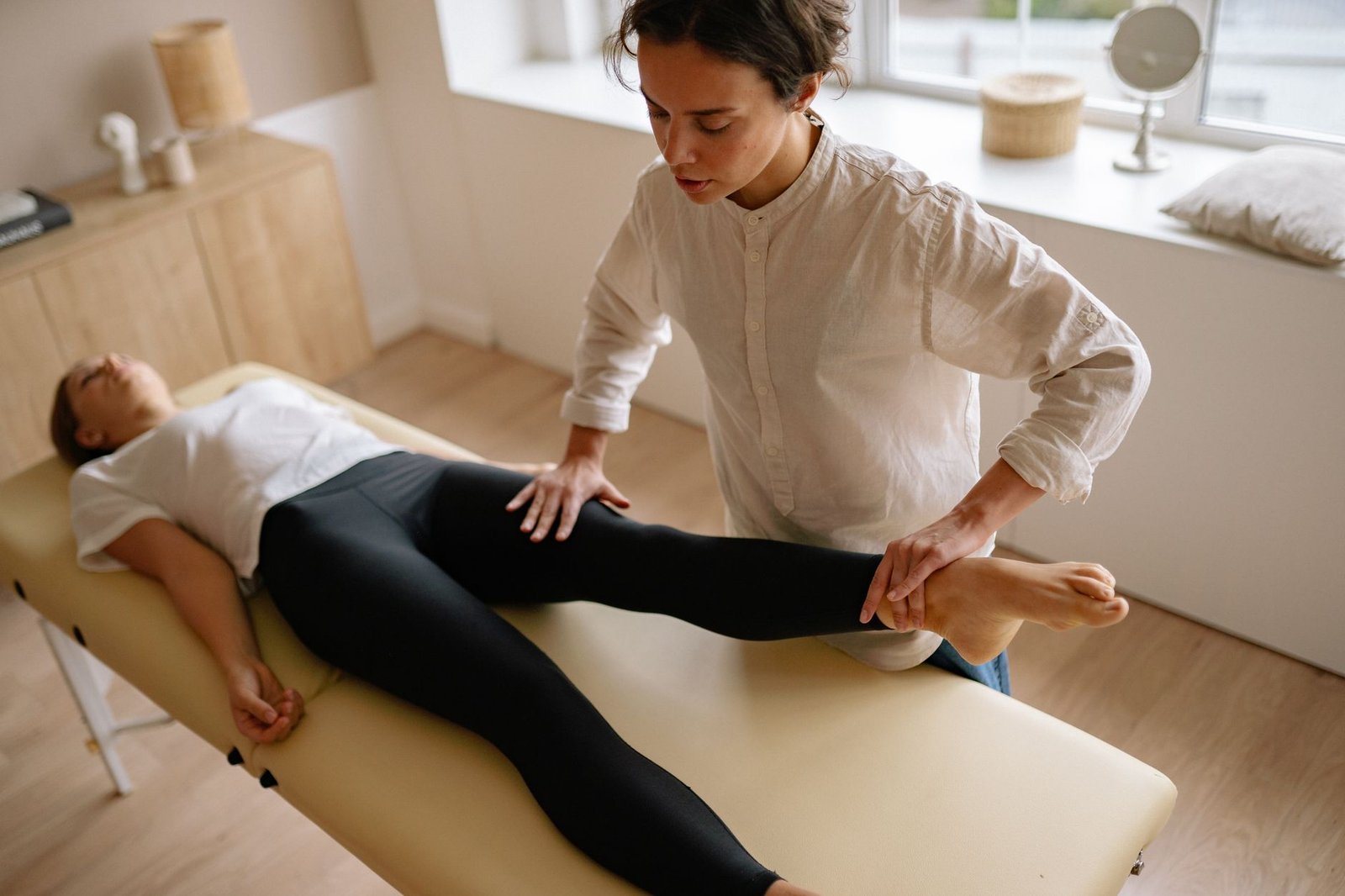
There is no single scan you need to get started. A physiotherapist will press on the trochanter to see if it reproduces your pain, then test things that load the tendon: standing on the sore leg for 30 seconds, lying on that side, resisting hip movement outward. They will also look at how you walk, how you rise from a chair, and whether your pelvis drops on one side.
What the research says about treatment
One of the better-known trials was published in the BMJ in 2018. Researchers in Australia followed 204 adults aged 35 to 70 who had lateral hip pain for more than three months, with gluteal tendinopathy confirmed by clinical exam and MRI. They split people into three groups: a physiotherapist-led programme of education and exercise (14 sessions over eight weeks), a single corticosteroid injection, or a wait-and-see approach. At eight weeks, 51 of 66 people in the education and exercise group reported a successful outcome, compared with 38 of 65 after the injection and 20 of 68 in the wait-and-see group. Average pain scores at that point were 1.5 out of 10 with exercise, 2.7 with the injection and 3.8 with no treatment. You can read the full paper here.
A 2025 systematic review and network meta-analysis pulled together 19 randomized trials with 1,701 participants. Its conclusion was that exercise therapy gave the most meaningful improvement in pain and function among the conservative options studied, while injections also helped on some function measures. The authors are upfront that the number of included studies was limited, so comparing treatments against each other with confidence is still hard. The review is available on PubMed Central.
What physiotherapy for hip pain looks like
The “education” part of that BMJ trial is not filler. A lot of the early gains come from changing what irritates the tendon. That can mean sleeping with a pillow between your knees so the top leg does not drop across your body, avoiding crossed legs and deep, low sofas, and spreading your weight evenly when you stand at the kitchen counter.
Exercise then builds the tendon’s tolerance for load, gradually. Early on, that might be gentle isometric holds, such as pressing the outside of your knee into a wall for 30 to 45 seconds. Later come side-lying leg raises, step-ups, and single-leg work, progressed only as fast as the hip allows. Hands-on treatment, taping and, in stubborn cases, shockwave therapy can sit alongside the exercise, but they support the programme rather than replace it.
When to get it looked at
Book an assessment if the pain has lasted more than a couple of weeks, wakes you at night, or makes stairs and walking a chore. See a doctor promptly if you had a fall, cannot put weight on the leg, or notice fever, a hot swollen hip, or numbness and weakness spreading down the leg.
Our physiotherapy team in Newmarket can work out what is driving your hip pain and build a plan you can follow at home between visits. Tonight, try a pillow between your knees and see how the morning feels, then book a visit so we can take it from there.