
Scoliosis in Adults: What Chiropractic Care Can and Can’t Do
A routine chest X-ray, a chiropractor noticing one shoulder blade sits higher than the other, a dentist’s comment about your posture. Many adults learn they have scoliosis this way, decades after anyone checked their spine. The next question is almost always the same: can chiropractic care straighten it?
The short answer is no, and a trustworthy clinician will tell you so. The longer answer is that there is still a lot a chiropractor can do for the stiffness, pain and movement problems that often travel with a curved spine.
What adult scoliosis actually is
Scoliosis is a sideways curve of the spine, measured on an X-ray as the Cobb angle. In adults, a curve above 10 degrees counts. Some adults carry a curve that started in adolescence and was never treated. Others develop one later because ageing discs and joints wear unevenly on one side, which is called degenerative scoliosis.
A curve alone does not always hurt. Plenty of people live with one for life and never need treatment. When symptoms do show up, they tend to include aching in the lower back, tiredness after standing for a while, stiffness getting out of a chair, and sometimes leg symptoms if a nerve is being squeezed. A 2025 review of adult scoliosis in the Turkish Journal of Physical Medicine and Rehabilitation describes this wide range of presentations and notes that bracing, physical therapy and medication are the usual conservative options, with surgery kept for severe deformities (Coşkun and Bucak, 2025).
What chiropractic care cannot do
Spinal adjustments do not reverse a structural curve in an adult. By adulthood the bones and discs have settled into their shape, and no hands-on technique changes that. If anyone promises to correct your Cobb angle in a handful of visits, walk away.
It also helps to be clear about the research. The review described below looked at bracing, physiotherapy-style exercise programmes and injections. It did not test chiropractic adjustments for adult curves, so we cannot claim that evidence for them.
What it can do
The goal in most adult cases is simple: less pain, better movement, and a spine that copes well with daily life. A chiropractor can assess how the curve affects your joints and muscles, check whether the pain is coming from the curve or from something unrelated, and then build a plan around you.
Joint mobility and muscle tension
A curved spine makes some joints work overtime while others barely move. Gentle mobilization, soft tissue work and, where appropriate, adjustments can ease the overworked segments. Forceful twisting is not appropriate for everyone with a curve, and a good clinician adjusts the technique to your spine.
Targeted exercise
Here the research is more encouraging. A 2025 narrative review in the Journal of Clinical Medicine pulled together seven studies of non-surgical care for adult spinal deformity, each with at least a year of follow-up. In the physiotherapy and rehabilitation programmes, one study found the Oswestry Disability Index (a questionnaire about how back pain limits daily tasks) fell from 39.5 to 31.8, and back pain scores dropped from 58.4 to 42.1. Another reported disability scores dropping from 38 to 17.6. Bracing slowed curve progression in some studies too. The authors call the evidence a useful short-term option for people who cannot or prefer not to have surgery, and the review is a narrative one covering a small number of studies, so the results should be read with care (Zlatanos et al., 2025).
In practice that means core strengthening, hip mobility work, and breathing and posture drills you can do at home, such as holding a side plank for 20 seconds on each side and building up gradually.
When a different kind of help is needed
Chiropractic care is one piece of the picture. See a medical doctor promptly if you notice numbness or weakness in a leg, trouble controlling your bladder or bowels, a curve that seems to be getting visibly worse, or pain that wakes you at night. These can point to nerve involvement or other conditions that need imaging or a specialist opinion. Your chiropractor should refer you without hesitation when that is the case, and many adults with scoliosis do best with a team that includes their family doctor, a physiotherapist, and sometimes a spine specialist.
What a first visit looks like
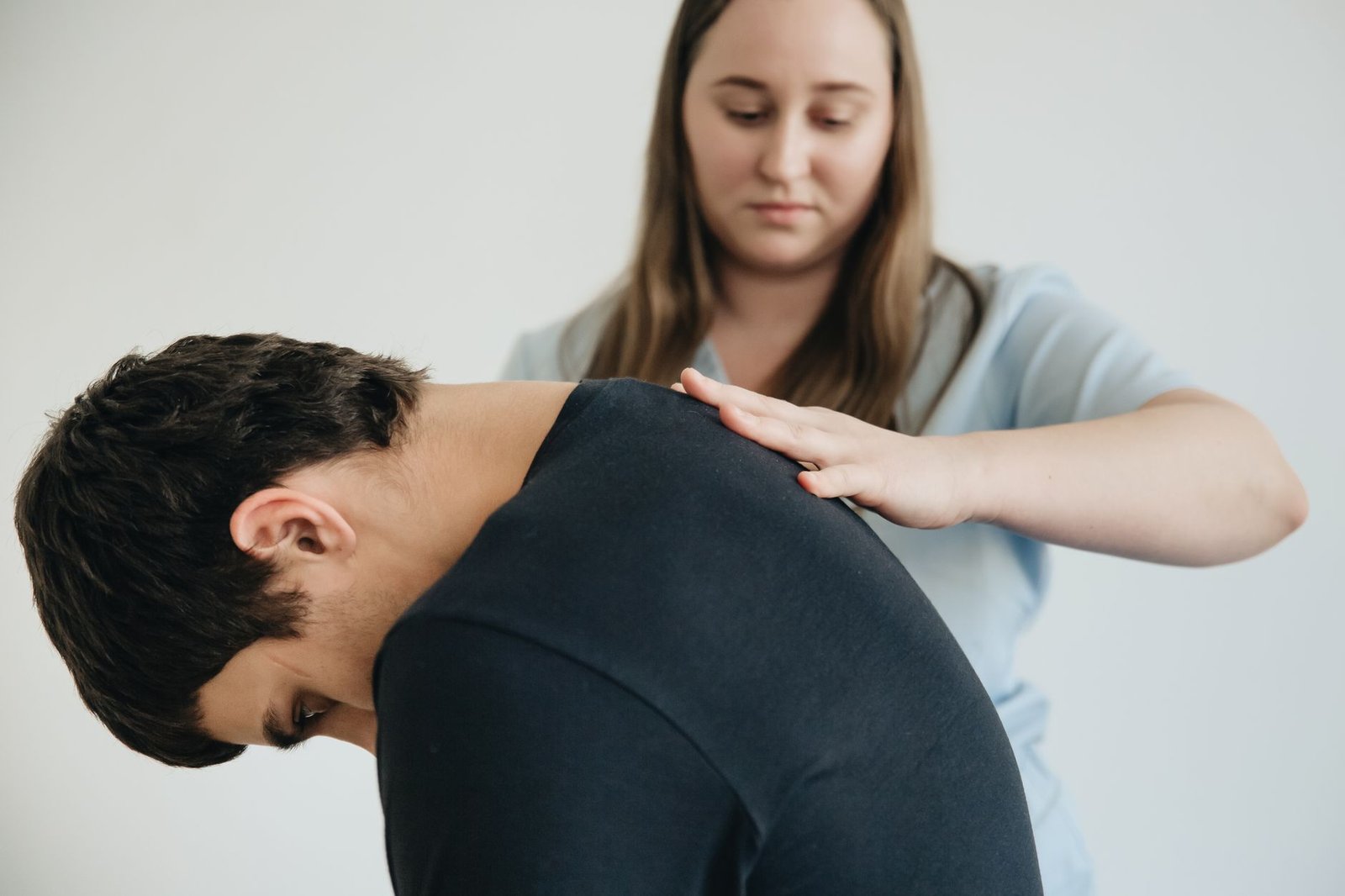
Expect a conversation about when the pain started, what makes it better or worse, and whether you have any X-rays. Bring them if you do. The chiropractor will look at how you stand and walk, test your range of motion, and check strength and nerve function in your legs. From there you should leave with a clear explanation of what is going on and a realistic plan, not a long prepaid package.
If you are in Newmarket and living with an adult curve, our team at Wellness Place can look at your back and explain what chiropractic care can reasonably offer you. You can also read more about scoliosis on our site. Book an assessment, bring any past imaging, and write down the three movements that bother you most so we can start there.