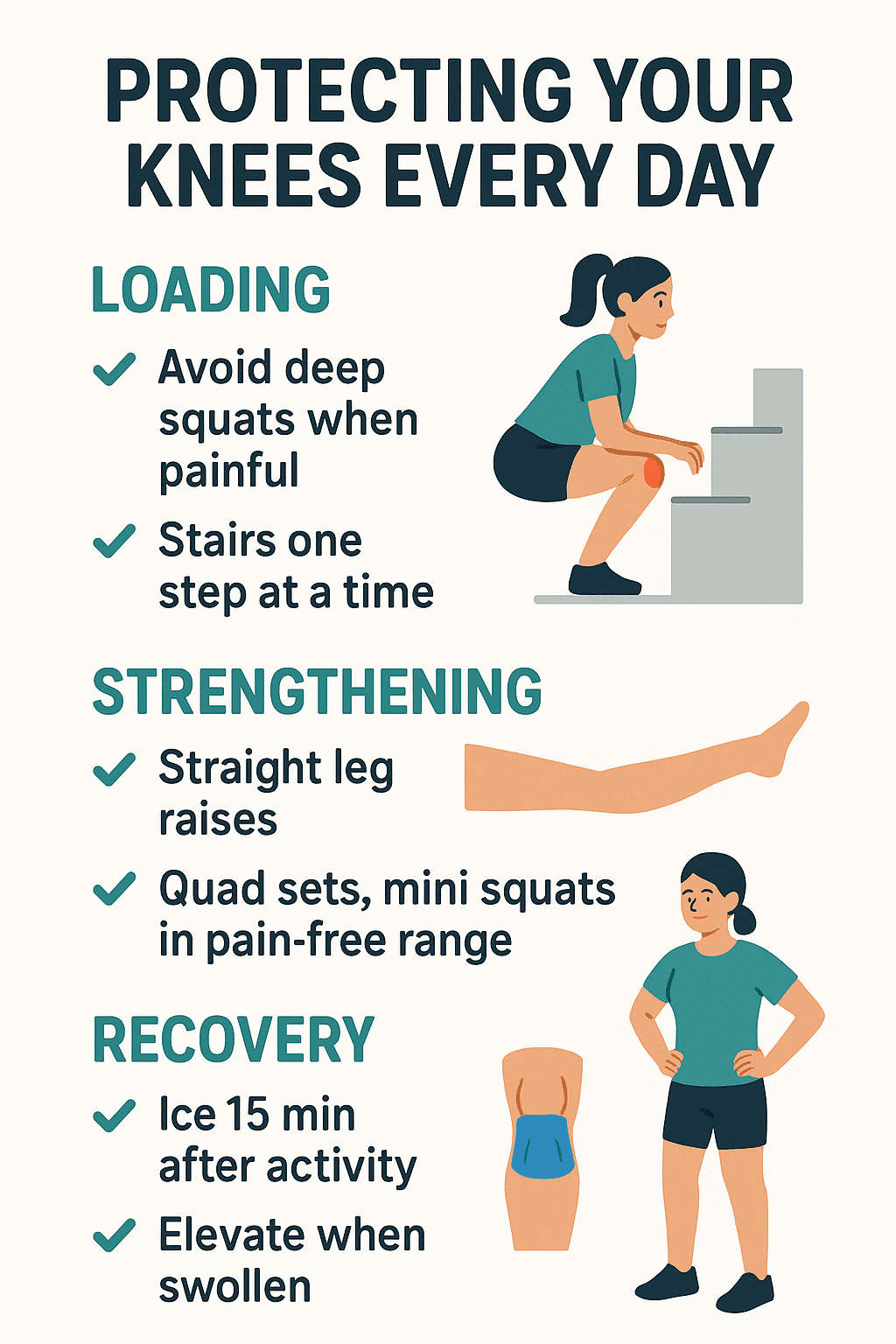
Knee Pain: Understanding What’s Happening and How to Get Better
Medically reviewed by Ksenya Kharnam, BPT, Registered Physiotherapist, Clinical Director · Last reviewed May 26, 2026
The Knee: A Loaded and Complex Joint
The knee is the largest joint in the body, formed where the femur (thigh bone) meets the tibia (shin bone), with the patella (kneecap) gliding along the front. Four main ligaments hold the bones together — the ACL and PCL inside the joint, and the MCL and LCL on the inner and outer sides. Two C-shaped cartilage pads called menisci sit between the femur and tibia, distributing load, providing cushioning, and stabilizing the joint.
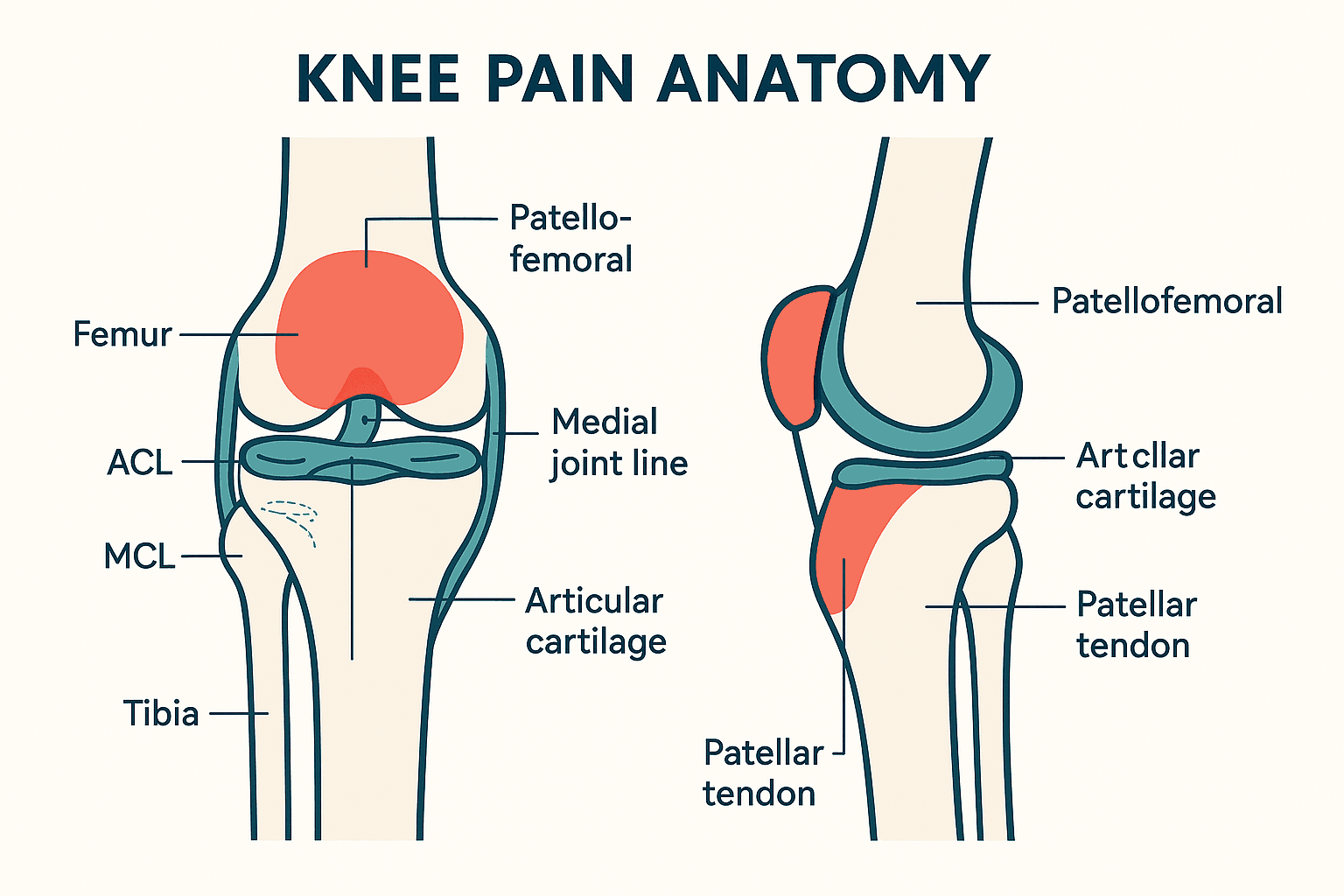
The kneecap sits within the quadriceps tendon and tracks along a groove in the femur. When quadriceps strength, hip muscle control, and foot biomechanics are all working well, the patella tracks smoothly. When any of these go wrong, the result is often anterior (front) knee pain.
Symptoms and Patterns
Knee pain location gives important clues to its source:
| Location | Likely Cause |
|---|---|
| Front of knee / behind kneecap | Patellofemoral syndrome, patellar tendinopathy |
| Inner (medial) joint line | Medial meniscus tear, MCL injury, medial OA |
| Outer (lateral) knee | IT band syndrome, lateral meniscus, LCL injury |
| Deep, diffuse aching | Osteoarthritis |
| Behind the knee | Posterior capsule strain, Baker’s cyst |
Common patterns also include:
– Morning stiffness that eases with movement (OA)
– Pain that builds during a run and forces you to stop (ITBS)
– Pain worsening on stairs, squatting, or prolonged sitting (PFPS)
– Swelling following activity
– Clicking, catching, or giving way
Recovery: What to Expect
| Condition | Typical Recovery |
|---|---|
| PFPS | 6–12 weeks with consistent rehab |
| IT band syndrome | 4–8 weeks with load modification and hip strengthening |
| Patellar tendinopathy | 3–6 months; longer for severe cases |
| Meniscal tear (degenerative) | 6–12 weeks of conservative physio; surgery rarely needed |
| Knee OA | Ongoing management; significant symptom reduction achievable |
Red Flags: Seek Urgent Assessment if You Have:
- Significant swelling immediately after a trauma — possible ligament tear or fracture
- Inability to bear weight after an injury
- Locked knee — unable to fully straighten
- Deformity or gross instability
- Hot, red, and swollen joint with fever — possible joint infection or gout
- Night pain not related to position — may indicate bone pathology
Ready to Get Your Knees Moving Again?
Whether your knee pain is new or has been limiting you for months, our physiotherapy team will assess the full picture and build a recovery plan that works. Book an appointment →
This article is for patient education purposes only and does not constitute medical advice.