
Pelvic Floor Dysfunction: What It Is, Why It Happens, and How Physiotherapy Helps
Medically reviewed by Ksenya Kharnam, BPT, Registered Physiotherapist, Clinical Director · Last reviewed May 26, 2026
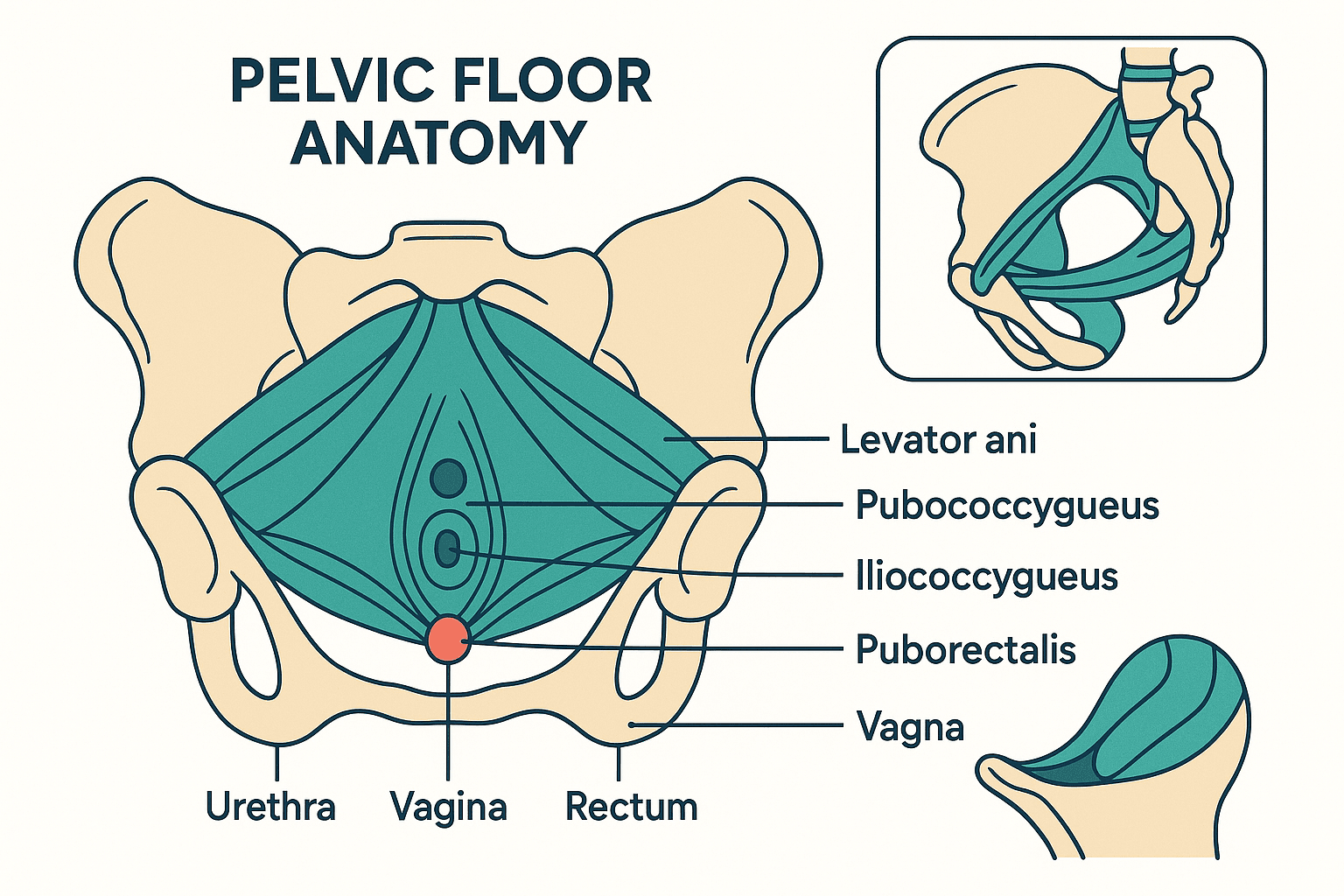
What Is the Pelvic Floor?
The pelvic floor is a group of muscles, ligaments, and connective tissue that forms a hammock-like base across the bottom of the pelvis — spanning from the pubic bone at the front to the tailbone (coccyx) at the back, and from one sitting bone to the other.
These muscles have three critical functions:
1. Support: The pelvic floor acts as a shelf, supporting the weight of the bladder, uterus, and rectum, and resisting the downward pressure of intra-abdominal forces (coughing, lifting, pregnancy).
2. Sphincteric control: The pelvic floor muscles encircle the urethra, vagina, and rectum. Their ability to contract and relax controls continence of urine and stool, and enables comfortable, complete elimination.
3. Sexual function: The pelvic floor is integral to arousal, sensation, and comfortable penetration in women, and to erection and ejaculation in men.
Causes and Risk Factors
- Pregnancy and childbirth — particularly vaginal delivery with a large baby, prolonged pushing, or perineal tearing
- Menopause — estrogen decline reduces tissue elasticity and muscle tone throughout the pelvic floor
- Chronic constipation and straining — generates repeated downward pressure on the pelvic floor
- High-impact sport — particularly running, gymnastics, heavy lifting without adequate intra-abdominal pressure management
- Previous pelvic surgery — hysterectomy, bladder repair
- Chronic cough — repeated loading of the pelvic floor
- Obesity — chronically increased intra-abdominal pressure
- Trauma — physical or sexual trauma affecting the pelvic region
- Central nervous system conditions — MS, Parkinson’s, spinal cord injury
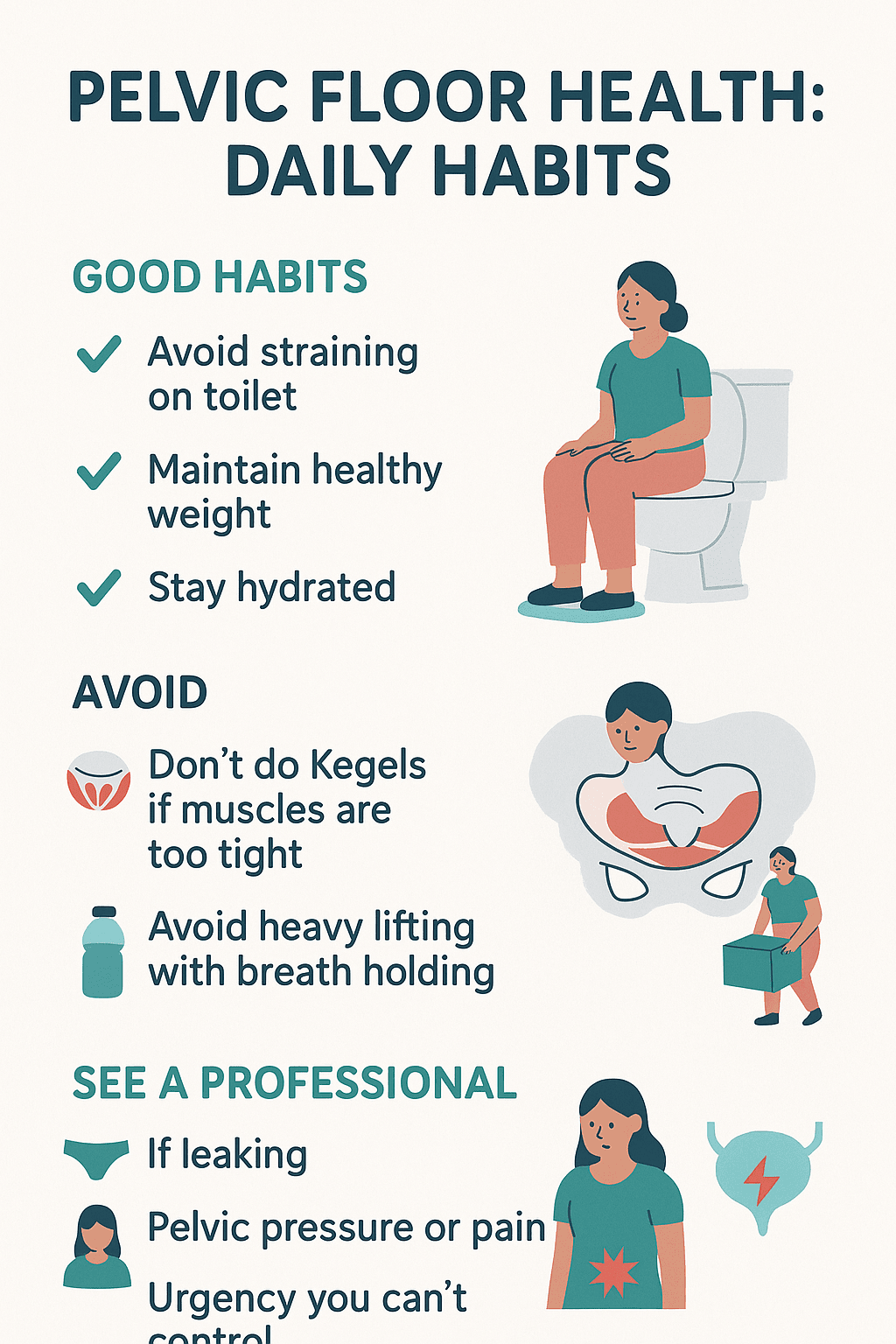
Self-Care Strategies
Are You Doing Your Kegels Correctly?
Most people have never been properly taught. A correct Kegel:
1. Identify the right muscles — imagine stopping the flow of urine AND preventing passing gas simultaneously. That gentle squeeze-and-lift is your pelvic floor.
2. Relax completely first — you cannot strengthen a muscle from a shortened, tight position
3. Squeeze and lift — not strain or hold your breath or tighten your buttocks
4. Hold 3–5 seconds; release completely; rest 5–10 seconds
5. 10 repetitions at a time, 3 times per day
Note: if you have a hypertonic pelvic floor, Kegels are contraindicated. Assessment by a pelvic floor physiotherapist will determine what’s right for you.
Bladder Habits That Help
- Don’t go “just in case” — this trains the bladder to hold less and increases urgency
- Aim for voiding every 2–4 hours during the day
- Limit caffeine and alcohol — both irritate the bladder
- Manage fluid intake — adequate hydration (6–8 glasses) but not excessive
Bowel Health
- Adequate dietary fibre and hydration prevents constipation and the straining that stresses the pelvic floor
- Squatty Potty position (feet raised on a footstool) opens the anorectal angle and makes elimination easier and more complete with less straining
Your Pelvic Floor Deserves Attention
Pelvic floor problems are common but they are not inevitable or untreatable. Our pelvic floor physiotherapist provides compassionate, expert assessment and treatment in a safe, private environment. Book an appointment →
For patient education only. Not medical advice.