Urinary Incontinence: Breaking the Silence — and Finding Real Solutions
Medically reviewed by Ksenya Kharnam, BPT, Registered Physiotherapist, Clinical Director · Last reviewed May 26, 2026
Types of Urinary Incontinence
Stress Urinary Incontinence (SUI)
Leakage of urine with physical exertion that increases intra-abdominal pressure — coughing, sneezing, laughing, jumping, lifting, or running. The pelvic floor cannot generate sufficient force quickly enough to maintain urethral closure against the sudden pressure spike.
SUI is the most common type in women under 60, and is strongly associated with:
– Vaginal childbirth (particularly forceps delivery, large babies, prolonged pushing)
– Menopause (reduced estrogen affects tissue support)
– High-impact exercise without adequate pelvic floor conditioning
– Obesity
Urgency Urinary Incontinence (UUI)
Leakage associated with a sudden, compelling urge to void that cannot be deferred. You feel the urge and don’t make it to the bathroom in time. This is caused by overactivity of the detrusor muscle (the bladder wall) and is often associated with an overactive, poorly relaxing pelvic floor.
Triggers commonly include: the sound of running water, putting the key in the front door (“latchkey incontinence”), cold exposure, and anxiety.
Mixed Urinary Incontinence
A combination of stress and urgency incontinence — very common, particularly in older women.
Overflow Incontinence
Leakage from an overfull bladder that cannot empty properly — associated with bladder outlet obstruction or impaired detrusor contractility. More common in men but does affect women, particularly post-surgery or with neurological conditions.
Pelvic Floor Physiotherapy at Wellness Place
Pelvic floor physiotherapy is the most evidence-based first-line treatment for urinary incontinence — recommended ahead of surgery by clinical guidelines worldwide.
Major studies show:
– Pelvic floor muscle training (PFMT) reduces stress incontinence by 50–80%, with 30–40% of women achieving complete continence
– For urgency incontinence, bladder training combined with PFMT reduces episodes by 70–80%
– Physiotherapy results are comparable to surgical outcomes for many women — without surgical risk
Assessment
Your pelvic floor physiotherapist will begin with a comprehensive assessment:
– Detailed bladder diary review (voiding frequency, volumes, urgency episodes)
– Assessment of fluid intake habits, caffeine/alcohol, bladder irritants
– Pelvic floor muscle assessment — tone, strength, coordination, and endurance
– Core and breathing mechanics assessment
– Screen for prolapse or other contributing factors
Treatment for Stress Incontinence
Pelvic floor muscle training: A progressive program of pelvic floor strengthening, with specific attention to the quick-contract (speed-strength) needed to pre-contract before coughing, sneezing, or exercise — the “knack” technique.
The Knack: Contracting the pelvic floor immediately before and during a cough or sneeze. Studies show this simple technique reduces leakage by 70–98% in some women.
Core and breathing integration: The pelvic floor is part of the deep core unit. Coordinating it with the diaphragm, transversus abdominis, and multifidus provides the full pressure management system needed for continence under load.
Load modification: Identifying activities driving leakage and modifying technique (e.g., running gait, lifting mechanics) to reduce pelvic floor demand while strength is rebuilt.
Treatment for Urgency Incontinence
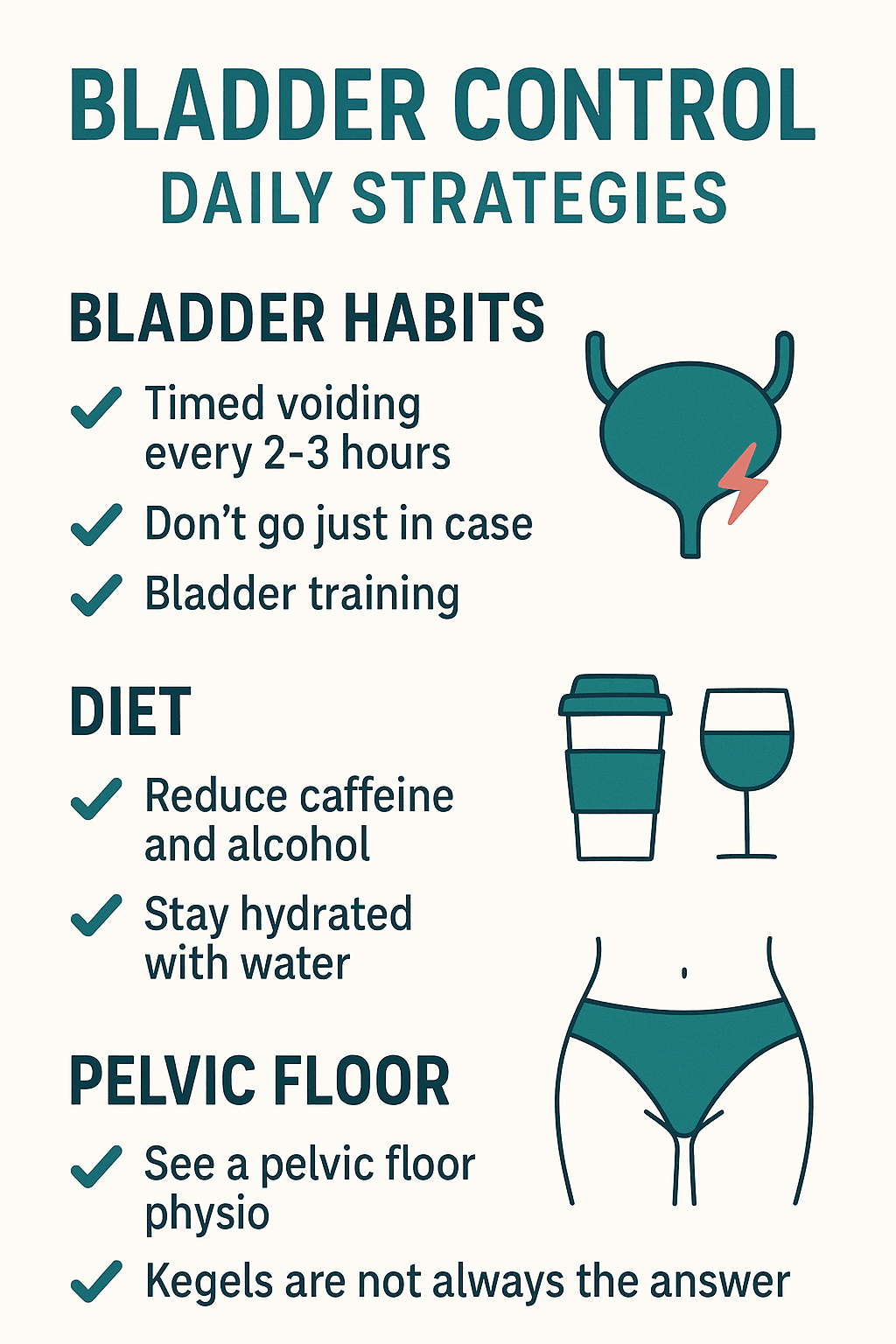
Bladder training: Gradually extending the time between voids (starting from your current interval and adding 15–30 minutes every 1–2 weeks) reconditions the bladder to hold more before signalling urgency. This takes patience — typically 6–12 weeks — but produces excellent results.
Urge suppression strategies: Techniques to defer urgent voiding without running — “freeze and squeeze” (contracting the pelvic floor firmly at the first urge signal, which inhibits the detrusor reflex), distraction techniques, and not rushing to the bathroom.
Dietary modifications: Reducing bladder irritants — caffeine, alcohol, carbonated drinks, artificial sweeteners, acidic foods — can significantly reduce urgency episodes.
When to Seek Medical Assessment Alongside Physiotherapy
- Blood in the urine (haematuria) — requires medical investigation
- Pain with urination — possible urinary tract infection or interstitial cystitis
- Incontinence with neurological symptoms — possible spinal cord pathology
- Sudden onset severe incontinence — warrants investigation
- No improvement after 3 months of consistent physiotherapy
Take the First Step — It’s Worth It
Urinary incontinence is not something you simply manage around. It is something you can treat. Our pelvic floor physiotherapist provides expert, compassionate care in complete privacy. Book an appointment →
For patient education only. Not medical advice.