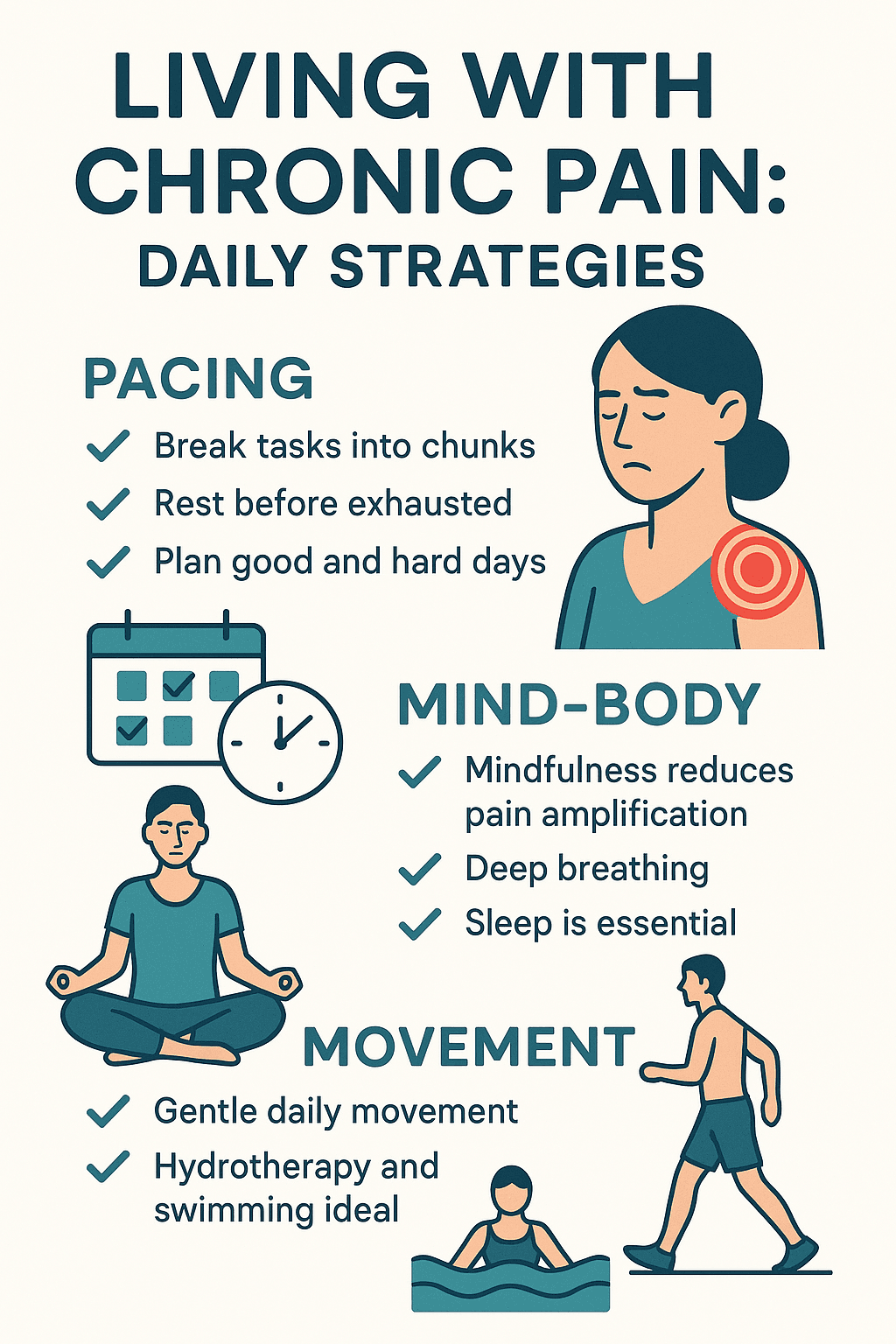
Chronic Pain: Understanding Why It Persists — and What Actually Helps
Medically reviewed by Ksenya Kharnam, BPT, Registered Physiotherapist, Clinical Director · Last reviewed May 26, 2026
Why Does Pain Become Chronic?
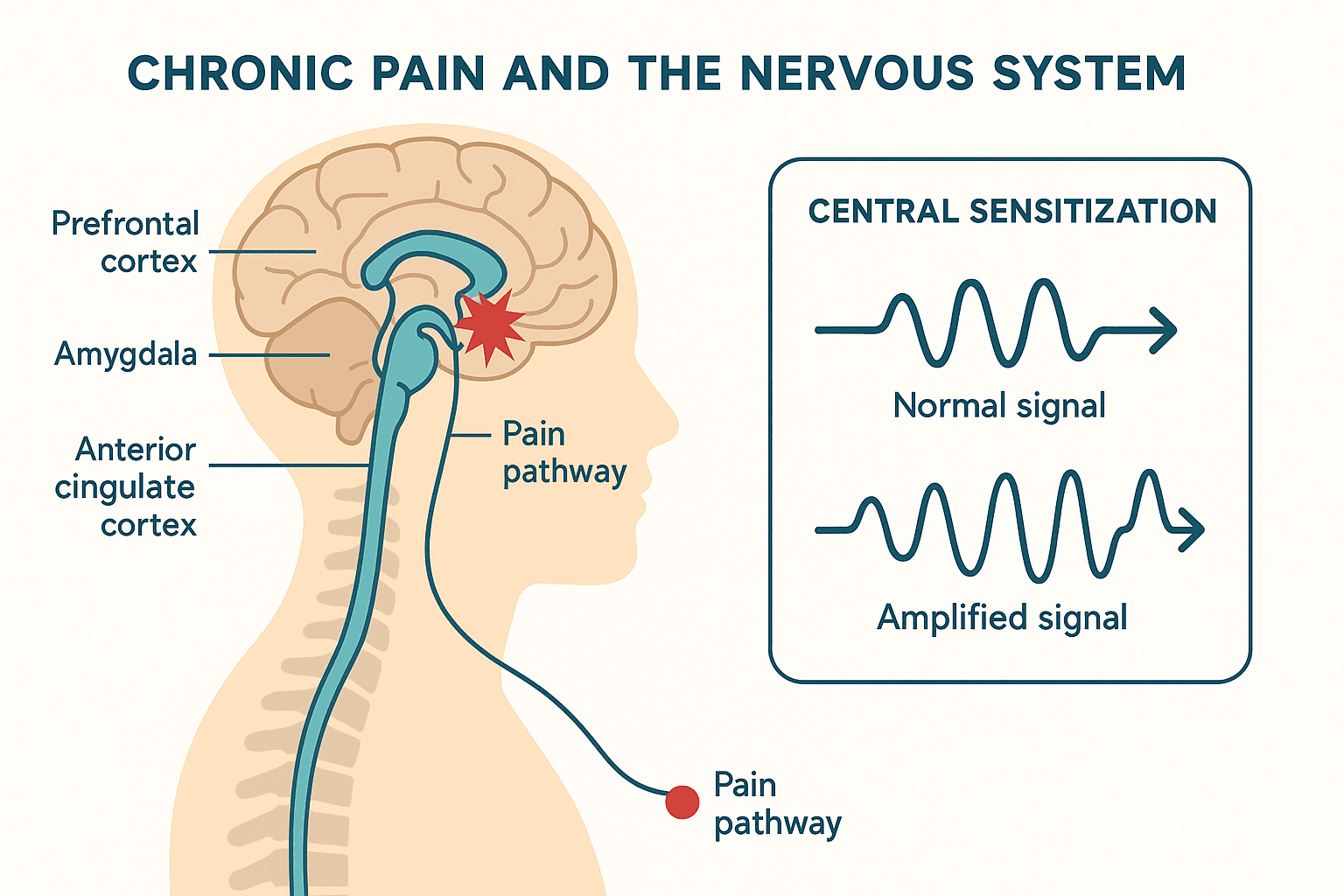
To understand chronic pain, you need to understand that pain is not simply a measure of tissue damage. Pain is an output of the brain — a protective signal designed to motivate you to change behaviour and protect your body. Acute pain serves this purpose well: you injure tissue, pain makes you rest and protect the area, tissue heals, pain resolves.
But in chronic pain, this system becomes dysregulated. The nervous system itself changes — a phenomenon called central sensitization. The pain alarm system becomes more sensitive: it fires more easily, amplifies signals, and responds to stimuli that would not normally cause pain. This is not weakness or imagination — it is a measurable neurobiological change.
Think of it like a home security alarm that was triggered once by a real burglar (acute injury), and has now become so sensitive that it goes off when the wind blows.
Common Presentations of Chronic Pain
Chronic pain can occur anywhere and from many conditions:
- Chronic low back pain
- Chronic neck pain
- Fibromyalgia — widespread musculoskeletal pain with sensitivity at multiple sites
- Chronic headache and migraine
- Persistent post-surgical pain
- Neuropathic pain (nerve damage pain)
- Complex Regional Pain Syndrome (CRPS)
- Persistent tendinopathy pain
Many people with chronic pain have received multiple diagnoses, tried multiple treatments, and feel that nothing works. This is very common — and often the result of treatments targeting the wrong thing.
The Biopsychosocial Model: Why Your Whole Life Matters
Modern pain science recognizes that chronic pain is not purely a physical problem. The biopsychosocial model understands pain as the interaction of:
- Biological factors: Tissue state, central sensitization, inflammation, hormonal and nutritional factors
- Psychological factors: Catastrophizing, fear-avoidance, depression, anxiety, past trauma
- Social factors: Work, relationships, financial stress, social support, meaningful activity
Treatments that address only one dimension — for example, only physical treatment — will always be limited. The most effective chronic pain management is multidisciplinary — and Wellness Place’s integrated team of physiotherapists, acupuncturists, naturopathic doctors, and massage therapists is well-positioned to address the full picture.
What to Expect: Realistic Goals
For chronic pain, the goal is rarely “zero pain.” More realistic and meaningful goals are:
– Reduced pain intensity — from 7/10 to 3–4/10
– Improved function — doing more of what matters to you
– Reduced reliance on medication
– Better sleep and mood
– Increased confidence in your body
Many people with long-standing chronic pain achieve significant improvements with consistent, multidisciplinary treatment — even after years of suffering.
For patient education only. Not medical advice.