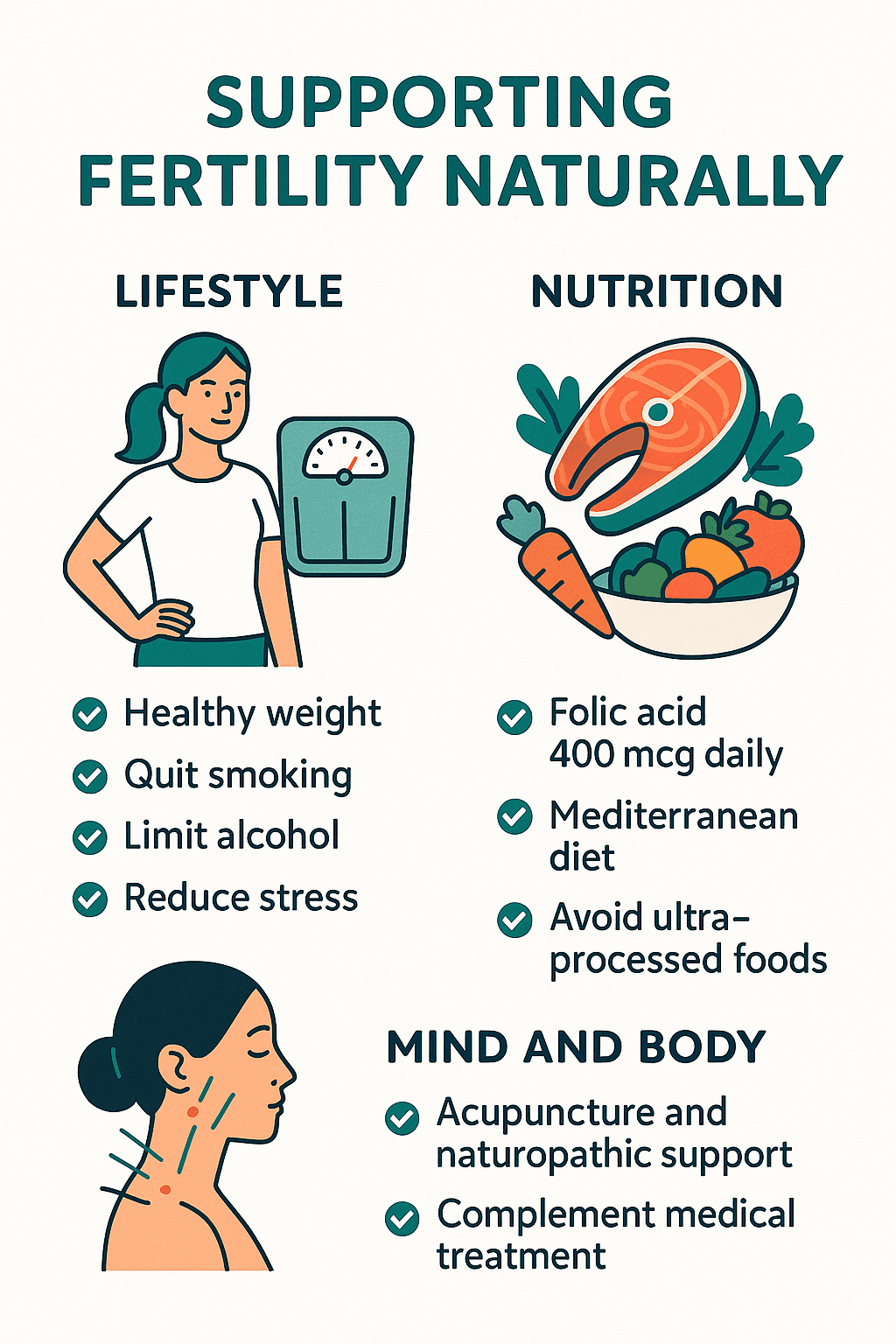
Infertility: A Compassionate Guide to Support, Options, and Integrative Care
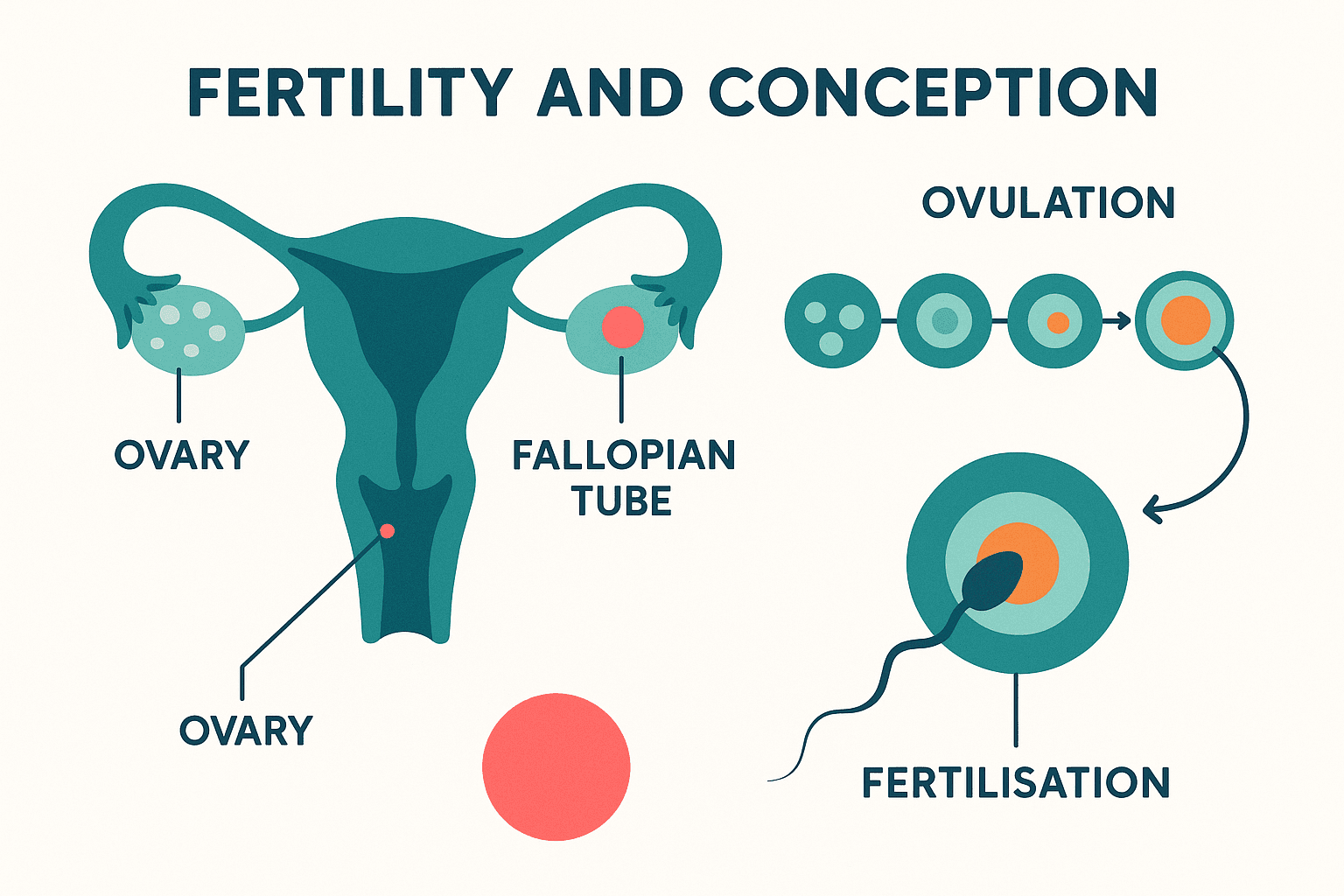
Understanding Fertility: A Brief Overview
Conception requires the convergence of many biological events:
– Ovulation: Release of a mature egg from the ovary
– Sperm health: Adequate count, motility, and morphology
– Fallopian tube patency: Open, functional tubes to allow egg-sperm meeting
– Uterine receptivity: A healthy endometrium that can implant a fertilized egg
– Hormonal coordination: The HPO axis directing the cycle correctly
Disruption at any point can impair fertility. Most fertility investigations evaluate each of these components in turn.
How Naturopathic Medicine Supports Fertility
Naturopathic medicine does not replace reproductive medicine — it works alongside it, optimizing the biological environment in which conception occurs:
Cycle Regulation and Ovulation Support
- Identifying and addressing anovulation or irregular ovulation through hormone assessment and targeted treatment
- Vitex agnus-castus (chaste tree): Well-evidenced herbal support for luteal phase deficiency and progesterone support
- Inositol (myo-inositol and D-chiro-inositol): Strong evidence for improving ovulation, egg quality, and metabolic parameters in PCOS
- Thyroid optimization — even subclinical hypothyroidism affects ovulation and early pregnancy; naturopathic thyroid support improves outcomes
Egg Quality Optimization
Egg quality is not static — it is influenced by mitochondrial health, oxidative stress, blood flow to the ovaries, and nutritional status:
– CoQ10 (Ubiquinol form): The best-evidenced supplement for egg quality — improves mitochondrial function in the oocyte and is particularly valuable in women over 35 or with diminished ovarian reserve
– Antioxidants: Vitamin C, vitamin E, NAC (N-acetylcysteine) reduce oxidative damage to oocytes
– DHEA: Evidence for improving ovarian reserve markers in specific populations — used under medical supervision
Preconception Nutritional Optimization
- Folate (methylfolate form): Essential for neural tube development — ideally begun 3 months before conception
- Vitamin D: Low levels are associated with reduced implantation and pregnancy rates; optimization is a straightforward, high-impact intervention
- Iron: Iron stores (ferritin) should be optimized before conception — low ferritin impairs early pregnancy
- Omega-3 DHA: Critical for early fetal neurological development; optimizing maternal DHA levels before conception is beneficial
Uterine Receptivity
- Progesterone support to optimize the luteal phase and endometrial preparation
- Anti-inflammatory nutrition and botanicals to support endometrial quality in endometriosis
- Blood sugar regulation to normalize insulin — elevated insulin impairs progesterone signalling and uterine receptivity
Stress and HPA Axis Regulation
Chronic stress suppresses the HPO axis — reducing GnRH pulsatility and disrupting ovulation. This is not “just stress” — it is measurable neuroendocrine disruption. Adaptogenic herbs (ashwagandha, rhodiola), sleep optimization, and targeted nervous system support address this directly.
Supporting ART (IVF/IUI)
Naturopathic medicine adds value alongside assisted reproductive technology:
– Optimizing egg quality and ovarian response before stimulation cycles
– Managing the physical and emotional stress of ART protocols
– Supporting implantation in the post-transfer window
– Reducing miscarriage risk through early pregnancy hormonal and nutritional support
Emotional Wellbeing Through Infertility
The emotional toll of infertility — grief, isolation, relationship strain, loss of expected life narratives, the relentlessness of monthly hope and disappointment — is profound and real. Please know:
- You are not alone. 1 in 6 couples share this experience.
- Stress does not “cause” infertility — the relationship is complex, and blaming yourself for being stressed is unfair and inaccurate.
- Support is available. Talk to your practitioners about emotional support resources. Counselling, support groups (Fertility Matters Canada), and community are all important.
Frequently Asked Questions
Can naturopathic medicine treat PCOS-related infertility without medication?
For some women with PCOS, naturopathic approaches — particularly inositol, dietary modifications, weight management, and acupuncture — are sufficient to restore regular ovulation and achieve conception. For others, they work alongside Clomid, letrozole, or IVF. The approach should be individualized.
Should my partner also be seen?
Yes — male factor is involved in approximately 50% of infertility cases. Naturopathic medicine and acupuncture are both evidence-based for improving sperm quality. A shared approach optimizes outcomes for the couple.
How long should we try before seeking help?
Standard guideline: 12 months under 35; 6 months over 35. If you have irregular periods, known endometriosis, or other contributing factors, earlier investigation is reasonable. Starting naturopathic preconception care does not require waiting — it optimizes the foundation regardless of when conception happens.
For patient education only. Not medical advice.