
Inflammation: The Hidden Driver of Chronic Disease
Acute vs. Chronic Inflammation
Acute inflammation is the immune system’s immediate response to injury or infection — a necessary, time-limited, and beneficial process. Redness, swelling, warmth, and pain at a wound site are acute inflammation doing its job. It resolves when the threat is addressed.
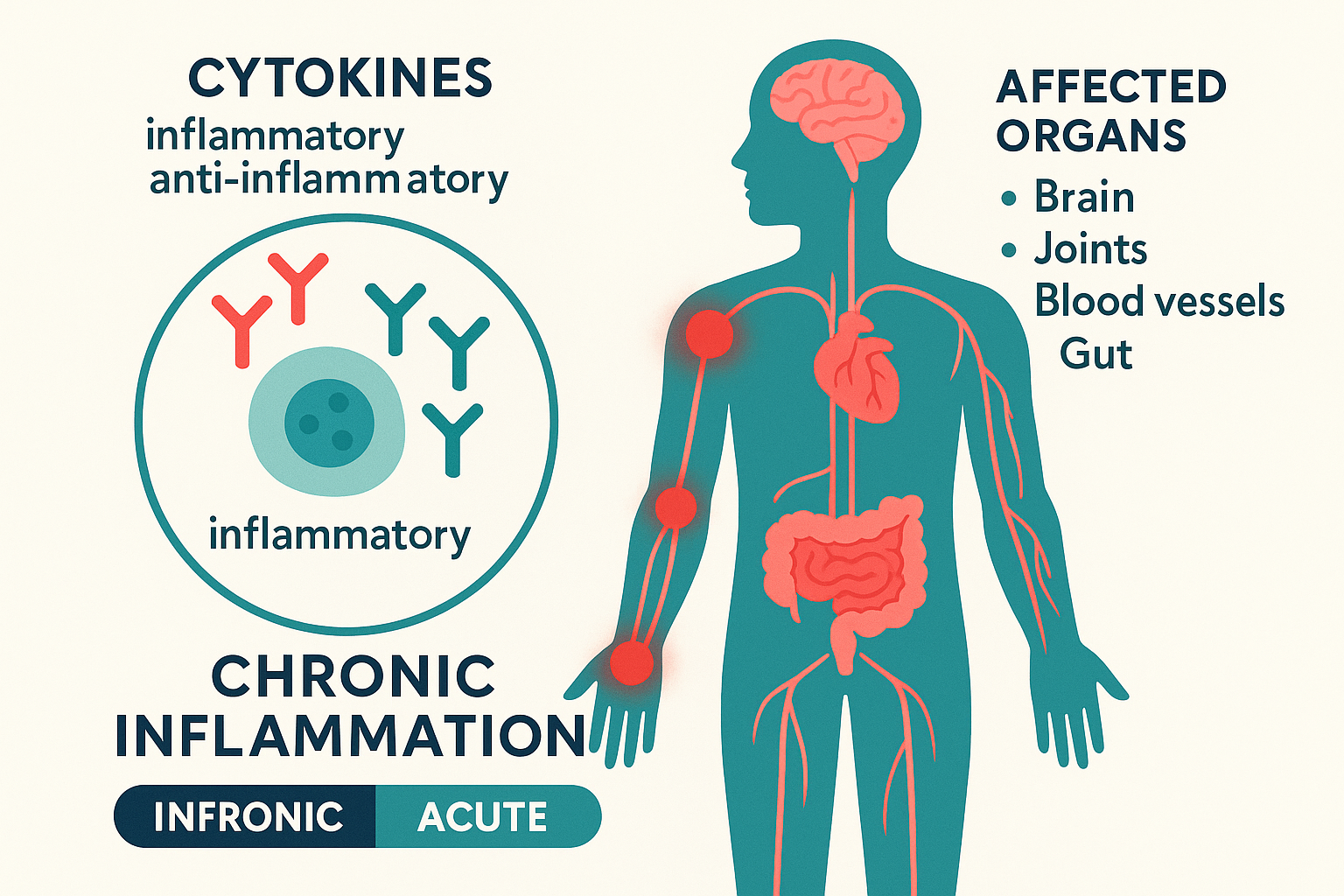
Chronic low-grade inflammation is different — it is sustained immune activation in the absence of an ongoing acute threat. The immune system is in a state of constant, low-level activation, producing pro-inflammatory cytokines (particularly IL-6, IL-1β, TNF-α, and CRP) that circulate through the body and affect every organ system.
Unlike acute inflammation, chronic inflammation is:
– Often symptom-free until significant disease has developed
– Detectable via blood markers (hsCRP, homocysteine, fibrinogen, oxidized LDL)
– Strongly driven by lifestyle factors — diet, sleep, movement, stress, gut health
– Highly responsive to targeted nutritional and lifestyle intervention
Conditions Driven by Chronic Inflammation
Virtually every major chronic disease involves chronic inflammation as a mechanism or contributing factor:
- Cardiovascular disease: Atherosclerosis is an inflammatory process; CRP is an independent risk factor for heart attack
- Type 2 diabetes and insulin resistance: Inflammation impairs insulin receptor signalling
- Autoimmune conditions: Rheumatoid arthritis, Hashimoto’s, lupus, inflammatory bowel disease, psoriasis
- Mental health: Depression, anxiety, and brain fog have strong neuroinflammatory components
- Neurodegenerative disease: Alzheimer’s and Parkinson’s involve neuroinflammation
- Cancer: Chronic inflammation creates a tumour-promoting microenvironment
- Pain conditions: Fibromyalgia, chronic pain, and joint degeneration are inflammation-mediated or inflammation-amplified
Self-Care for Reducing Chronic Inflammation
Eat an Anti-Inflammatory Diet Daily
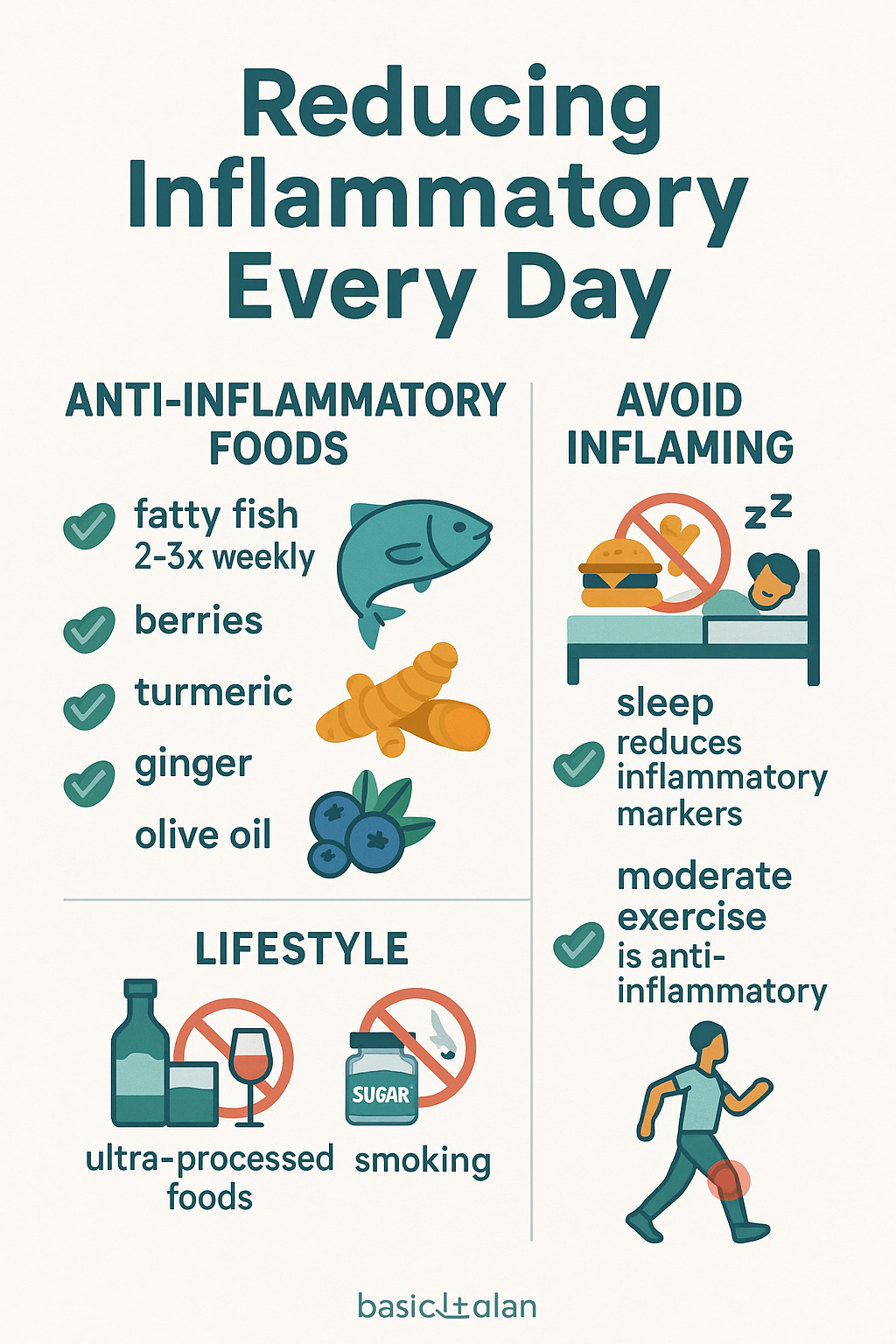
The Mediterranean dietary pattern has the strongest evidence base. Practical daily steps:
– Olive oil as the primary cooking and dressing fat
– 2–3 servings of oily fish per week (salmon, sardines, mackerel)
– 5–9 servings of colourful vegetables and fruits daily (diverse polyphenols)
– Minimize ultra-processed foods, refined sugars, and industrial seed oils
– Turmeric and ginger generously in cooking
Exercise Regularly
Moderate aerobic exercise (30 minutes, most days) reduces CRP and inflammatory cytokines within weeks. High-intensity exercise without adequate recovery can temporarily increase inflammation — moderate consistency is the target.
Prioritize Sleep
CRP rises after even one night of insufficient sleep. 7–9 hours of quality sleep is not optional for inflammatory management.
Manage Stress Actively
Chronic cortisol creates inflammatory vulnerability. Daily parasympathetic practices (breathing, yoga, meditation, nature time) reduce the cortisol-driven component of chronic inflammation.
Reduce Alcohol
Alcohol increases intestinal permeability and promotes LPS translocation — directly driving systemic inflammation. Even moderate consumption measurably increases CRP in some individuals.
Inflammation Is Addressable
The chronic inflammatory state that silently drives disease is not inevitable — it is a product of identifiable, modifiable factors. Address them, and your biology changes. Book an appointment →
For patient education only. Not medical advice.