Menstrual Disorders: When Your Period Isn’t Normal — and What Can Help
What Is a “Normal” Period?
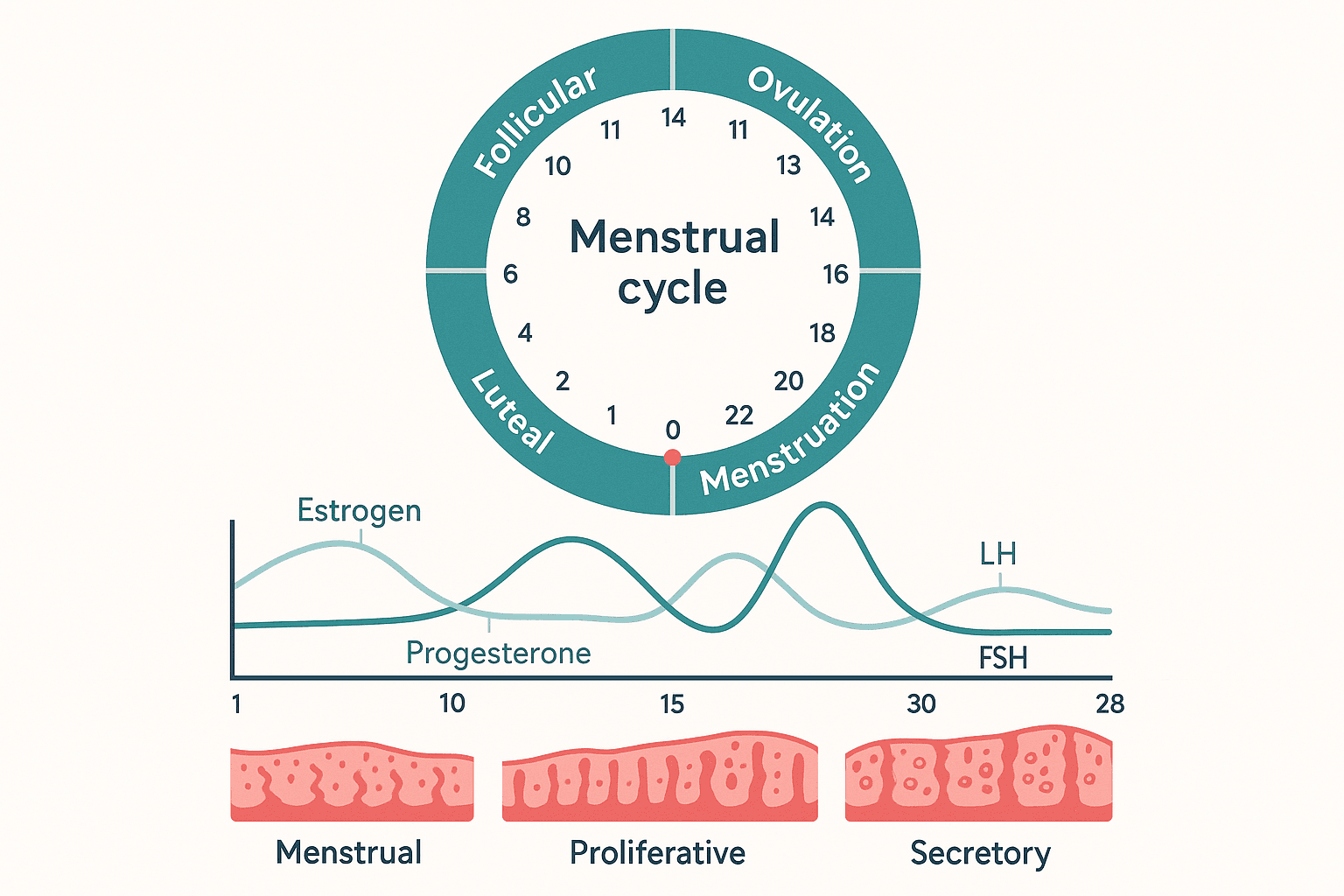
Before understanding disorders, it helps to know the normal range:
– Cycle length: 21–35 days
– Period length: 2–7 days
– Blood loss: 20–80 ml per cycle (approximately 3–6 tablespoons)
– Colour: Ranges from bright red to dark — both are normal
– Clots: Small clots (under 1 cm) occasionally are normal; large or frequent clots suggest heavy flow
– Discomfort: Mild-to-moderate cramping is common; severe cramping that limits function is not normal
Treatments at Wellness Place
Naturopathic Medicine
Naturopathic medicine offers the most comprehensive approach to menstrual disorders at Wellness Place, addressing the hormonal root causes rather than simply masking symptoms:
Hormone assessment and rebalancing: Testing of estrogen, progesterone, FSH, LH, prolactin, thyroid, and androgens (in suspected PCOS) provides the hormonal map to guide treatment.
Progesterone support: Many cases of heavy, painful, or PMS-associated periods involve progesterone deficiency relative to estrogen. Natural progesterone support (bioidentical or herbal — Vitex agnus-castus/chaste tree) addresses this directly.
Anti-inflammatory protocols for dysmenorrhoea: Omega-3 fatty acids (fish oil) reduce prostaglandin production — the mechanism responsible for period cramps. Multiple trials show omega-3 supplementation reduces primary dysmenorrhoea pain scores significantly.
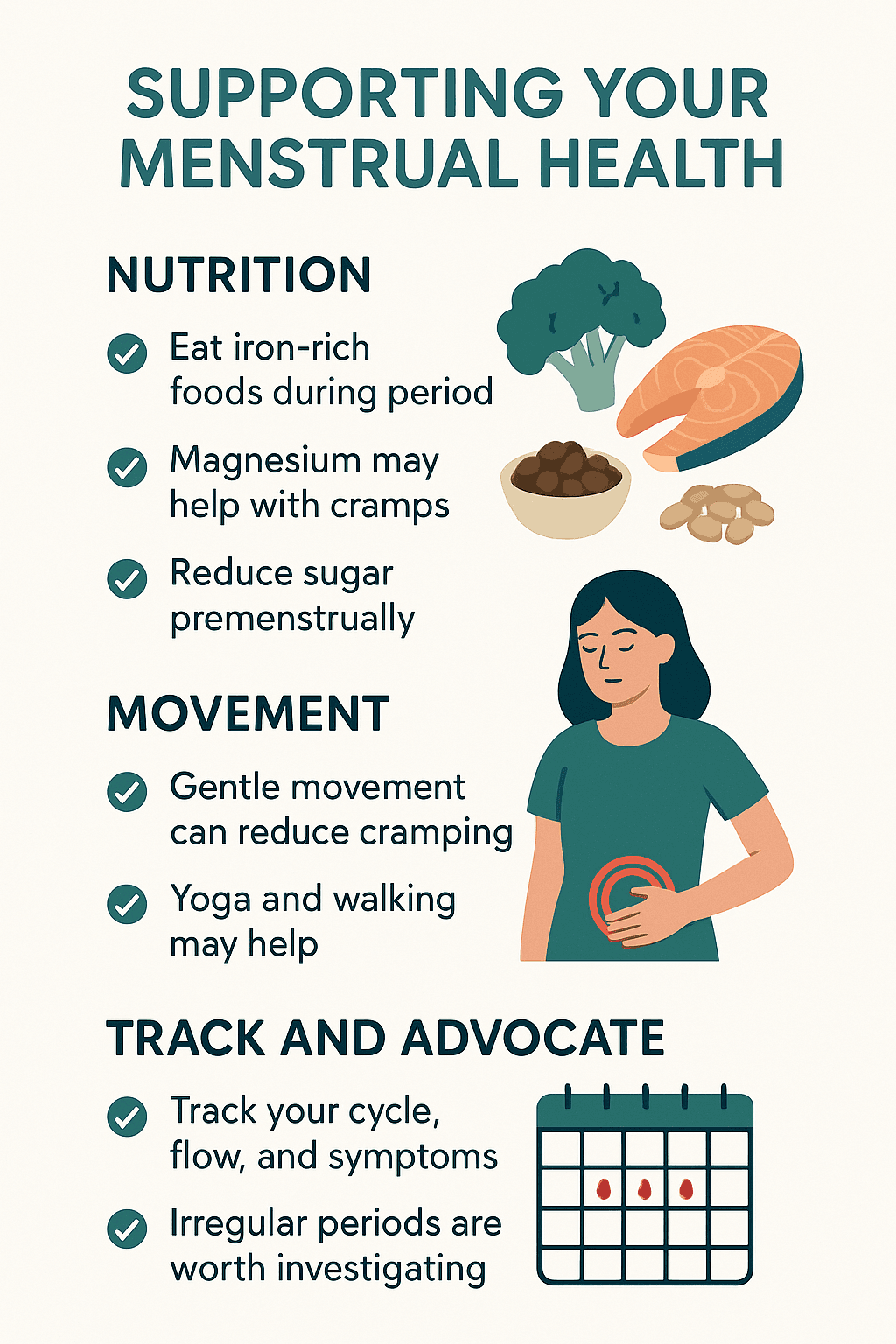
Magnesium: Deficient in most women with dysmenorrhoea. Relaxes uterine muscle, reduces prostaglandin production, and addresses the menstrual migraines that affect many women.
Iron repletion for menorrhagia: Heavy periods frequently cause iron-deficiency anaemia. Targeted iron supplementation (in the form with best absorption and tolerability for you) restores energy, cognition, and mood.
Liver and estrogen metabolism support: Supporting phase 1 and phase 2 liver detoxification of estrogen — through DIM (diindolylmethane from cruciferous vegetables), B vitamins, and liver herbs — reduces estrogen dominance and improves hormonal balance.
PCOS management: A comprehensive naturopathic protocol for PCOS addresses insulin resistance, androgen excess, and anovulation through diet, inositol supplementation, cycle regulation, and targeted hormonal support.
Acupuncture
Acupuncture has centuries of traditional use and growing clinical evidence for menstrual disorders:
Dysmenorrhoea: Multiple systematic reviews confirm that acupuncture significantly reduces primary dysmenorrhoea pain — comparable to NSAIDs in head-to-head trials, with the advantage of treating the underlying pattern rather than just blocking pain.
Regulation of cycle irregularity: Acupuncture promotes ovarian blood flow, modulates the HPO (hypothalamic-pituitary-ovarian) axis, and helps restore regular ovulation in conditions including PCOS and stress-related cycle disruption.
PMS and PMDD: Acupuncture’s effects on neurotransmitters (serotonin, GABA, endorphins) and the stress response system address the mood and physical symptoms of PMS, often with marked improvement within 1–2 cycles.
Endometriosis pain management: Acupuncture reduces endometriosis-associated pelvic pain through anti-inflammatory and analgesic mechanisms, complementing medical and surgical management.
Red Flags: Seek Medical Assessment for:
- Sudden change in period pattern — new severity, frequency, or irregularity warrants investigation
- Postmenopausal bleeding — any vaginal bleeding after 12 months without a period requires urgent gynaecological assessment
- Severe, progressive dysmenorrhoea in a woman over 25 — possible endometriosis or adenomyosis
- Intermenstrual bleeding (bleeding between periods) — requires investigation
- Fever or unusual vaginal discharge with pelvic pain — possible infection
Your Cycle Is Not Something to Just Endure
Menstrual disorders — whether painful, heavy, irregular, or emotionally debilitating — are conditions with real causes and real treatments. Book an appointment →
For patient education only. Not medical advice.