Sprains and Strains: What They Are, How They Heal, and What You Should Do
The Difference Between a Sprain and a Strain
These terms are often used interchangeably, but they refer to injuries to different structures:
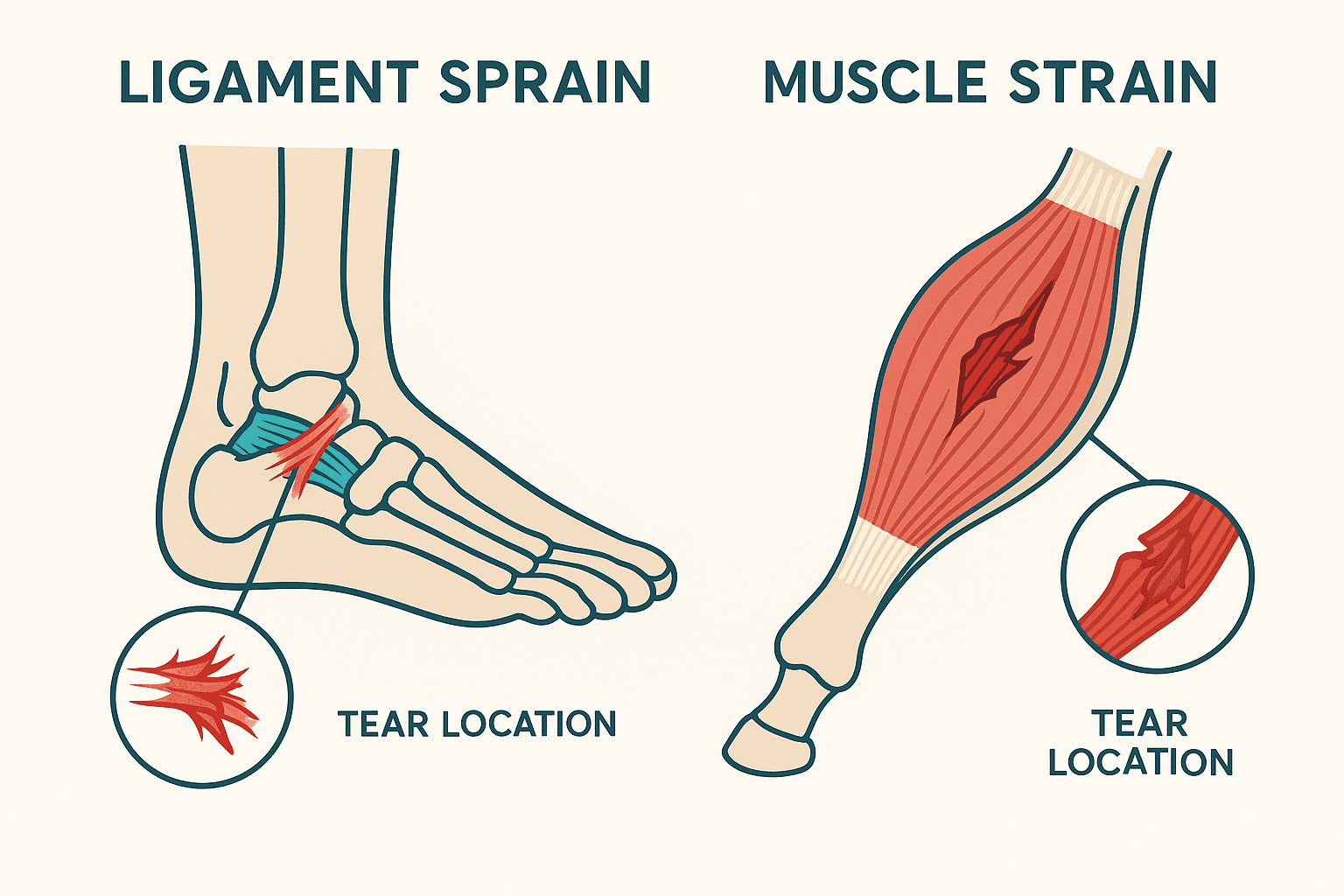
Sprain: A stretch or tear of a ligament — the fibrous tissue that connects bone to bone and stabilizes joints. Sprains most commonly affect the ankle (lateral ligament complex), knee (MCL, ACL), wrist, and thumb.
Strain: A stretch or tear of a muscle or tendon — the tissue connecting muscle to bone. Strains most commonly affect the hamstring, calf, quadriceps, lower back, and rotator cuff.
Both are classified by severity:
| Grade | Tissue Damage | Symptoms |
|---|---|---|
| Grade I | Microscopic tears, structure intact | Mild pain, minimal swelling, full strength |
| Grade II | Partial tear | Moderate pain, swelling, bruising, reduced strength |
| Grade III | Complete rupture | Severe pain (or paradoxically little pain), significant swelling, instability, significant strength loss |
The Hamstring Strain: The Most Common Muscle Strain
Hamstring strains — particularly grade II tears of the biceps femoris at the musculotendinous junction — are the most common muscle injury in running, football, and soccer. They are notorious for re-injury: athletes who return to sport before adequate healing and strength is restored re-tear at alarmingly high rates.
Treatments at Wellness Place
Physiotherapy
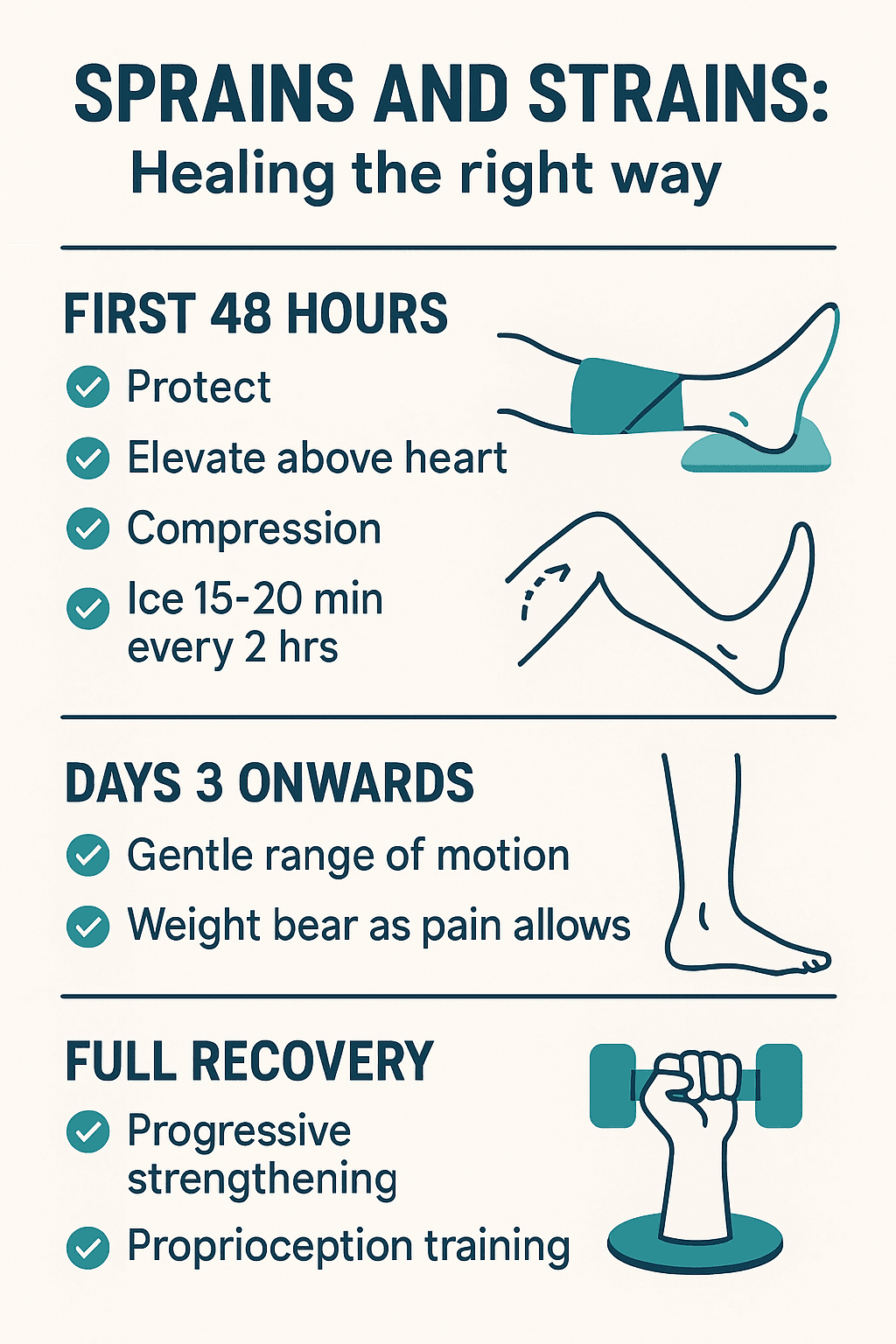
Acute phase (Days 1–5):
Following the PEACE & LOVE framework:
– Protect from further harm; offload as needed
– Elevate the limb
– Compression to limit excessive swelling
– Early, pain-free range of motion — movement promotes healing, prevents stiffening, and maintains proprioception
Rehabilitation phase (Weeks 1–8 depending on grade):
– Progressive strengthening: For ankle sprains, calf and peroneals; for hamstring strains, eccentric hamstring loading (Nordic curls)
– Proprioception and balance training: Single-leg balance, unstable surface training — restoring the joint’s positional awareness is critical and is the most commonly missed element of sprain rehabilitation
– Manual therapy: Joint mobilization to restore range of motion and reduce pain
– Sports-specific movement retraining: Return to cutting, jumping, and sport-specific demands before full clearance
Grade III injuries may require surgical consultation (ACL rupture, complete Achilles tear, significant ligament instability) — your physiotherapist will identify when referral is appropriate.
Acupuncture
Acupuncture plays a useful role in sprain and strain recovery by reducing acute pain and swelling, and addressing the muscular spasm and guarding that inhibit early rehabilitation. It also promotes local circulation and tissue repair — complementing the early loading approach and helping patients engage more comfortably with movement-based rehab from the outset.
Common Mistakes That Slow Recovery
- Resting completely for too long — immobility causes muscle weakness and joint stiffening
- Returning to sport too early — before strength and proprioception are restored; the leading cause of re-injury
- Skipping proprioception training — pain-free movement is not the same as restored stability
- Using anti-inflammatories for weeks — blunts the biological repair process
Frequently Asked Questions
How long does a sprained ankle take to heal?
Grade I: 1–2 weeks. Grade II: 3–6 weeks. Grade III: 6–12 weeks or longer. The key determinant of a good outcome is not just time, but whether proprioception and strength rehabilitation was completed — without it, chronic instability is very common.
I’ve sprained this ankle before — is it weaker now?
Repeated sprains typically indicate that the proprioceptive control of the joint was never fully restored after the first injury. Targeted rehabilitation to restore joint position sense and peroneals strength can significantly reduce recurrence, even in people with a long history of ankle sprains.
For patient education only. Not medical advice.