
Shockwave Therapy for Stubborn Tendon Pain: Who It Helps and How It Works
Medically reviewed by Ksenya Kharnam, BPT, Registered Physiotherapist, Clinical Director · Last reviewed September 30, 2026
Six months of stretching, rest, ice, and a heel that still hurts with the first step out of bed every single morning. That’s the exact profile of patient shockwave therapy tends to help most, chronic tendon pain that’s stopped responding to the usual conservative approach.
What It Actually Is
Shockwave therapy, or extracorporeal shockwave therapy (ESWT), delivers acoustic sound waves directly into a painful area through the skin. It’s not electrical, and it’s not a shock in the way the name suggests, it’s a controlled mechanical stimulus that essentially restarts a healing process that’s stalled.
A tendon that’s been painful for months often stops healing on its own, the tissue plateaus rather than progressing. Shockwave gives it the signal it needs to get moving again. Our physiotherapists use shockwave therapy as part of a broader treatment plan for stubborn tendon and plantar fascia issues, not as a standalone fix.
What It Treats
Plantar fasciitis (heel pain), Achilles tendinopathy (back of the ankle), patellar tendinopathy (just below the kneecap), tennis elbow, rotator cuff tendinopathy, and calcific tendinitis are the most common candidates.
Why Tendons Get Stuck
Tendons have a much poorer blood supply than muscle, meaning fewer nutrients and healing signals reach the injury site after the initial damage. Past a few months, the tissue can change structurally, a shift called tendinopathy, which makes rest alone increasingly ineffective. This is specifically where shockwave has an edge: it promotes new blood vessel formation and stimulates collagen production, the two things tendon repair actually depends on.
What the Evidence Shows
A 2023 meta-analysis found high-quality evidence that ESWT has a large effect on pain and function in plantar fasciitis (the study is here). Results elsewhere are more mixed. The same analysis found little effect for patellar and Achilles tendinopathy, while a 2024 meta-analysis reported better pain relief and function for rotator cuff tendinopathy (the research is here). That’s why shockwave makes most sense for stubborn cases once exercise alone hasn’t been enough.
What a Session Actually Feels Like
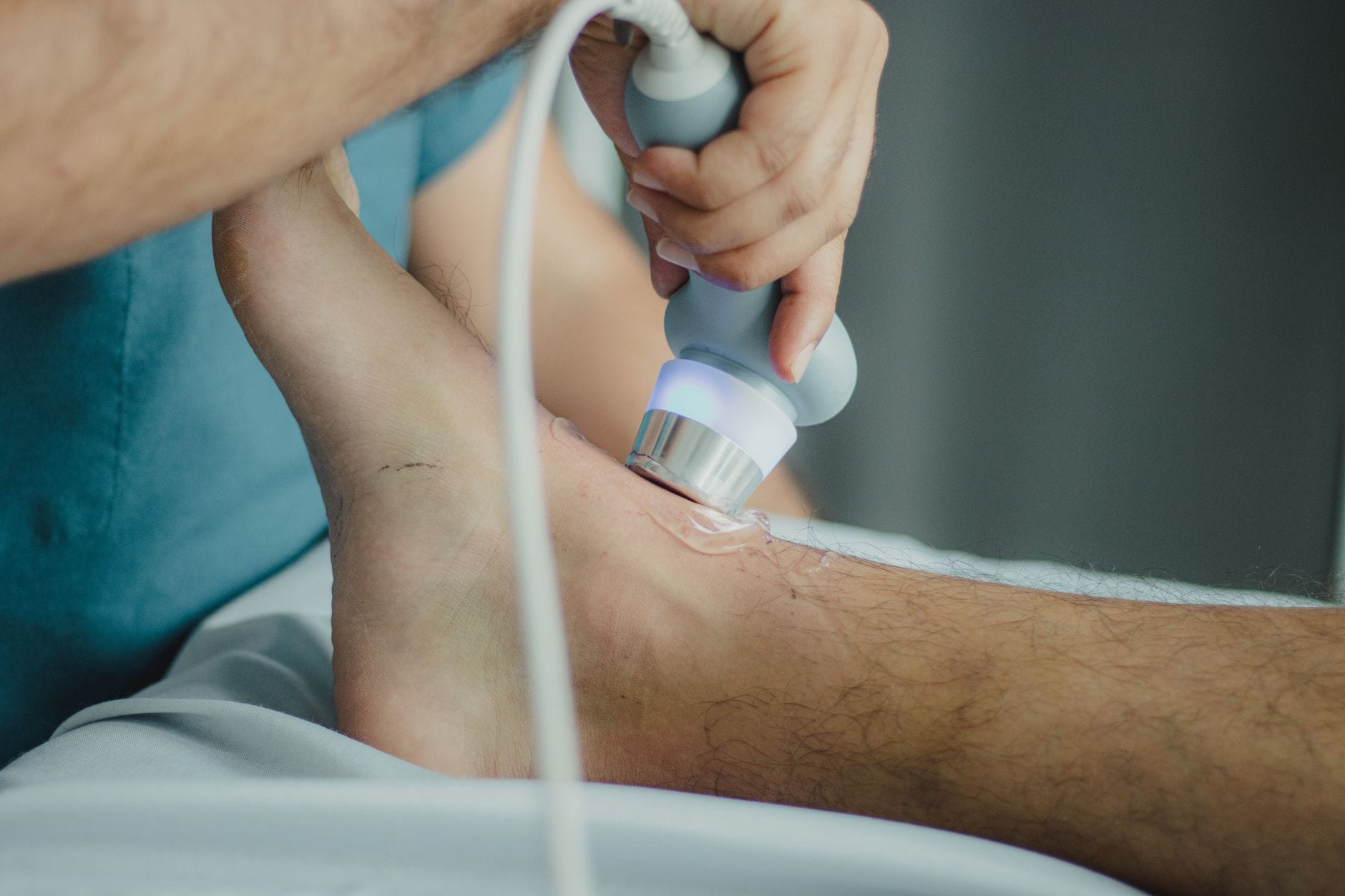
A treatment runs about 15 to 20 minutes. Gel goes on the skin over the area, then a handheld device delivers the acoustic waves. Most people describe it as a rhythmic tapping or pressure, mildly uncomfortable directly over the most tender spot, but tolerable throughout. Three to five sessions, usually a week apart, is the typical course, though some people notice improvement after just one or two and others with longer-standing issues need more.
Who It’s Actually For
Shockwave tends to make sense for tendon or heel pain that’s lasted at least six weeks without lasting relief from rest, stretching, or standard first-line care. It’s not recommended during pregnancy, with a bleeding disorder, or with an active infection or tumour near the treatment site.
If plantar fasciitis or another stubborn tendon issue has been dragging on, it’s worth asking one of our physiotherapists whether shockwave fits your specific case. Our team in Newmarket can assess and let you know honestly whether it’s the right next step.