
Reflexology for Better Sleep: Pressure Points That Actually Help
Medically reviewed by Ksenya Kharnam, BPT, Registered Physiotherapist, Clinical Director · Last reviewed September 30, 2026
Two-thirty in the morning, staring at the ceiling, doing math on how many hours of sleep are still possible before the alarm goes off. If that sounds familiar, you’re not alone — a good chunk of the clients who come through our doors in Newmarket mention some version of this scene. Sleep problems rarely show up alone. They tend to travel with stress, anxiety, sore muscles, and a nervous system that won’t switch off. Reflexology won’t fix everything on that list, but it addresses more of it than people expect.
What Reflexology Actually Does
Reflexology is built on the idea that specific points on the feet correspond to organs and systems throughout the body. A trained practitioner applies focused pressure to these points, and the theory is that this stimulates a response elsewhere — calming the nervous system, easing tension, improving circulation. Skeptics will point out that the mapping isn’t anatomically literal, and that’s fair. But the physical sensation of firm, rhythmic pressure on tired feet triggers something real: a drop in heart rate, slower breathing, muscles that stop bracing.
For sleep specifically, that shift matters. Insomnia is often less about the body being unable to sleep and more about the mind refusing to stand down. Reflexology sessions give the nervous system a concrete reason to shift out of alert mode.
The Research Behind It
This isn’t just a nice theory we tell clients to make them feel better about the appointment. A 2020 meta-analysis pooled 26 randomized trials and found foot reflexology improved sleep quality and eased anxiety and depression in adults, with longer and more frequent sessions linked to better sleep results (read the study here). Anxiety matters here because it’s tightly linked to how easily someone falls and stays asleep. None of this says reflexology cures insomnia outright, and the authors asked for more rigorous trials. What the pooled research does show is a consistent link between reflexology sessions, better reported sleep, and lower anxiety.
The Pressure Points That Matter Most for Sleep
You don’t need to memorize a foot map to benefit from a session, but a few zones come up again and again in sleep-focused reflexology work:
- The solar plexus point, roughly in the center of the foot just below the ball — pressing here is associated with a slower breathing rate almost immediately.
- The pituitary point, in the middle of the big toe, tied to hormone regulation, including melatonin.
- The heel and Achilles area, connected in reflexology theory to the lower back and pelvic region, where a lot of people unconsciously hold tension from sitting all day.
During a session at our clinic, a practitioner might spend an extra two or three minutes on the solar plexus point alone if a client’s breathing is shallow and quick at the start of the appointment. It’s a small adjustment, but it’s the kind of responsiveness that a foot map on a poster can’t replicate.
What a Session Actually Looks Like
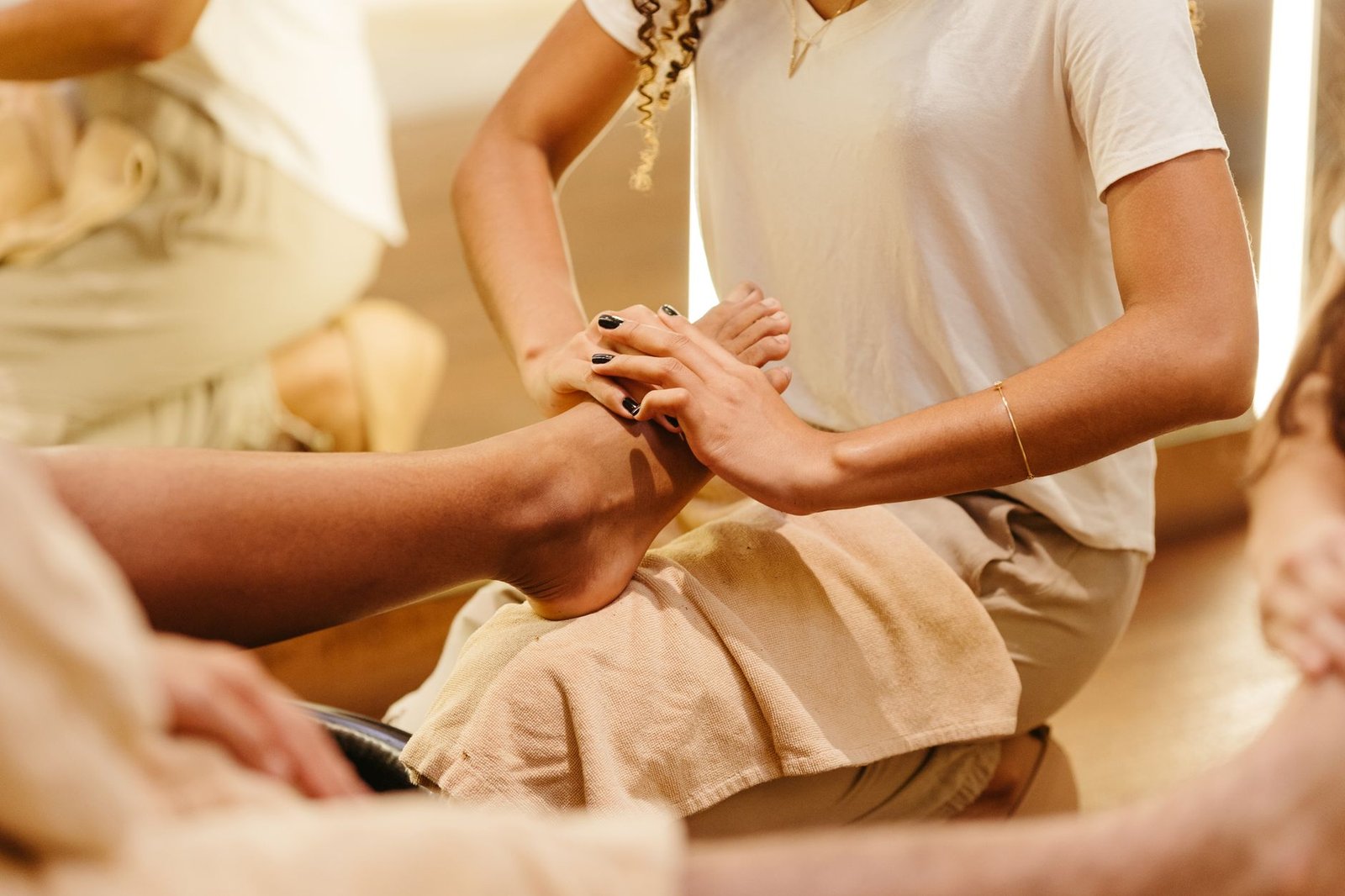
No needles, no oils that smell like a candle store, nothing invasive. You sit back, feet get supported and warmed slightly, and the practitioner works through specific zones with thumb and finger pressure — sometimes firm, sometimes a slow circular motion. Most sessions run 45 to 60 minutes. Clients often say the first ten minutes feel like nothing special, and then somewhere around minute fifteen, their shoulders drop and they stop checking their phone.
Why This Matters More Than People Think
Chronic poor sleep isn’t just about feeling groggy. It’s linked to higher stress hormone levels, worse mood regulation, and a body that stays in a low-grade fight-or-flight state longer than it should. If you’ve been dealing with insomnia for months rather than days, it’s worth looking at approaches that work with the nervous system directly rather than just treating sleep as a scheduling problem.
We’re not suggesting reflexology replace a conversation with your doctor if insomnia has been severe or long-standing. But as part of a broader plan — alongside consistent sleep timing, less screen time before bed, and reduced caffeine after 2pm — it can be the piece that actually gets the nervous system to cooperate.
What to Expect After Your First Visit
Some clients feel noticeably calmer that same night. Others need three or four sessions before sleep quality shifts in a way they’d actually mention to a friend. Both are normal. The body doesn’t always respond on a predictable timeline, especially if stress has been the dominant pattern for years rather than weeks.
Getting Started
If insomnia has been dragging on and you’re curious whether reflexology could help, our foot reflexology service page has details on what sessions at Wellness Place involve, along with pricing and scheduling. Book an evening appointment if you can — it makes the transition from clinic to bed a lot shorter, and that matters more than people expect.