
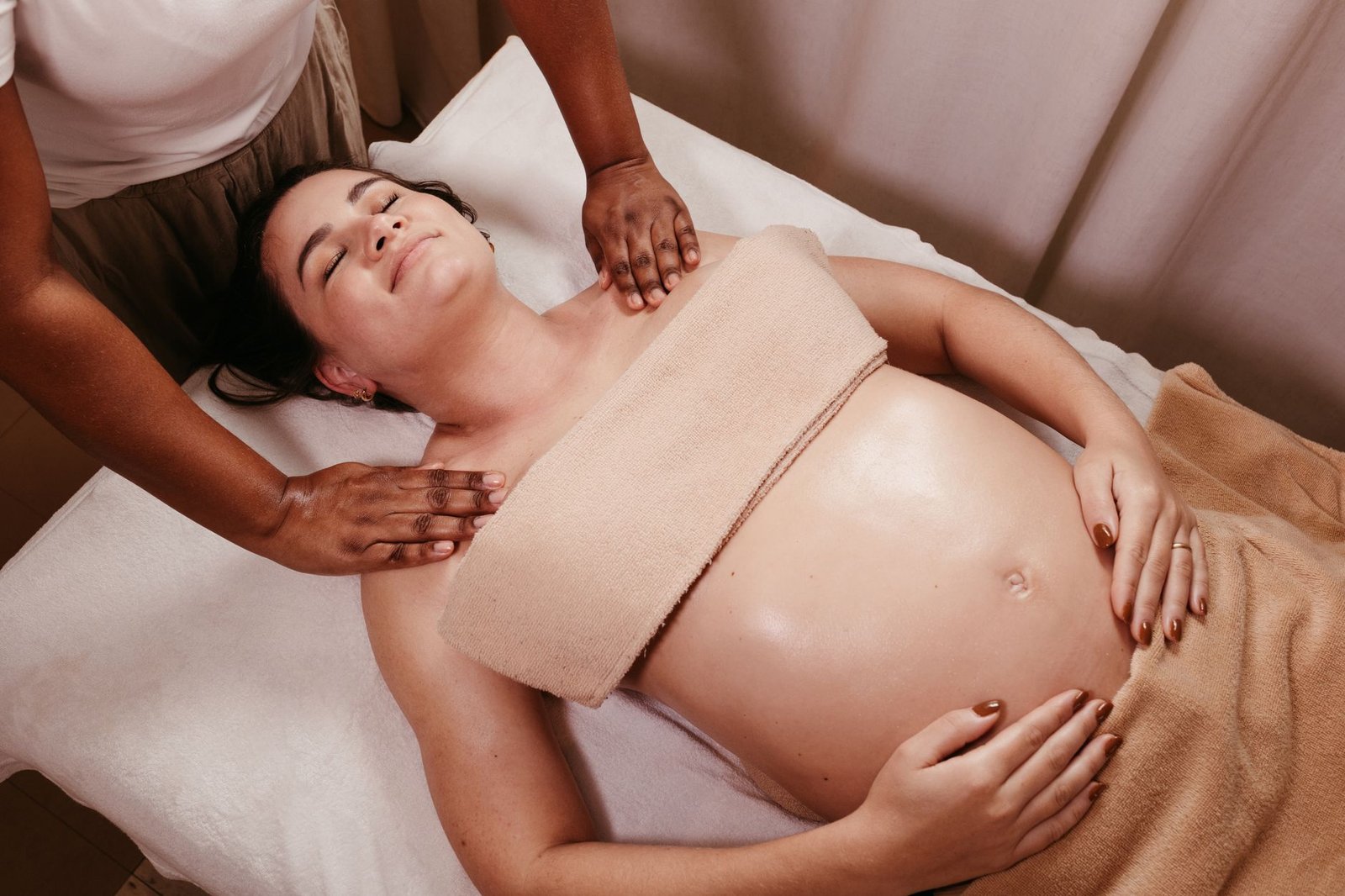
Prenatal Massage in Newmarket: Safe, Effective, and What to Expect
Medically reviewed by Ksenya Kharnam, BPT, Registered Physiotherapist, Clinical Director · Last reviewed September 15, 2026
Twenty-six weeks pregnant, low back aching, sleep in short supply — this is the point where most of our clients first call asking about prenatal massage. It’s one of the most common questions we get at our Newmarket clinic, and understandably so. Pregnancy changes your body fast, and a lot of that change lands squarely in the back, hips, and pelvis.
Is Prenatal Massage Actually Safe?
Short answer: yes, when it’s done by someone trained specifically in prenatal work. Your body isn’t just carrying extra weight during pregnancy — your ligaments loosen (thanks to a hormone called relaxin), your center of gravity shifts forward, and blood volume increases substantially. A massage therapist who understands these changes will adjust positioning, pressure, and technique accordingly.
Most clinics, ours included, avoid having pregnant clients lie flat on their back for extended periods after the first trimester, since this can compress a major vein and reduce blood flow. Instead, we use side-lying positions with supportive pillows, or a specially designed pregnancy pillow system that lets you lie face-down comfortably even at 35 weeks. Certain acupressure points are also avoided or approached with more caution, particularly in the ankles and wrists, though the evidence on this is more traditional than clinical.
A 2012 randomized controlled trial published in the Journal of Clinical Nursing found that massage therapy during pregnancy reduced anxiety and improved sleep quality among participants, with no adverse effects reported. That’s reassuring, but it also underscores why working with someone properly trained matters — the studies showing benefit are studying trained protocols, not guesswork.
What About the First Trimester?
This is where opinions differ. Some therapists won’t treat clients before 12-14 weeks, out of an abundance of caution around miscarriage risk, even though there’s no strong evidence that massage causes miscarriage. We typically ask new clients to get clearance from their midwife or OB before booking in the first trimester, mostly so everyone’s on the same page. After that, we proceed as normal, just with extra attention to comfort and positioning.
What the Research Actually Shows
The research on prenatal massage is smaller in scale than we’d like — pregnancy studies often are, for good ethical reasons — but what exists is encouraging. A study published in PMC examined massage therapy’s effects on pregnant women experiencing depression and found measurable reductions in cortisol levels alongside improved mood scores. Lower back pain, one of the most common complaints we hear in clinic, also responds well: several trials have shown reduced pain intensity and improved function after a course of prenatal massage sessions, typically once weekly over several weeks.
What’s interesting clinically is that the benefit isn’t purely physical. Anxiety reduction shows up again and again in the data, and we see it anecdotally too. One client, pregnant with her second child, told us the 45 minutes on the table was the only time all week she wasn’t thinking about work emails or her toddler’s daycare pickup. That’s not nothing.
Back Pain and Pelvic Discomfort
By the third trimester, close to two-thirds of pregnant people report some form of back or pelvic pain. The mechanism is straightforward — added weight, altered posture, loosened ligaments — but the discomfort is real and often disruptive to daily life and sleep. Prenatal massage targets the muscles compensating for these shifts, particularly through the lower back, glutes, and hips.
If pelvic pain is a bigger issue than general back tension — pain with walking, going up stairs, or rolling over in bed — it’s worth looking at our prenatal pelvic health page, since that kind of pain sometimes needs a more targeted approach than massage alone, such as pelvic floor physiotherapy.
What to Expect at Your First Appointment
We’ll ask about your due date, any complications flagged by your care provider, and where you’re feeling the most tension. Sessions run 30 to 60 minutes, typically side-lying with pillows supporting the belly and top leg. Pressure is moderate — this isn’t deep tissue work, and it shouldn’t hurt. If anything feels off, tell your therapist immediately; adjusting pressure or position takes seconds.
Many clients come in every two to three weeks starting in the second trimester, then increase frequency to weekly as they approach their due date, when back and hip discomfort tend to peak. Others just book as needed, when a bad week catches up with them. Both approaches are fine.
Booking in Newmarket
If you’re pregnant and dealing with back pain, swelling, or just want an hour of calm, our massage therapy team includes therapists trained specifically in prenatal care. Bring your due date, bring your questions, and don’t feel like you need to wait until things get unbearable — earlier is easier to manage than later. Give us a call and we’ll match you with a therapist who’s treated plenty of pregnant clients before you.