
Physiotherapy for Back Ache in Newmarket: What Your First Visit Looks Like and How Fast It Helps
Back ache has a way of showing up at the worst moment. You bend to lift a laundry basket, or you stand up after two hours of driving on Highway 404, and something in your lower back grabs. Most people wait a few days, hoping it settles. When it lingers or keeps coming back, a physiotherapist can help.
This post walks through what actually happens at a first physiotherapy visit for back ache, and what the research says about how quickly people tend to feel better.
Why Back Ache Is So Common
Low back pain is one of the most common reasons adults miss work. In most cases there is no single damaged structure to point to. Clinicians call this “non-specific” low back pain, which simply means the pain is real but is not caused by something serious like a fracture, infection or nerve compression that needs urgent care.
Muscles, joints and the nervous system all play a part. So do sleep, stress and how worried you are about the pain. That mix is why a good assessment matters more than a quick fix.
What Your First Physiotherapy Visit Looks Like
A first appointment usually runs 45 to 60 minutes. Expect to talk, move and leave with a plan.
1. A conversation about your back
Your physiotherapist will ask when the pain started, what makes it better or worse, and how it affects your day. Can you put on socks? Sleep on your side? They will also ask a few screening questions to rule out the rare warning signs, such as numbness in the groin area, new bladder or bowel changes, unexplained weight loss or fever. If any of these come up, you will be referred to a doctor promptly.
2. A movement assessment
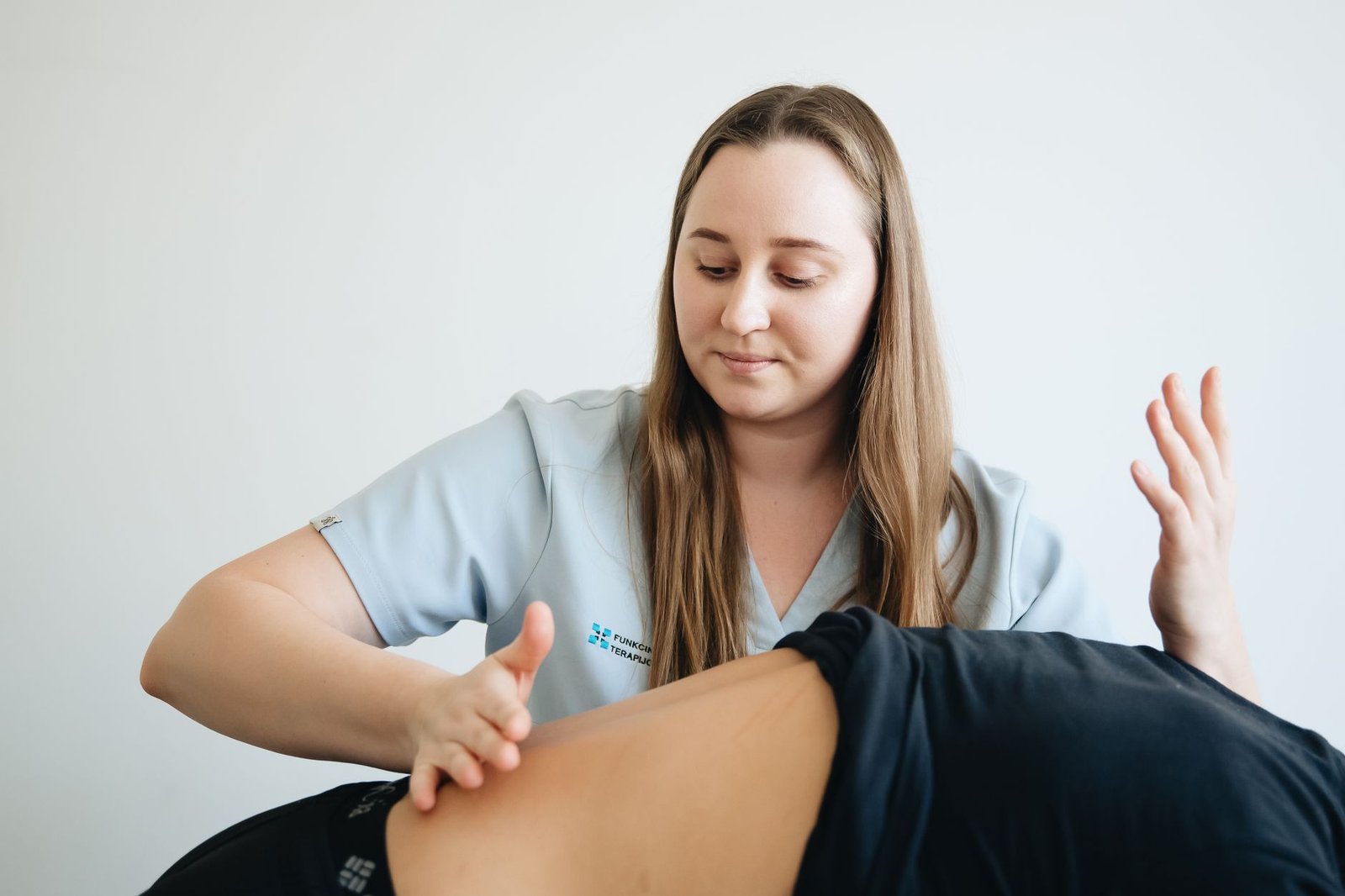
Next comes the hands-on part. You might be asked to bend forward, lean back, rotate, stand on one leg or do a slow sit-to-stand from a chair. The physiotherapist watches how your back and hips move, checks strength and flexibility, and may test the nerves in your legs if pain travels below the knee. If leg pain is your main issue, our article on sciatica and when physiotherapy makes the difference covers that pattern in more detail.
3. An explanation you can understand
Knowing why your back hurts, and hearing that most back pain is not a sign of damage, can lower fear and make it easier to keep moving.
4. Early treatment and a home plan
Treatment often starts on day one. It may include gentle manual therapy, guidance on positions that ease pain, and two or three simple exercises. A common starting point is something like knee-to-chest stretches or pelvic tilts done lying on your back, five to ten slow repetitions a few times a day.
How Fast Does Physiotherapy Help Back Ache?
This is the question almost everyone asks. The honest answer depends on how long you have had the pain.
A large 2024 review in the Canadian Medical Association Journal pooled data from 95 studies following people with low back pain over time (Wallwork et al., 2024). For people whose pain was recent (under six weeks) or subacute (six to twelve weeks), average pain scores dropped by roughly half within the first six weeks. Pain that had already lasted three months or more improved much more slowly. The authors note the evidence for that persistent group was of very low certainty, and they suggest that people who are recovering slowly in the subacute stage may benefit from getting more support early.
In practical terms, many people with a fresh flare-up notice meaningful change within a few weeks. If your back ache has been hanging around for months, progress tends to be steadier and more gradual, and the plan focuses more on building strength and confidence over time.
What the Research Says About Exercise
Exercise sits at the centre of most physiotherapy plans for back pain. A Cochrane review of 249 trials looked at exercise for chronic low back pain lasting more than 12 weeks (Hayden et al., 2021). It found moderate-certainty evidence that exercise probably reduces pain compared with no treatment, usual care or placebo, by an amount the authors considered clinically important. The improvement in day-to-day function was smaller than their threshold for a meaningful change.
The review also reported that side effects were mostly minor, such as muscle soreness. Many of the included trials had some risk of bias, partly because it is hard to hide from people whether they are exercising. Still, exercise is a safe, sensible foundation, and your physiotherapist will tailor it to your back.
Signs It Is Time to Book
Consider seeing a physiotherapist if your back ache has lasted more than a week or two without improving, keeps returning, wakes you at night, or is stopping you from working, exercising or sleeping well. You do not need a doctor’s referral to see a physiotherapist in Ontario, though some extended health plans ask for one before they reimburse, so check your policy.
You can read more about the condition on our back pain page, or see how our team approaches care on the physiotherapy in Newmarket page. When you are ready, book an assessment with one of our physiotherapists and bring a short list of the movements that bother you most. It makes that first visit even more useful.