
Concussion and Post-Concussion Syndrome: What It Really Means and How Physiotherapy Helps
What Is a Concussion?
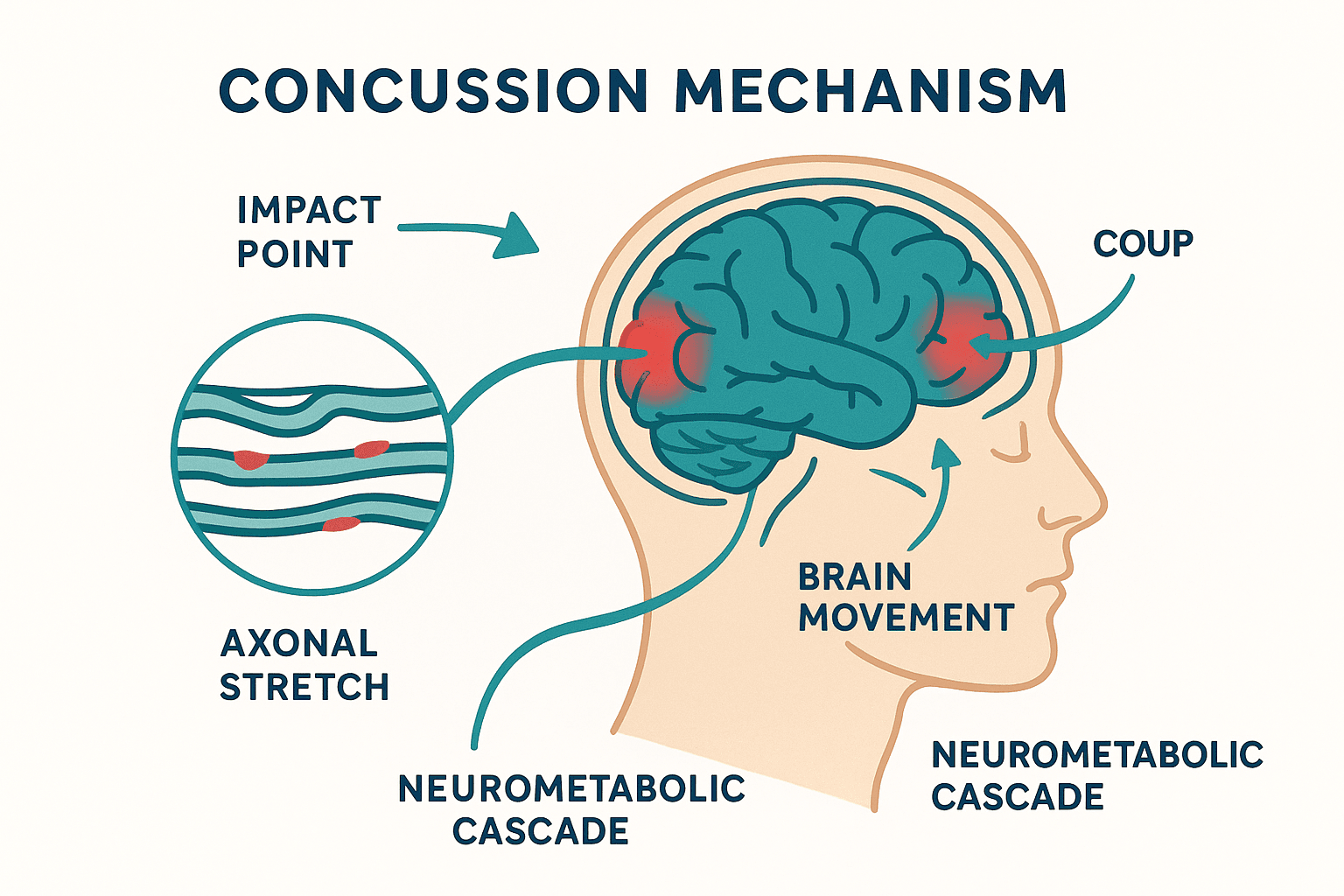
A concussion is a traumatic brain injury (TBI) caused by a biomechanical force applied to the head, neck, or body that transmits an impulsive force to the brain. The brain does not need to hit the skull — the acceleration-deceleration of the brain within the cranial vault is sufficient.
It is a functional disruption — alteration of brain chemistry and neural network function — not a structural injury. This is why CT scans and standard MRIs are typically normal in concussion: the injury is at the neurometabolic level, not the anatomical level.
Common mechanisms:
– Sports collision (hockey, football, soccer heading)
– Fall — a common cause in children and older adults
– Motor vehicle accidents
– Workplace incidents
– Physical assault
A loss of consciousness is NOT required — and in fact, most concussions (~90%) do not involve loss of consciousness.
What Is Post-Concussion Syndrome?
When concussion symptoms persist beyond the expected recovery window — typically 10–14 days in adults and up to 4 weeks in children — this is termed post-concussion syndrome (PCS) or persistent concussion symptoms.
PCS affects approximately 10–30% of people after concussion, and the mechanisms are multifactorial:
Cervical dysfunction: The same trauma that concusses the brain also strains the ligaments, muscles, and joints of the cervical spine. Cervicogenic headaches, dizziness (cervicogenic dizziness), and neck pain are major contributors to PCS that physiotherapy directly addresses.
Vestibular dysfunction: The vestibular system (inner ear and its central connections) is often disrupted in concussion, causing dizziness, vertigo, visual motion sensitivity, and balance problems.
Visual dysfunction: Convergence insufficiency (eyes not working together efficiently) and oculomotor dysfunction are common after concussion and cause headaches, reading difficulties, and visual fatigue.
Central sensitization: Ongoing symptom amplification from a sensitized nervous system.
Psychological factors: Anxiety about symptoms, fear of re-injury, and low mood contribute to symptom persistence and must be addressed.
Self-Care in the Acute Phase
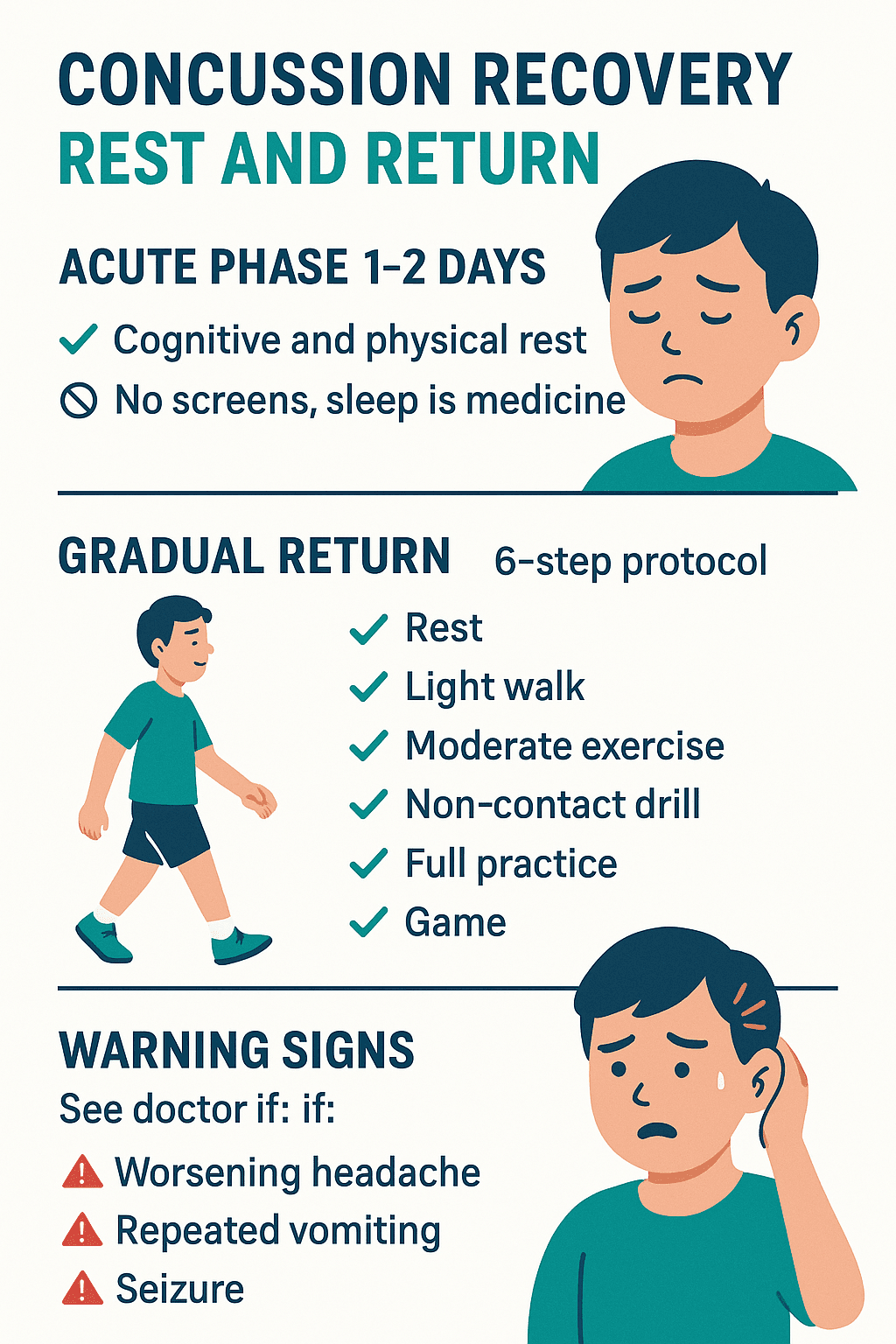
The first 24–48 hours:
– Rest is appropriate initially — but not prolonged or complete
– Screen use in moderation — if it worsens symptoms significantly, reduce. If tolerable, it is not harmful
– Sleep is essential — do not disrupt normal sleep patterns
– Avoid alcohol completely
– Avoid driving until cleared by a healthcare provider
Within days 2–7:
– Begin gentle walking; gradually increase
– Brief periods of cognitive activity (reading, screens) as tolerated — stopping if significant symptom worsening
– Avoid full return to sport until cleared
Frequently Asked Questions
Should I rest completely until my symptoms are gone?
No — this is one of the most common and harmful concussion myths. Prolonged rest is associated with worse outcomes, including anxiety, deconditioning, and prolonged symptom duration. Early, graduated, sub-threshold activity is now the standard of care.
How long does concussion recovery take?
For uncomplicated concussion in adults: 10–14 days. Children and adolescents typically take longer (up to 4 weeks). If symptoms persist beyond these windows, post-concussion rehabilitation with a physiotherapist is recommended. With active treatment, most PCS cases resolve well, though some take 3–6 months.
Can I get another concussion before I’ve recovered from this one?
Yes — and second-impact syndrome (a second concussion before the first has resolved) can produce dangerous, potentially fatal cerebral swelling, particularly in young athletes. This is why a staged return-to-sport protocol with medical clearance is essential before any contact sport is resumed.
For patient education only. Not medical advice.