Hormonal Imbalance: When Your Chemistry Is Off
The Hormonal System: An Overview
The body’s hormones form an interconnected regulatory network — not isolated individual signals. The key systems involved in hormonal balance include:
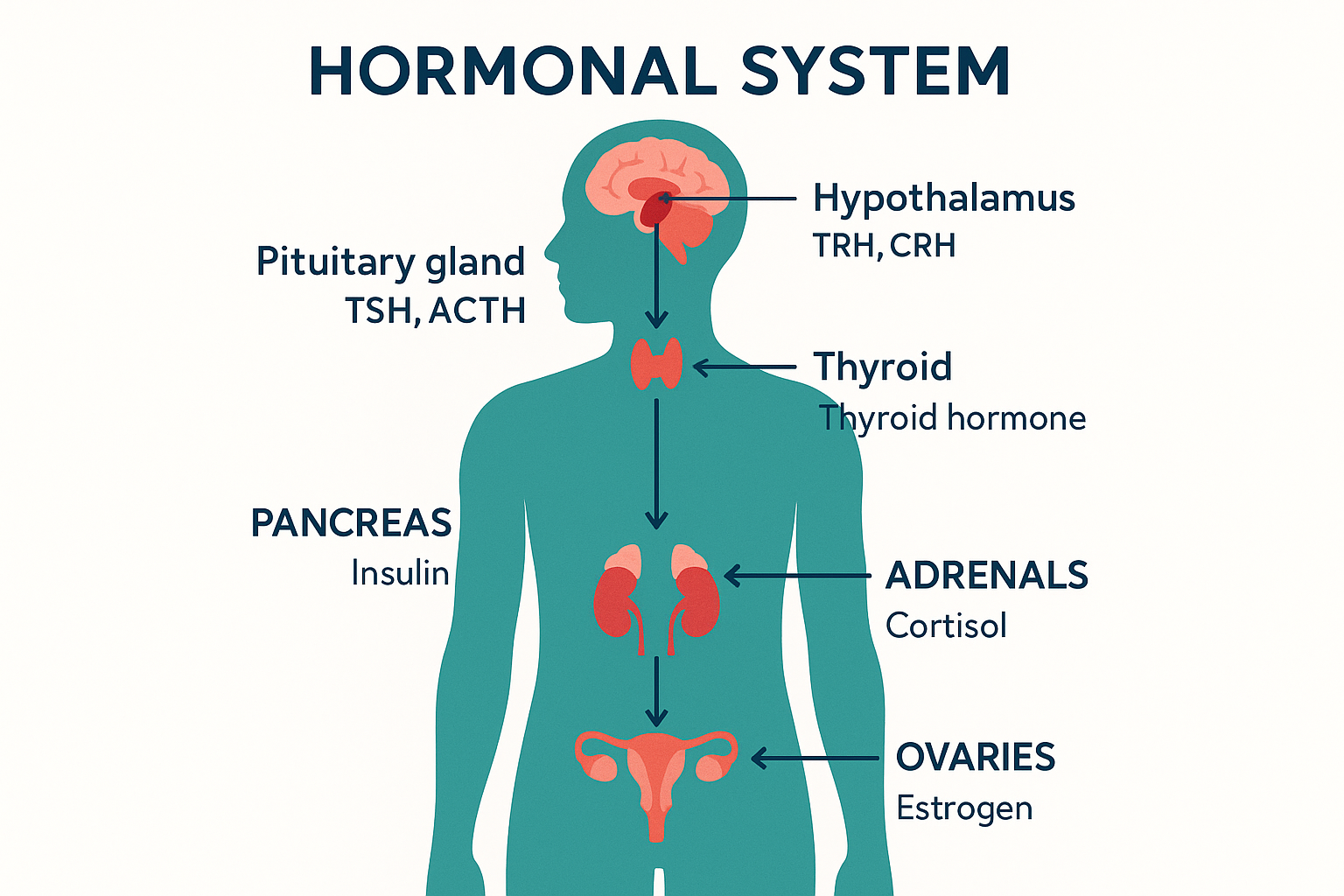
The Hypothalamic-Pituitary-Adrenal (HPA) axis: Regulates the stress response and cortisol — and intimately influences every other hormonal axis. Chronic HPA activation suppresses thyroid function, sex hormone production, and insulin sensitivity.
The Hypothalamic-Pituitary-Thyroid (HPT) axis: Thyroid hormones regulate metabolic rate, body temperature, energy, mood, and virtually every organ system. Disruption is more common than recognized — and “normal” reference ranges are wide.
The Hypothalamic-Pituitary-Gonadal (HPG) axis: Regulates reproductive hormones — estrogen, progesterone, testosterone, LH, and FSH. Disruption manifests as cycle irregularity, fertility problems, perimenopause symptoms, libido changes, and mood disruption.
Insulin signalling: Insulin dysregulation interacts with every other hormonal system — elevating androgens (in PCOS), suppressing sex hormone-binding globulin, promoting cortisol reactivity, and impairing thyroid conversion.
The Gut-Liver-Hormone axis: The liver detoxifies and conjugates hormones for excretion; the gut reabsorbs them. Dysbiosis and impaired liver detoxification alter the effective estrogen and cortisol load on the body.
Treatments at Wellness Place
Naturopathic Medicine
Comprehensive hormonal assessment: A naturopathic hormonal workup goes well beyond a single blood test. Depending on the presentation, it may include:
– Thyroid panel: TSH, free T4, free T3, reverse T3, TPO and anti-thyroglobulin antibodies
– Reproductive hormones: estradiol, progesterone (day 21 of cycle), FSH, LH, testosterone (total and free), SHBG, DHEA-S, prolactin
– Adrenal: cortisol rhythm (salivary or DUTCH), DHEA
– Metabolic: fasting insulin and glucose, HbA1c, HOMA-IR
– Liver and detoxification: liver enzymes, DUTCH hormone metabolite testing (showing how estrogen is being processed)
Estrogen detoxification and metabolism support:
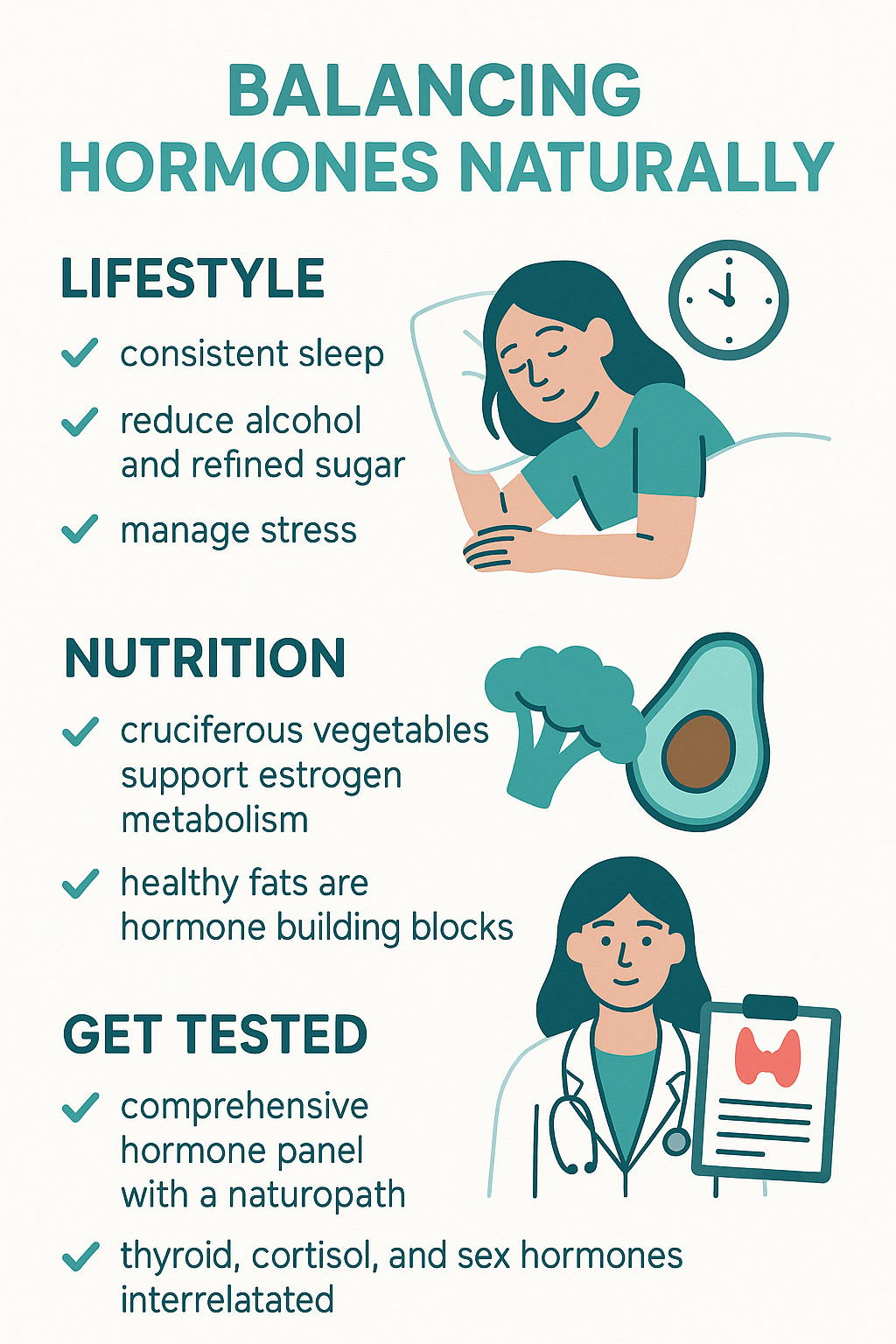
– DIM (diindolylmethane): Found in cruciferous vegetables; shifts estrogen metabolism toward the 2-hydroxy (protective) pathway and away from the 16-OH and 4-OH (proliferative/carcinogenic) pathways
– Calcium D-glucarate: Inhibits beta-glucuronidase (the enzyme that recirculates estrogen from the gut), supporting estrogen excretion
– Milk thistle and NAC: Support hepatic phase 2 estrogen conjugation
– Adequate dietary fibre: Binds conjugated estrogens in the gut for excretion rather than reabsorption
Progesterone support:
– Vitex agnus-castus (chaste tree berry): Modulates dopamine receptors in the pituitary, reducing prolactin and supporting progesterone production. Evidence for PMS, irregular cycles, and luteal phase deficiency.
– Bioidentical progesterone: Where clinically indicated, plant-derived bioidentical progesterone (topical or oral) restores progesterone levels and addresses the sleep, mood, and cycle symptoms of deficiency.
Thyroid optimization:
– Selenium: Essential for T4-to-T3 conversion; reduces thyroid antibodies in Hashimoto’s (strong RCT evidence)
– Zinc: Required for thyroid hormone synthesis and conversion
– Iodine: Necessary for thyroid hormone synthesis; both excess and deficiency impair thyroid function — testing before supplementing is important
– Ashwagandha: Improves T3 and T4 levels and reduces TSH in subclinical hypothyroidism in RCTs
– Immune modulation for Hashimoto’s: Gluten and dairy elimination has evidence for reducing TPO antibodies; vitamin D optimization is important for immune regulation
Insulin sensitization: See the Weight Management article for a full discussion. Key agents: berberine, inositol, chromium, alpha-lipoic acid.
PCOS management: A multi-component protocol addressing insulin resistance (inositol/berberine), androgen excess (spearmint tea, DIM, saw palmetto), ovulation restoration (vitex, cycle-appropriate nutritional support), and inflammation.
Adaptogenic hormone support: Adaptogens that specifically support hormonal balance: ashwagandha (thyroid, cortisol, testosterone), rhodiola (cortisol, testosterone in women), maca (HPG axis support), holy basil (cortisol, insulin).
Acupuncture
Acupuncture has documented effects on multiple hormonal systems:
- HPG axis regulation: Modulates GnRH pulsatility and LH/FSH ratios — supporting regular ovulation, PCOS, and menstrual cycle normalization
- Thyroid: Evidence for reducing TPO antibodies and normalizing thyroid hormone levels in Hashimoto’s
- Insulin: Acupuncture improves insulin sensitivity and reduces fasting glucose in clinical studies
- Cortisol: Normalizes HPA axis function — reducing elevated cortisol and supporting depleted adrenal states
- Reproductive: Supports estrogen and progesterone balance through its regulatory effects on the HPG axis
Frequently Asked Questions
How do I know if my symptoms are hormonal?
Many symptoms overlap between hormonal imbalance and other conditions (thyroid vs. depression, perimenopause vs. anxiety). A thorough naturopathic assessment — including comprehensive testing and symptom pattern analysis — is the only reliable way to determine the hormonal contribution. Do not rely on a single cortisol or TSH result to rule out hormonal imbalance.
Are bioidentical hormones safe?
Bioidentical hormones (plant-derived hormones chemically identical to the body’s own) differ from synthetic progestins and conjugated equine estrogens used in conventional HRT. The evidence base for bioidentical estradiol and progesterone is generally favourable, particularly for bone health, cardiovascular health, and symptom relief. Like all hormone therapies, they require individualized assessment of benefits and risks. Your naturopath will discuss this in detail.
Can naturopathic medicine replace conventional hormone treatment?
For mild-to-moderate hormonal imbalance, naturopathic treatment can be highly effective as a standalone approach. For significant hypothyroidism, surgical menopause, or severe estrogen deficiency, it works best alongside or as preparation for hormone therapy. The right approach depends on your specific hormonal picture and health goals.
For patient education only. Not medical advice.